
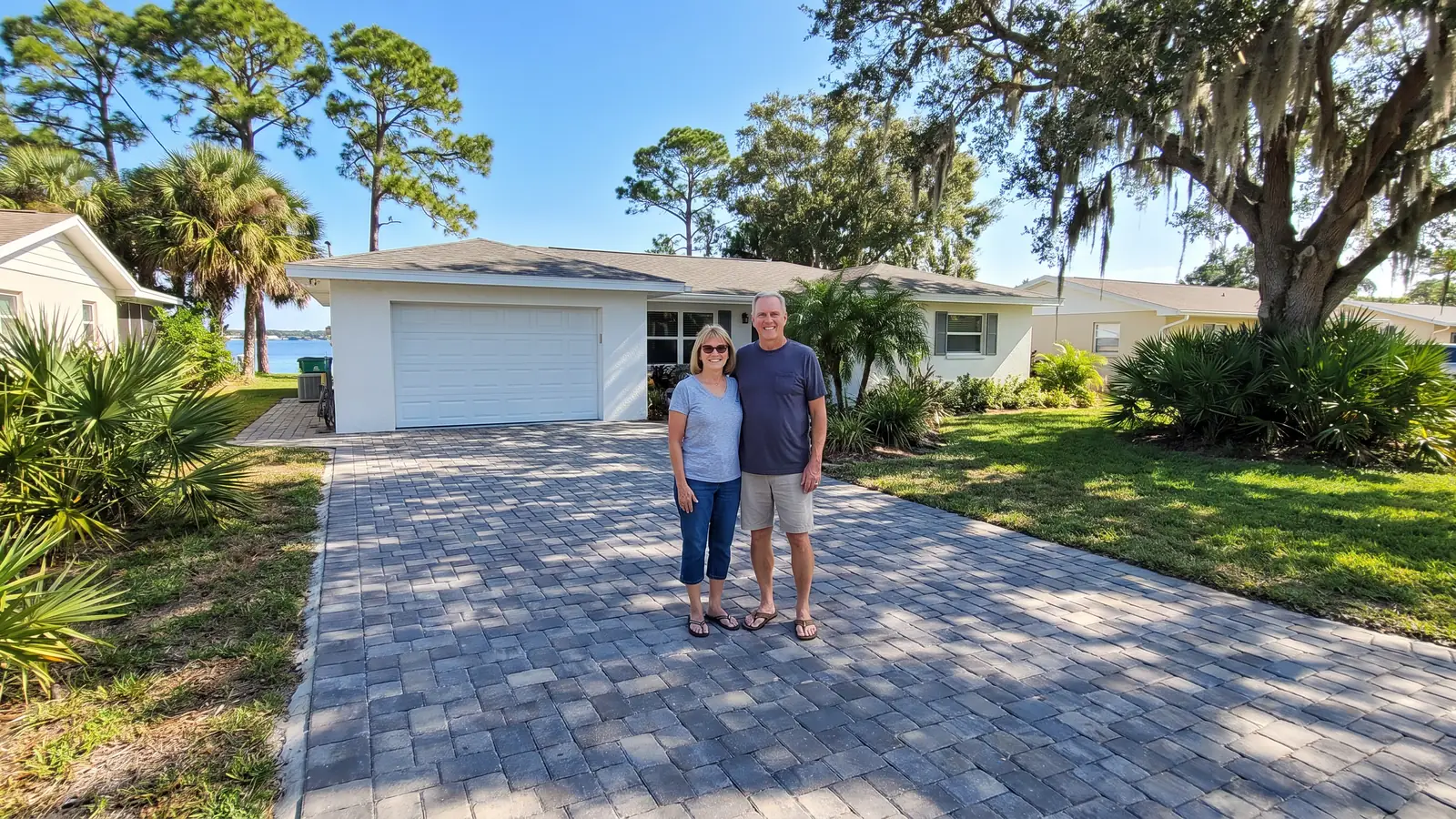
Paver sealing for Sanford homes
Paver Sealing in Sanford, FL
Sanford pavers inside or outside a historic district can get a free sealing estimate; call (321) 416-1841.
- Brings out deeper paver color
- Fresh joint sand helps lock pavers in place
- Gives weeds less room to grow
- Makes the surface easier to keep clean
- Free estimate, no obligation
Request a Free Estimate
Free, no obligation.
Fast, careful paver sealing in Sanford
Paver sealing in Sanford covers homes in the historic districts and on newer streets alike. A local contractor washes, re-sands and seals driveways, walkways and patios, with a free estimate up front. Use get your free estimate to ask for a quote, and a reply arrives in 1 business day or less. Georgetown, Goldsboro and the newer streets near the airport are all in range.
Maybe the walk to your front door has lost its color, and green film has settled along the shaded edge. A wash, new sand and a coat can bring it back to one even tone. Prefer to talk first? Call (321) 416-1841 and describe the surface.
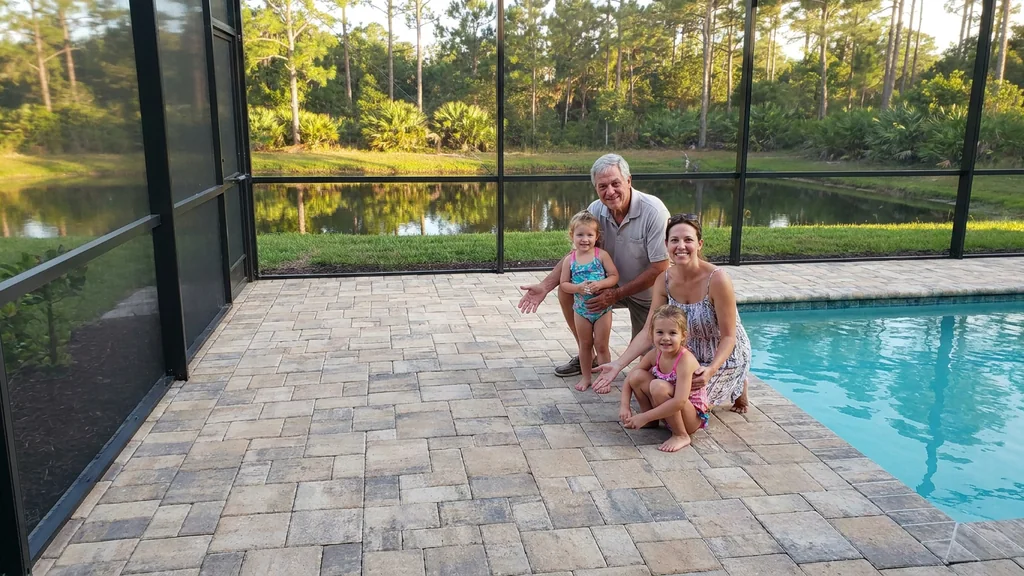
Why hire a local paver sealing contractor in Sanford?
Historic rules, older streets and sandy ground all shape a Sanford job, and a local contractor keeps track of them. To see how they apply to your address, get your free estimate.
Walk-through and a written price
You get a written price after a walk around the drive, the patio and the front walk. Nobody charges for that visit.
Prices you can check
Space Coast companies post $1.85 up to $4.00 for each square foot of wash, sand and coat. Test any Sanford bid against that.
Sheen that suits the house
Pick matte to blend with period trim, or wet look for deeper color that scuffs more easily on a busy drive.
You make the call
Dates, finish and the final yes all stay with you. A Sanford estimate asks for nothing in return.
Get Your Free Estimate in Sanford
Tell us about your pavers in Sanford.
Free, no obligation
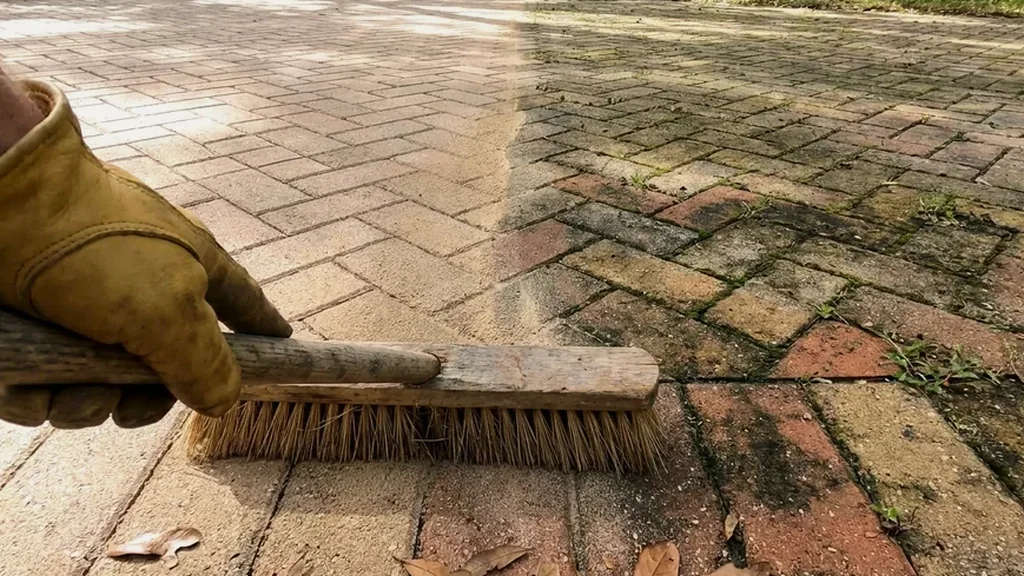
What paver problems show up most in Sanford?
Old homes and local historic rules
Sanford has four local historic districts, and the city says any exterior work, including site work, needs a Certificate of Appropriateness in three of them. The city page does not name paver sealing, so a short call to planning staff is wise. Check first if your home is on a historic street, then book the job. A contractor can wait on the date while you ask. Bring your street address and a photo of the front of the house to that call, since the planning staff can only answer for a specific lot. Once you have an answer, tell the contractor in writing so the file is clear. A few photos of the front of the house help planning staff and the contractor alike. The seven-member Historic Preservation Board meets on the third Wednesday of each month, so ask early to catch the next meeting. Keep a copy of whatever the city tells you, since a later buyer may ask for it.
Sandy ground that moves joint sand
UF/IFAS describes most Florida soil as sand, and Sanford's wet season runs from June to September. Heavy rain carries loose sand out of paver joints. Empty joints give weeds a start and let pavers creep, so fresh sand goes in after the wash and before the coat. Gaps usually show first along a sloped edge near the street, so that edge gets checked first. A walk with a slight tilt toward the road is a common spot for this, so mention any tilt you notice. A broom pass after each storm shows how much sand has left the joints. Joints that look full from the porch can be thin farther down.
Green film near the lake and the trees
Sanford sits on the south shore of 8,771-acre Lake Monroe, and months of wet-season rain keep shaded pavers damp. Moss and algae settle in those spots. Film left under a coat stays there, so the wash comes first. North walls and tree lines are where it tends to start, and those spots deserve a second look at the next coat. Ask the contractor to check the shaded side of the house first. A shaded porch landing or a walk beside the house often keeps its green tint longest. The wet-season months from June to September give algae the longest run.
Orange streaks from sprinkler water
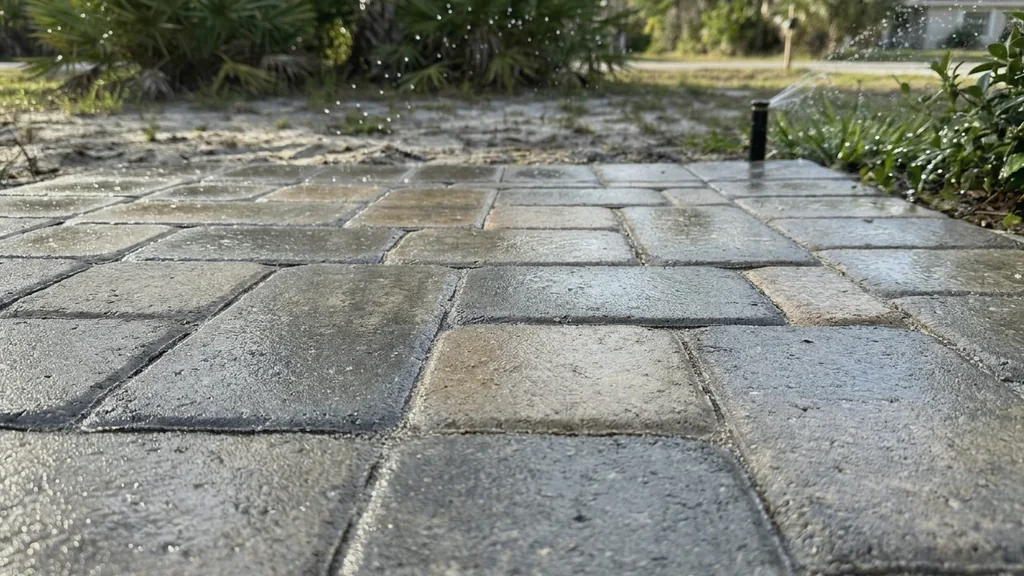
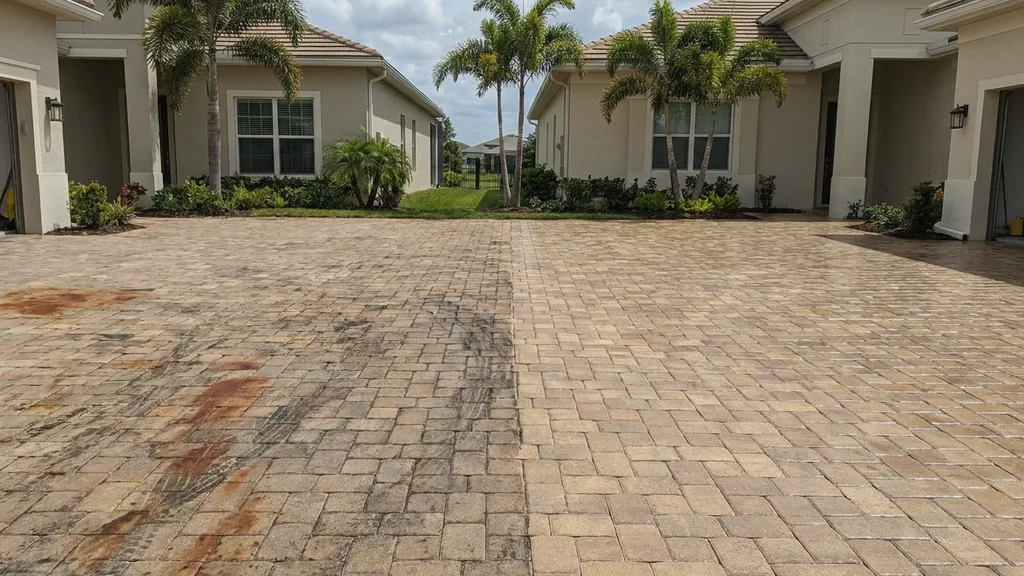
Iron runs high in most Florida well water, according to UF/IFAS, and sprinklers fed from a well can leave orange fans across nearby pavers. The wash handles those marks, because sealer would only lock them in. Point out each sprinkler head to the contractor, because a stain can begin a few feet from the spot you see. Left under a coat, rust stays visible for years. Mention which sprinkler zones run on a well, so the contractor can look there first. A rust fan often points back to one head.
Homes from many eras on one street
Sanford's historic districts hold Queen Anne, Craftsman, Colonial Revival, Bungalow and Ranch homes, and the 2020 census counted 25,176 housing units. Pavers laid at different times may carry different coats. A solvent-based coat underneath means water-based product will not bond, so the old coat has to be identified first. The way water sits on the surface can hint at the old coat. If doubt remains, a small test area is tried first. Neighbors with the same builder may know which product went down on their pavers. Ask neighbors with similar homes what went on theirs, since a shared builder can mean a shared coat. A bungalow and a newer build on one block may need two different plans.
Do historic streets in Sanford need a different sealing plan than newer ones?
Yes, because historic streets come with city rules that newer ones do not. Sanford has four local districts: Downtown Commercial, Sanford Residential, Sanford Avenue and Georgetown Residential. In three of them, exterior work including site work needs a Certificate of Appropriateness. Ask about your address before you get your free estimate, and mention what you learn.
The city page does not name paver sealing, so call the planning division if you are unsure. The Historic Preservation Board has seven members and meets on the third Wednesday of each month. If your home sits in a district, call (321) 416-1841 and tell the contractor, so the plan can wait for an answer.
Outside the districts, Sanford runs from the Goldsboro side in the west to Georgetown on the east, and out to newer streets near the airport. Those homes follow ordinary rules, which means the main questions are the age of the pavers and what coat is on them. When you are ready to price a job, get your free estimate.
Goldsboro and Georgetown carry their own history. Goldsboro was incorporated in 1891 and annexed in 1911, and Henry Sanford created Georgetown in the 1880s with Sanford Avenue as its main street. Zora Neale Hurston wrote her first published novel while living in Sanford. If your home sits in either neighborhood, call (321) 416-1841 and name your street.
What does paver sealing cost in Sanford?
Plan on roughly $1.85 to $4.00 for each square foot washed, sanded and sealed, the spread Space Coast firms post. On a Sanford lot, how many square feet you have and how worn the old coat is push the total up or down. Add a walk and a patio to a drive and the area grows fast. For a number on yours, get your free estimate.
Some jobs cost more than the base rate. Joints with little sand need extra filling, and a coat that has given out may need removing first. Narrow side yards and tight front walks on older lots slow the work too. Call (321) 416-1841 to learn which of those items the contractor expects at your address.
| Paved area | Typical example | Clean, sand and seal |
|---|---|---|
| 300 sq ft | Small patio or walkway | $555 to $1,200 |
| 600 sq ft | Two car driveway | $1,110 to $2,400 |
| 1,000 sq ft | Large driveway or pool deck | $1,850 to $4,000 |
| 1,500 sq ft | Driveway plus pool deck | $2,775 to $6,000 |
Math based on the $1.85 to $4.00 per square foot that Space Coast paver companies publish. Your contractor sets the actual price after seeing the surface. Repairs, leveling and stripping failed sealer are usually extra.
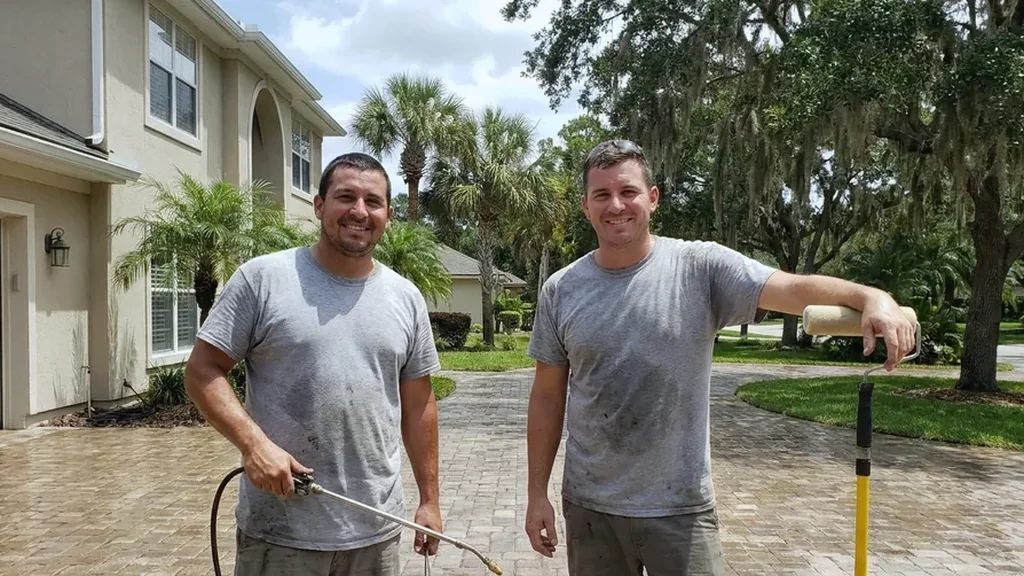
How does a paver sealing job work in Sanford?
Walk the lot and ask about past coats
The contractor circles your Sanford pavers and looks at color, joints, low spots and shade. Then come questions about earlier coats and any paperwork you have. If the house may sit in a historic district, that gets sorted out before a date is set. Old coats matter because water-based product will not bond over solvent-based. A quick phone photo of each area helps the contractor prepare. Bring any association or city notes to that first visit, so nothing surprises you later.
Wash away film, algae and rust
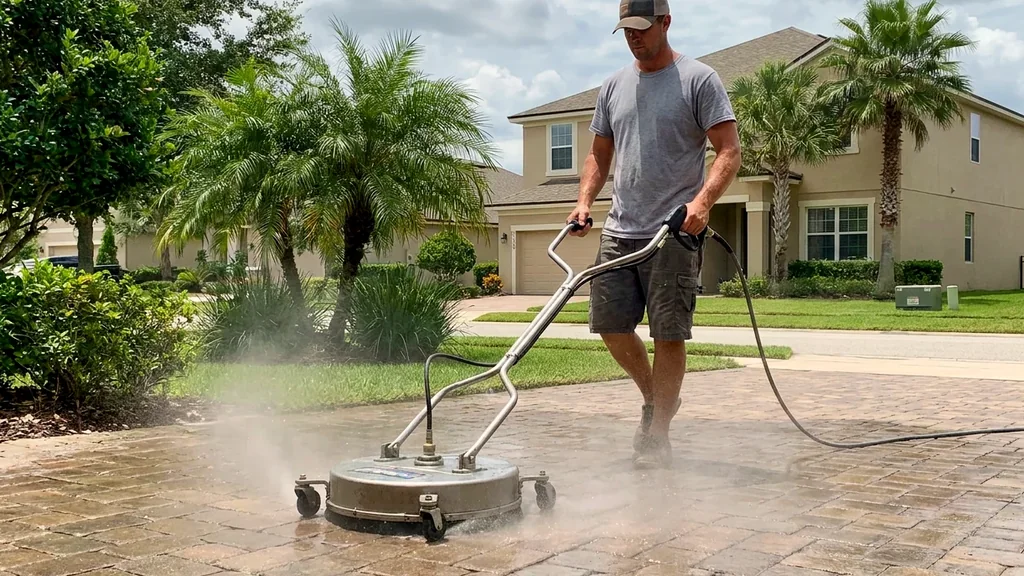
A wash takes off dust, green film and rust left by sprinklers. Rinse water is kept off shrubs, doors and old wood trim. Film on a shaded path looks harmless but returns fast if sealed over, so thick spots get another pass. Bare pavers are the goal. Mention any bed or low spot near the house that rinse water should avoid. Move cars, planters and furniture clear of the work area, and the contractor handles the rest.
Pack the joints with fresh sand
Washing pulls sand out of the joints, so new sand is swept in before anything is sealed. Full joints keep pavers steady and leave weeds nowhere to start. Loose grains are swept off afterward. Edges at the curb, slab or flower bed get a last look for gaps. Ask how much sand each joint will take. Edges beside flower beds are checked last, since soil can spill onto fresh sand.
Let the surface dry out
Sealer will not bond to wet pavers. The joints are checked as well as the tops, because a shaded path stays damp long after a sunny drive is dry. Wet spots mean the job waits. When the sky is unsettled, the work may run across two days. If the forecast shows rain, ask when the contractor will check again. Plan your day around the weather rather than the clock.
Coat evenly and write down the wait
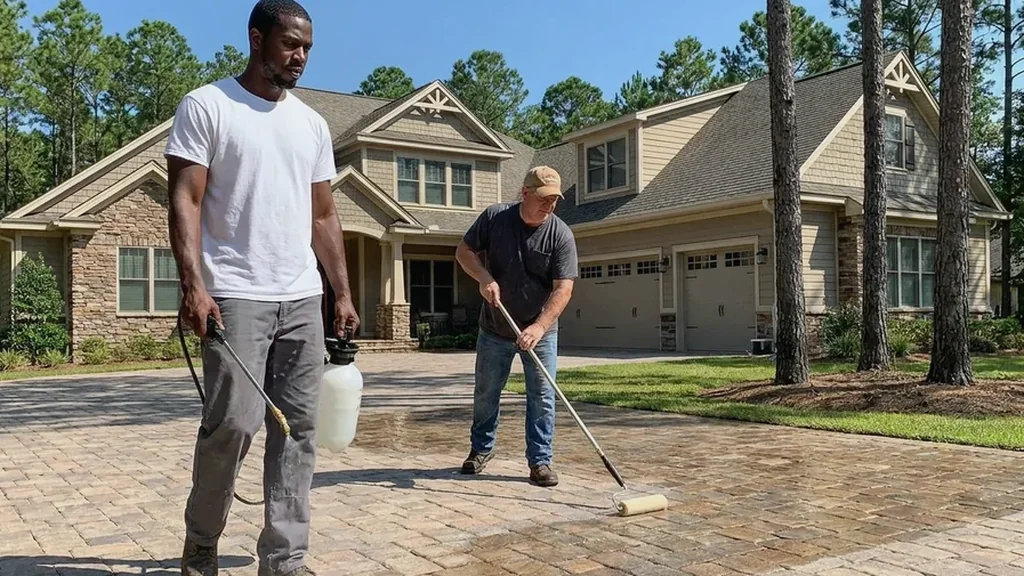
Sealer is applied evenly, in whichever finish you picked. Ask for the keep-off time, because each product sets its own, and jot the answer down. Sprinklers stay away until the coat has cured. Walk the surface the next morning in good light and report anything uneven. Tell everyone in the household the date the area reopens. Write the coat date on your copy of the estimate, since the next recoat counts from it.
Complete paver services in Sanford
Sealing a Sanford driveway takes four moves in a set order. First the surface is washed, then joint sand is packed in, then the pavers dry out, and only then does the coat go down. Doing them in order keeps the finish clean and the joints full. Call (321) 416-1841 to hear how long each move takes on your property.
A front walk under a porch roof, a drive that takes tire turns and a back patio in open sun all weather differently. Tell the contractor which of these you own when you get your free estimate. Each gets its own wash plan and its own finish, rather than one setting for the whole lot. Ask about the order of work too.
The sealer decision comes down to the coat already there and the sheen you want. Water-based product will not bond over a solvent-based coat, so an unknown history gets tested first. Matte suits a Queen Anne or bungalow front, while wet look deepens color and scuffs sooner. For help picking, call (321) 416-1841.
Sanford's wet season runs June to September, and the dry season runs October to May. Sealer wants dry pavers, so the dry months make scheduling easier. A summer day can still work if the joints have had time to dry out. To look for an open date, get your free estimate.
Questions to ask before you hire
- How long before cars can drive on the driveway again?
- How do you protect my landscaping and pool screen from overspray?
- Do you sand the joints with polymeric sand after the wash?
- Does the quote cover pressure cleaning, joint sand and any paver repairs?
- Can you remove the rust stains from my irrigation before sealing?
- How do you handle the salt air and humidity near the water?
- How often will the pavers need sealing again in this climate?
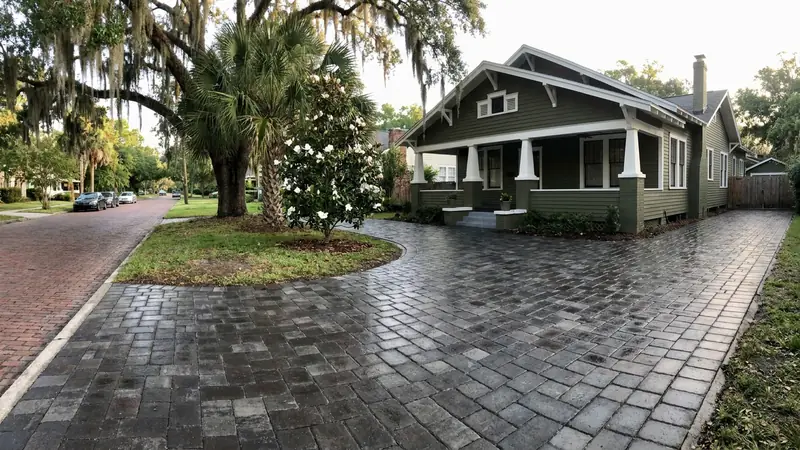
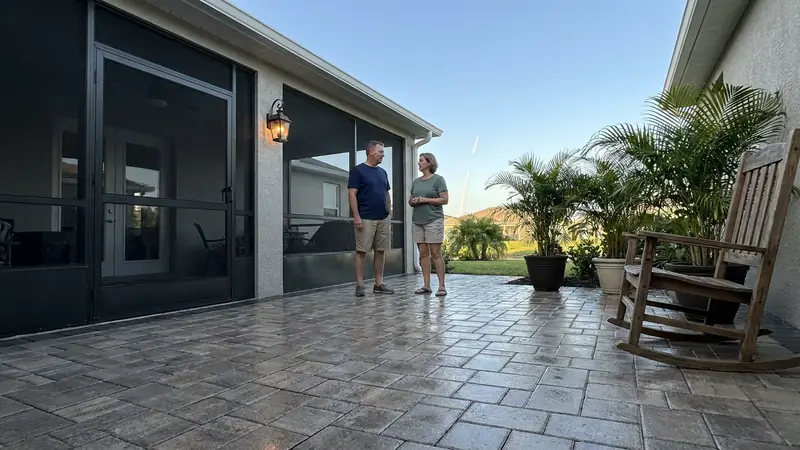
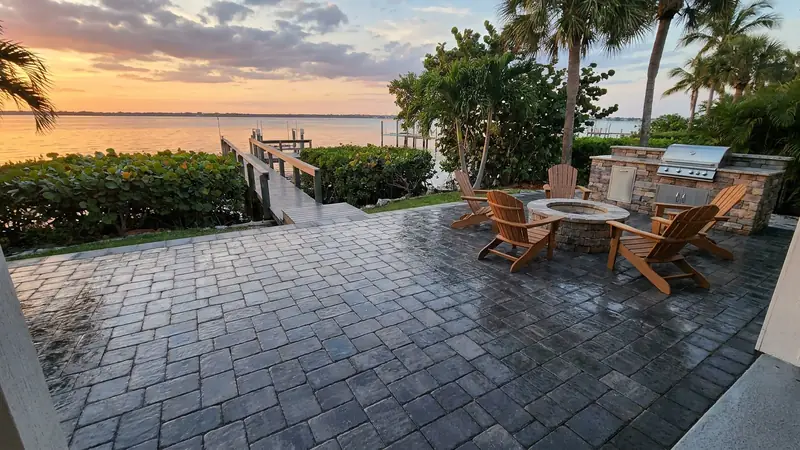
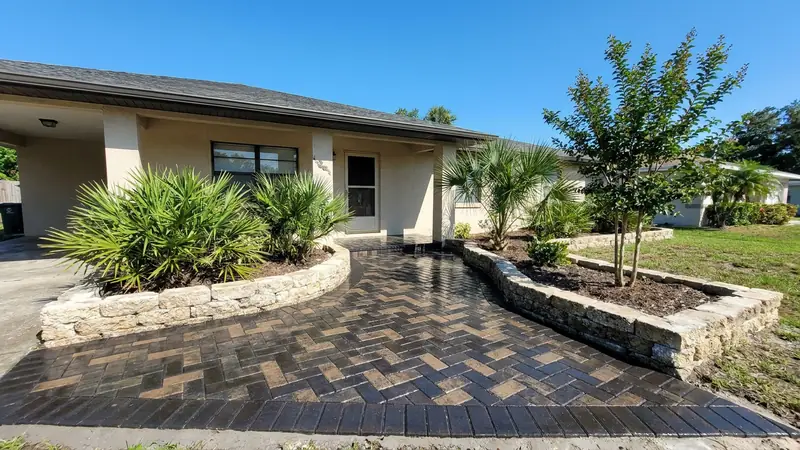
What do sealed pavers look like around Sanford?
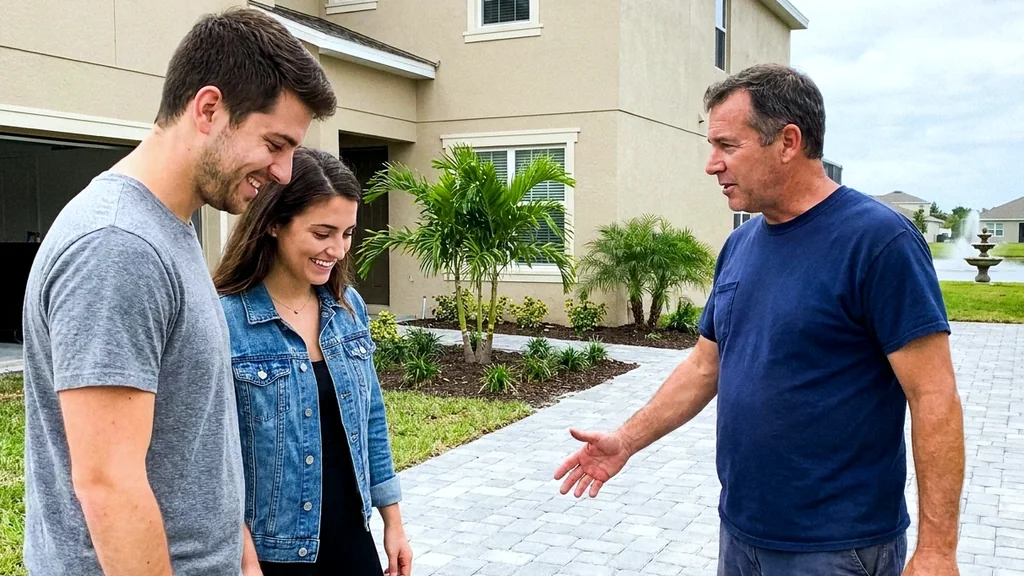
Why local matters in Sanford
A contractor who works in Sanford asks which street you live on before quoting. Georgetown, Goldsboro and the blocks near downtown can bring city review, while newer streets usually do not. Asking early saves a delay. To speak with a contractor who covers Seminole County, call (321) 416-1841.
Local pros also watch the calendar. June to September is the wet season, so good planning uses the dry months from October to May when possible. A contractor from the area will warn you early if a date might slide. You can get your free estimate and ask how delays are handled.
Air off Lake Monroe stays humid, and green film spreads in the shade of north walls and trees. A local contractor budgets extra wash time for those spots. If your home sits near the water or under heavy tree cover, get your free estimate and say so. A longer wash beats sealing over film.
What is Sanford known for, and does its history affect my pavers?
Sanford is known as Celery City, a name it earned after the Great Freeze of 1894 and 1895 pushed farmers from citrus to vegetables. Celery was first planted in 1896 on flat, sandy ground, the same sandy ground that sits under many driveways today. If joint sand keeps washing out of your pavers, call (321) 416-1841.
The city began in 1870 when Henry Shelton Sanford bought 12,548 acres by Lake Monroe, and it became a rail and river hub. Naval Air Station Sanford opened in 1942, and the old airfield is now Orlando Sanford International Airport. If you are close to the airport or the river, get your free estimate and say which street.
Rails and the river made the town. The South Florida Railroad reached Sanford in 1880 and the Jacksonville, Tampa and Key West line followed in 1886, which made the area a major orange shipper. Today the Auto Train ends its run here. Near the station or the Riverwalk, get your free estimate and give your street.
Frequently Asked Questions
How much does it cost to seal pavers in Sanford?
Space Coast firms post prices from $1.85 up to $4.00 a square foot, covering the wash, the sand and the sealer. Where a Sanford job falls depends on size, joint sand, the old coat and repairs. Ask for square feet on the quote so bids compare cleanly. A price far under the range deserves a question about what is missing. A written scope makes later questions easier to settle.
Which sealant should be used on pavers in Sanford?
Start with what is already on the pavers, because water-based sealer cannot go over a solvent-based coat. Then pick matte or wet look. After the job, ask for the product name and file it with the date and finish for next time. Keep that sheet where you can find it.
Should you seal pavers after power washing in Sanford?
Yes. Washing first lets the coat bond to clean pavers instead of film and stains. It also strips joint sand, which gets replaced before sealing. After that the pavers must dry all the way, and wet-season joints can take longer than the tops. Ask the contractor how long the dry-down will take on your walks.
How long does wet look sealer last on pavers in Sanford?
Companies commonly quote two to five years between coats for any sealer. Wet look shows scuffs sooner than matte, so a busy Sanford drive may need the early end of that span. A contractor can check the surface. Water that beads on it means the coat still works.
What is Sanford famous for, and does it matter for my pavers?
Sanford is known as Celery City and for a historic downtown on Lake Monroe. Two things carry over to pavers: sandy ground that sheds joint sand, and historic districts with city rules. The Riverwalk trail also includes 26 miles around the lake. Neither fact changes the price directly, but both shape the plan.
Do I need city approval to seal pavers in Sanford's historic districts?
The city says exterior work, including site work, needs a Certificate of Appropriateness in the Downtown Commercial, Sanford Avenue and Residential districts. Its page does not list paver sealing by name. Call the planning division with your address and ask about review time. Save the answer with your estimate.
Does the wet season change when I should seal pavers in Sanford?
It can. The wet season runs June to September and sealer needs dry pavers. Many owners aim for the dry months, yet a dry spell in summer can work once the joints are dry. The contractor judges the surface, and a forecast of rain moves the date. Ask for a call if the day shifts.
When can cars use a sealed Sanford driveway?
The wait varies by product, so get a firm number from the contractor. Feet usually go back on first and tires later. A shaded Sanford drive dries slowly, so assume the longer wait. If asked, leave cars on the street for a day or so.
Nearby areas we serve
Ready for a Free Estimate in Sanford?
Call (321) 416-1841 and tell us about your pavers.
Free, no obligation