
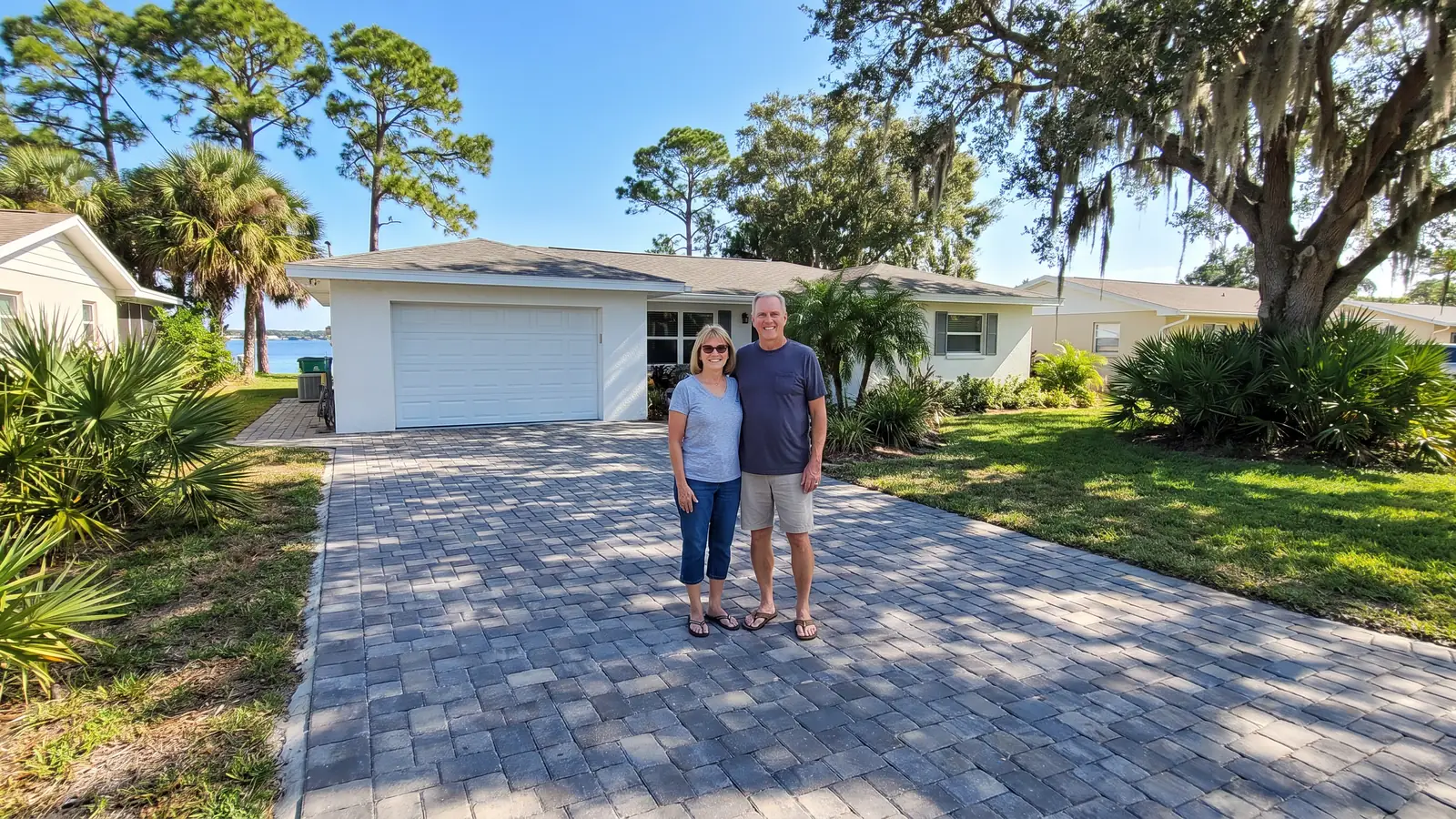
Paver sealing for Winter Park homes
Paver Sealing in Winter Park, FL
Winter Park's brick streets set a high bar, and your pavers can match it, so call (321) 416-1841 today.
- Brings out deeper paver color
- Fresh joint sand helps lock pavers in place
- Gives weeds less room to grow
- Makes the surface easier to keep clean
- Free estimate, no obligation
Request a Free Estimate
Free, no obligation.
Fast, careful paver sealing in Winter Park
Paver sealing is available across Winter Park, from the brick-lined streets near Park Avenue to the lake neighborhoods around Lake Virginia. A local contractor washes, re-sands and seals driveways, courtyards and pool decks, and the quote is free. Contact (321) 416-1841 and watch for a reply within 1 business day, usually much sooner.
You may know the look: leaves stuck in the joints, a gray film on the shady side and a few weeds along the edge. A wash, new sand and a fresh coat bring pavers back to one steady color. If you would like to start in writing, you can get your free estimate and say which Winter Park street you are on, along with a rough size for the pavers.
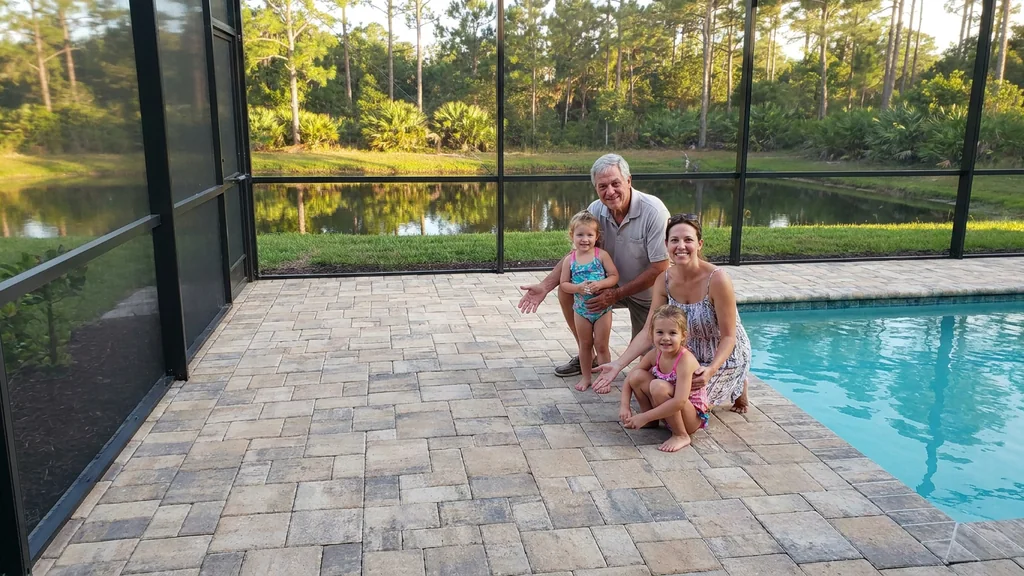
Why hire a local paver sealing contractor in Winter Park?
Winter Park homeowners tend to hire a local contractor because shade trees, lakes and a long list of older homes all affect the job. Brick-lined streets and a planned grid also set a high standard for how a driveway looks. To hear how that fits your property, get your free estimate.
A free look
The contractor visits your Winter Park pavers at no charge and quotes before any work is agreed.
Compare the range
Space Coast companies list $1.85 at the low end and $4.00 at the high end for each square foot cleaned, sanded and sealed. Test a Winter Park bid against it.
A look that fits
A matte coat sits quietly beside brick and older stone. A wet look adds shine but shows scuffs sooner.
No pressure
You pick the date and decide whether to go ahead. A Winter Park estimate comes with no obligation.
Get Your Free Estimate in Winter Park
Tell us about your pavers in Winter Park.
Free, no obligation
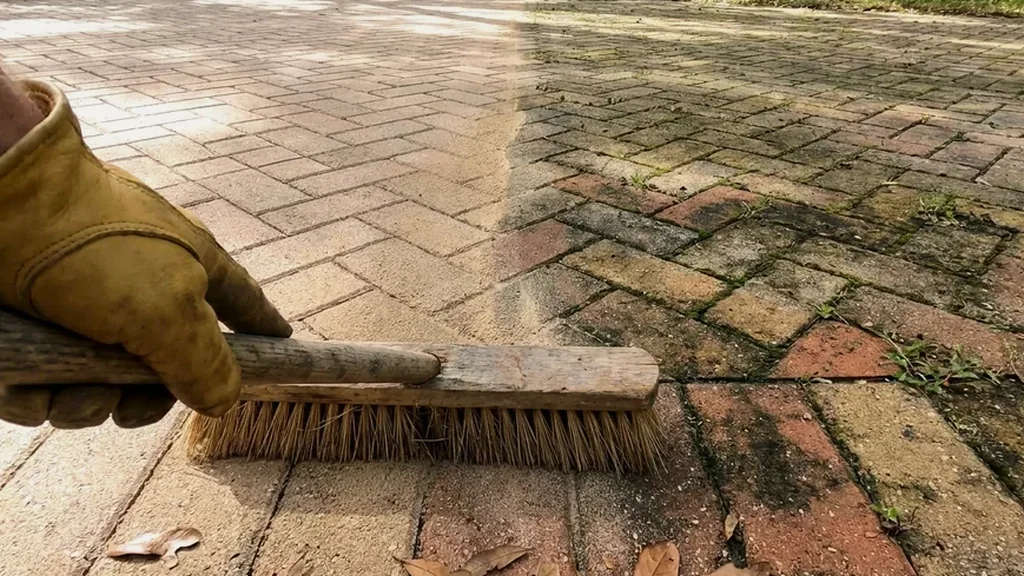
What paver problems show up most in Winter Park?
Leaves and shade on the pavers
Winter Park is known for its stately trees and tree canopy. Where leaves pile up and shade keeps pavers damp, green film and stains settle in. Sealer would trap that film, so the wash comes first and takes extra time under the trees. Moss and leaf stains are what homeowners tend to notice first, usually on the shaded side of a drive. Raking before the visit helps, though the wash still has to reach the joints.
Damp air near the lakes
The city is built around lakes, among them Maitland, Virginia, Mizell and Berry. Lakeside lots hold more moisture in the air and on the ground. Pavers near the water can stay damp longer, and that affects the sealing day. Walks that run down to the water get the same care as the driveway. Chain-of-lakes frontage in Winter Park often means a patio close to the shore, so mention that when you ask for the estimate.
Settled edges and lifted corners
A large sinkhole opened near Denning Drive in 1981 after record-low water in the limestone below. That was rare, but ground does move in Central Florida. Lifted or sunken pavers are repaired first, since sealer would only preserve the dip. A hairline gap or a corner that sits a half inch low is worth showing the contractor.
Pavers on homes that are decades old
The city has recorded over 700 historic structures, and a property generally qualifies for designation at 50 years. Older homes may have had pavers added and redone more than once. A solvent-based coat blocks water-based sealer, so the contractor checks what is there. If the house was added onto, a new patio may have newer pavers. Bring up any old permit or repair record you have, since it can point to what was done.
Summer rain that moves the schedule
Orange County's wettest months run from June through September, with 6 to 8 inches each. Sealer needs a dry surface. A sealing day under the trees may need extra drying time, and a sunny day after rain does not always mean a dry driveway.
Do Winter Park's historic districts add steps to paver sealing?
Possibly, though the city's own page does not mention driveways or sealing. It says design review covers additions and alterations to designated historic buildings, plus new construction in historic districts, and that no fees apply. Because the page is silent on pavers, a short call to the Historic Preservation Division settles it. Then get your free estimate with your address.
The local register has two districts, the College Quarter and Virginia Heights East, and a property generally needs to be 50 years old to be designated. Downtown Winter Park and Interlachen Avenue are on the National Register, which is a separate listing, and designation does not change property taxes. If your home sits in one of these areas, say so when you call (321) 416-1841.
Winter Park was platted in 1881 as a planned city, with a grid of streets and rules that buildings meet style standards. That orderly layout means many lots share a similar frontage, so a driveway that looks out of tune stands out. Pavers beside brick-lined streets tend to look best in a quiet finish, so ask about matte. Call (321) 416-1841 to talk it over.
What does paver sealing cost in Winter Park?
The published Space Coast range is $1.85 to $4.00 per square foot to clean, sand and seal, a fair yardstick for a Winter Park quote. Where your job lands depends on the area, the amount of joint sand lost and whether an old coat is in the way. Courtyards, entry walks and pool decks are measured with the driveway. To price pavers at your Winter Park address, get your free estimate; the estimate is free.
Shade and access matter here. A drive under heavy trees collects leaves and film that add wash time, and a tight courtyard behind a gate means more time by hand. Pavers that sit close to a lake or canal may stay damp longer, which can add drying time to the plan. Phone (321) 416-1841 to hear which of these will touch your price.
| Paved area | Typical example | Clean, sand and seal |
|---|---|---|
| 300 sq ft | Small patio or walkway | $555 to $1,200 |
| 600 sq ft | Two car driveway | $1,110 to $2,400 |
| 1,000 sq ft | Large driveway or pool deck | $1,850 to $4,000 |
| 1,500 sq ft | Driveway plus pool deck | $2,775 to $6,000 |
Math based on the $1.85 to $4.00 per square foot that Space Coast paver companies publish. Your contractor sets the actual price after seeing the surface. Repairs, leveling and stripping failed sealer are usually extra.
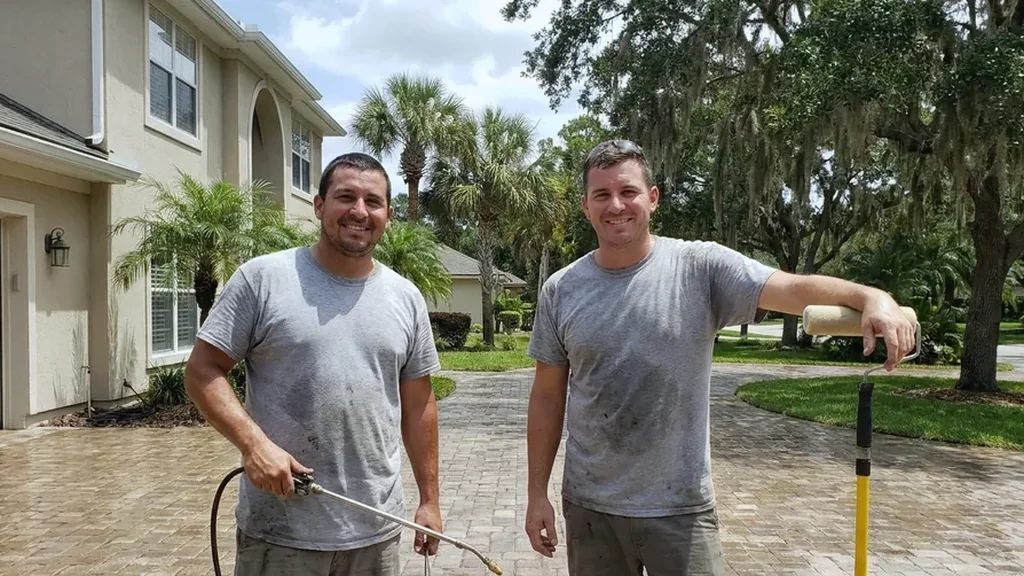
How does a paver sealing job work in Winter Park?
Survey the surface
The contractor starts by checking how your Winter Park pavers drain and where leaves and shade hold moisture. Sunken or lifted pavers are marked for repair, because sealer preserves any dip. A coat already on the stone matters, so share what you know of earlier work. Bring up any older repair that was done to the drive, since a patched corner can show through a clear coat.
Lift off leaf film and stains
The wash clears green film, leaf stains, rust and weeds. Pavers under trees and beside lakes often need the longest wash. Spray is kept off brick walls, plants and older wood trim. Sealer goes only on clean stone. Ornamental beds and low walls beside the pavers are covered or rinsed by hand.
Refill the seams
Washing takes out the old sand, so new sand goes in before any sealer. Full joints hold pavers together and leave less room for weeds. Sandy Florida ground does not hold water well, so joints drain fast and can empty after storms. Brushing finishes the step. If the joints were filled with a hard-setting product before, the contractor will want to know.
Wait for dry stone
Orange County gets its heaviest rain from June through September, and shaded pavers dry slowly. The contractor checks the forecast and the stone itself before starting. A damp corner can push a start back an hour or a day. Shade from mature trees slows drying, so a start after mid-morning is common on tree-covered drives. Rain from the day before can leave moisture in the joints even when the top looks dry.
Finish with sealer
Sealer goes on in matte or wet look. Scuffs show sooner on a wet look, which matters on a drive with daily tires. The usual quote from companies is two to five years. Allow about 24 hours of curing before cars, rain or foot traffic, says one Florida paver company. Ask for the product name so the next coat can match what is on your pavers now.
Complete paver services in Winter Park
A Winter Park job moves through a wash, new sand, a dry spell and then sealer. Leaf film, rust and old grime are cleared first, and new sand then fills the joints. Sealer goes on at the end over dry stone, so nothing dirty is locked under it. For the length of each stage on your property, call (321) 416-1841.
Driveways take tires, courtyards hold furniture, and pool decks get splashed. Entry walks by older homes are often narrow and shaded, and lakeside patios stay damp. Each surface is priced by its own area. When you get your free estimate, name the ones you have.
Sealer is a choice of base and sheen. Water or solvent comes first, and an old solvent coat rules out a water product. Matte or wet look comes second, and matte tends to suit brick and older stone. Call (321) 416-1841 to talk through which suits your home.
Weather sets the pace. Orange County's wettest months run from June through September, and the driest are January, February, November and December. Shade slows drying, so a tree-covered drive may need an extra day. For a date that fits your street, get your free estimate.
Questions to ask before you hire
- What does the estimate say about extra charges for stripping an old sealer?
- How do you handle the salt air and humidity near the water?
- Do you sand the joints with polymeric sand after the wash?
- Does the quote cover pressure cleaning, joint sand and any paver repairs?
- How often will the pavers need sealing again in this climate?
- Will you tell me which sealer goes on my pavers and why it suits them?
- Can the pool deck be sealed without making it slippery when wet?
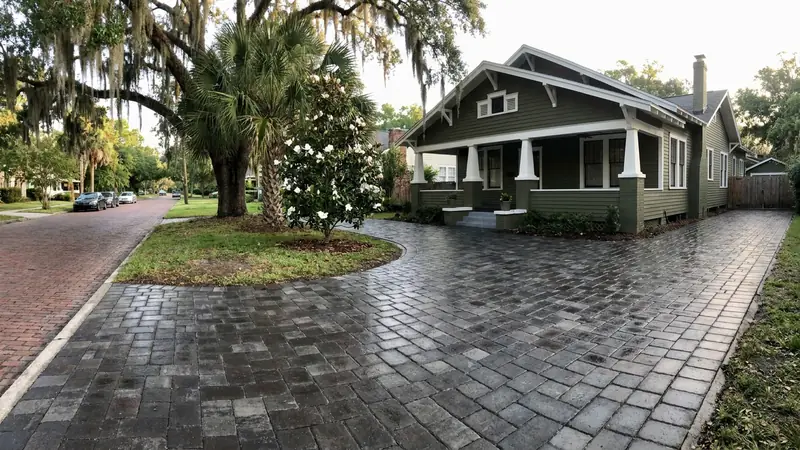
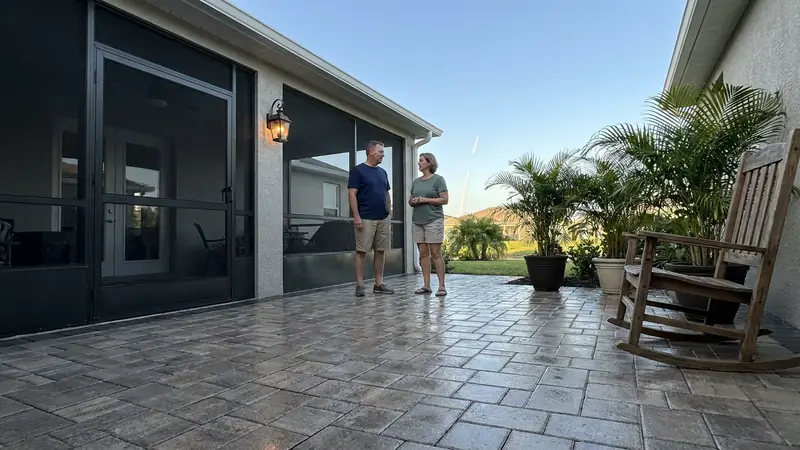
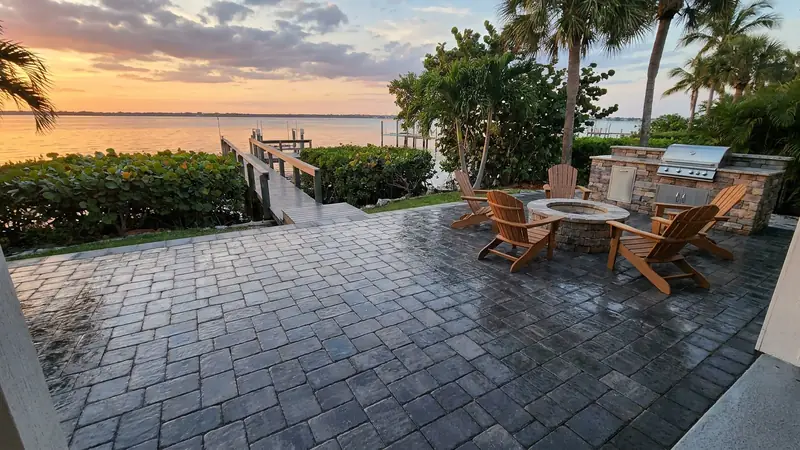
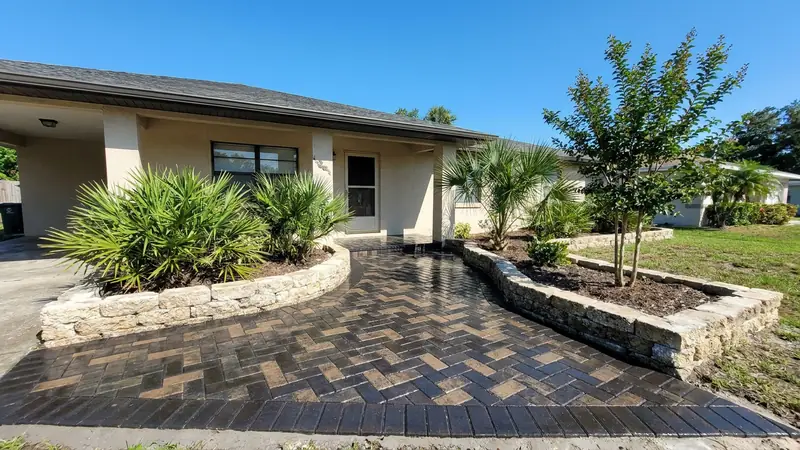
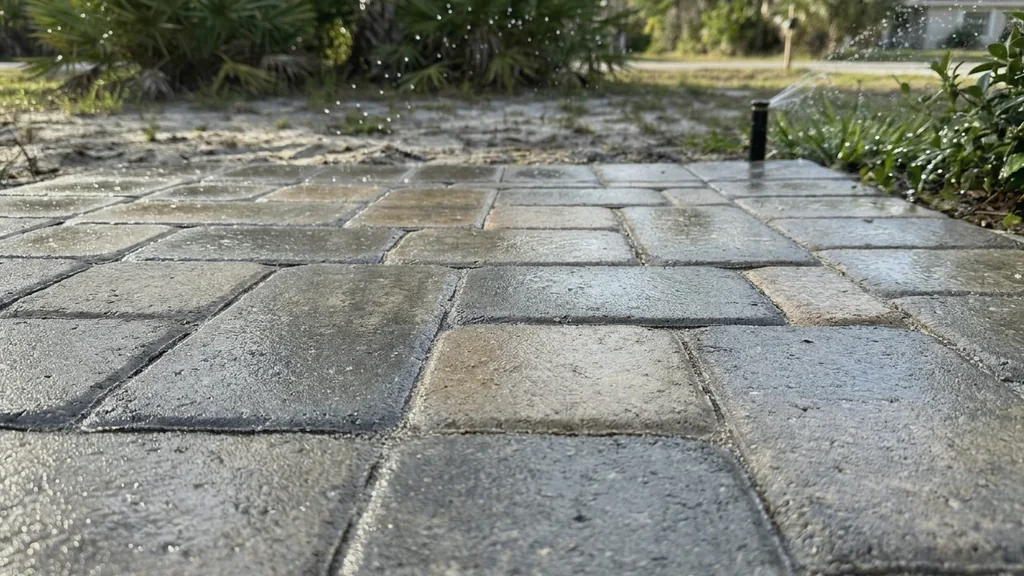
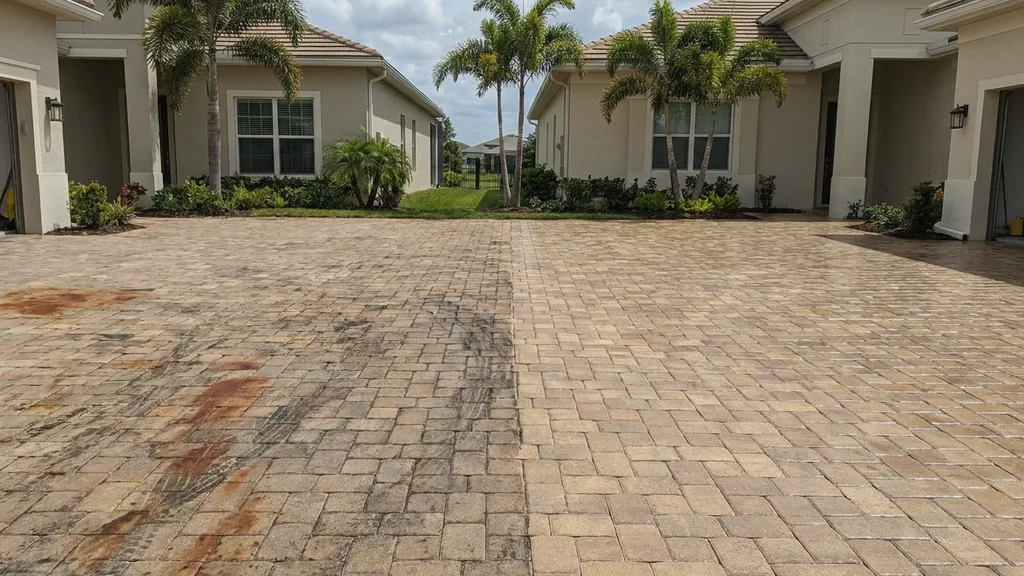
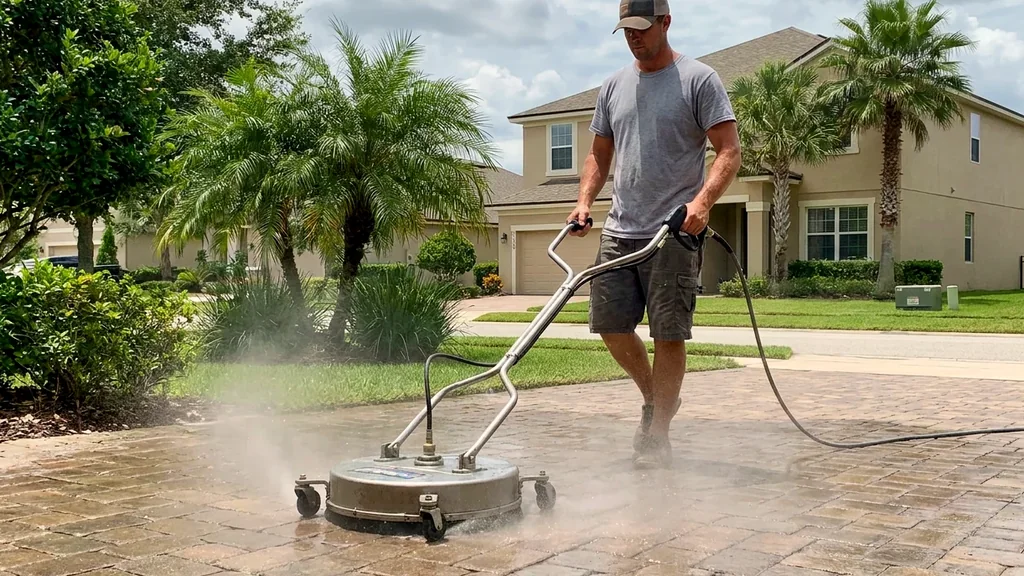
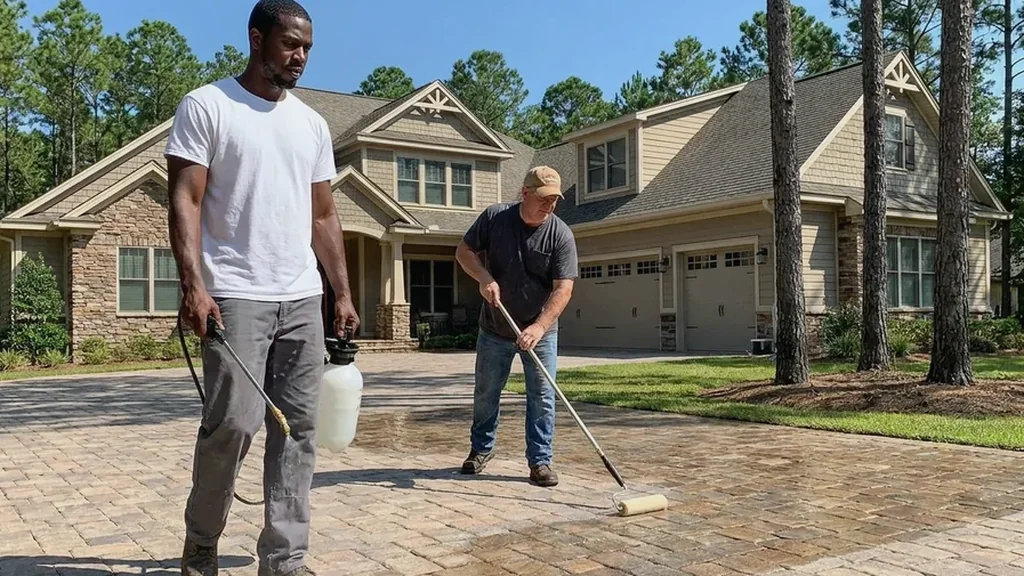
What do sealed pavers look like around Winter Park?
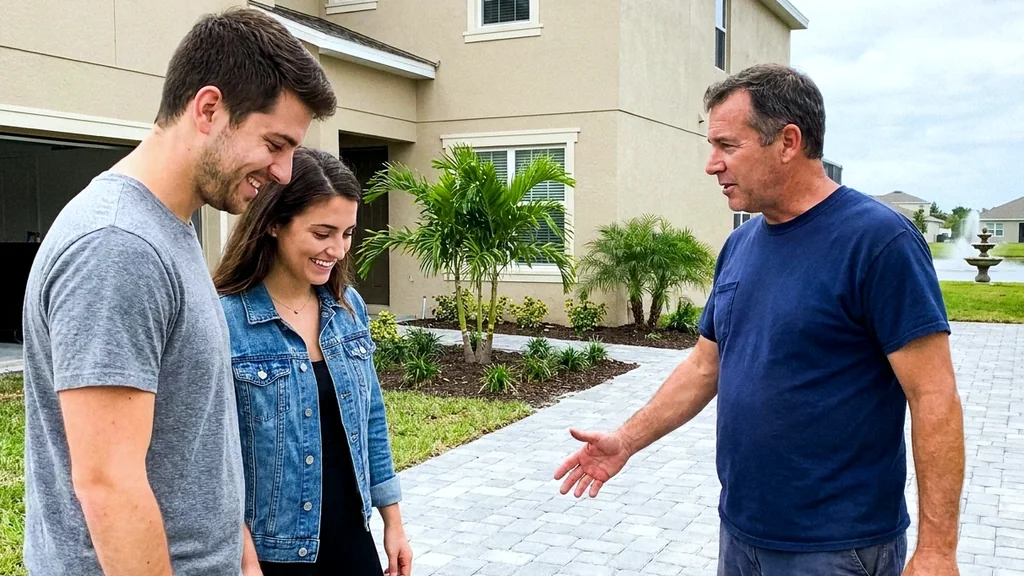
Why local matters in Winter Park
A contractor who works Winter Park knows the older streets from the newer ones. That helps with guessing the age of a coat and how much shade film to expect on arrival, especially on streets near the lakes. A crew from outside the area may miss that question. To reach a contractor who works Winter Park and nearby, call (321) 416-1841.
Local knowledge helps with the rules too. The city has a Historic Preservation Division and an ordinance that covers designated properties. A contractor who works here asks whether your address sits in a district, and you can confirm it with the city. You can get your free estimate and ask how that gets checked.
Older homes bring brick, stone and wood trim close to the pavers. A local contractor protects those surfaces from rinse water and keeps plants covered, which matters on streets where the planting is mature. Pool cages and screens get the same care. If that sounds like your place, get your free estimate and mention about when the house was built.
What does Winter Park's lake-and-brick history mean for my driveway?
It means the city was laid out on purpose, so streets and lots follow a pattern. The Mizell family bought land in 1858, the settlement became Osceola in 1870, and Loring Chase and Oliver Chapman platted Winter Park in 1881. It was chartered in 1887 as a winter resort and became a city in 1925, so a contractor who knows this can tell older streets from newer ones. Call (321) 416-1841 to reach one.
The look is part of the draw, with brick-lined streets, a cobblestoned Park Avenue District and the Winter Park Chain of Lakes. Rollins College opened in 1885, and Central Park came as a gift from Charles Hosmer Morse. Peacocks wander neighborhoods such as Windsong. Pavers that fit that setting stay quiet and even in color, so get your free estimate and describe your street.
Frequently Asked Questions
How many years between seal coats on Winter Park pavers?
The usual quote from companies is two to five years, so plan around that. Heavy tree shade, a busy drive and a wet look finish point to the shorter end. Flat color and loose joints are the early signs a coat is thinning.
How much does it cost to seal pavers in Winter Park?
Listed Space Coast pricing runs from $1.85 up to $4.00 for each square foot cleaned, sanded and sealed, so use that as your yardstick. Area, shade film, emptied joints and any old coat to remove decide where your job falls. Have the total area written into the quote, and the estimate is free.
Can you seal outdoor pavers in Winter Park?
Yes, driveways, walkways, courtyards and pool decks can all be sealed once they are clean and dry. Each surface wears in its own way, so the contractor measures and prices them separately. Ask which finish suits each area.
Do pavers need to be sealed in Winter Park?
Sealing is optional, but it helps hold joint sand, slows weeds and keeps stains from soaking in. Winter Park has tree shade, lakes and summer rain, which are hard on open joints. Whether it suits your pavers depends on their age and condition.
Is it better to spray or roll sealer on pavers in Winter Park?
Spraying, rolling and a mix of both all get used. Product, wind and pavers all play a part in the choice. Ask which method will be used on your Winter Park drive, and make sure the coat reaches into the joints.
What sealer works for pavers in Winter Park?
The choice is water-based or solvent-based, then matte or wet look. If an old solvent coat is on the pavers, a water-based product cannot go over it. Matte tends to suit brick and older stone. Get the product name on paper so the next coat can be matched.
Do I need city approval to seal pavers in Winter Park?
The city's historic preservation page covers additions and alterations to designated buildings and new construction in districts. It does not mention driveways or sealing. If your home is designated, ask the Historic Preservation Division before work begins. The page also says there are no fees for design review.
Why do my Winter Park pavers look green or stained?
Shade, leaves and damp air from the lakes leave green film and stains on many pavers. A wash removes it, and fresh joint sand and sealer help slow it from returning. The film does not mean the pavers are failing, only that they need cleaning.
Do pavers near Lake Virginia or other lakes need extra drying time?
Often they do. Lakeside lots hold more moisture, and shade from trees slows drying further. The contractor checks the stone by hand and waits until it is fully dry before any sealer goes on. Expect a morning start to slide into the afternoon on a damp day.
Will sealing change how pavers look beside Winter Park's brick streets?
It can, depending on the finish. Winter Park is known for its brick-lined streets, and a matte coat tends to keep pavers quiet and even beside brick. A wet look adds shine and deepens color. Ask to see a small test patch before the full drive is done.
How do Winter Park's trees affect a paver sealing job?
They set the pace of the wash and the drying. The city is known for its stately trees and tree canopy, so leaves, shade and damp stone are common. Expect extra time for the wash and a later start on shaded drives. A cleared surface is the key to a good coat.
Does the age of my Winter Park home change the sealing plan?
It can. A property generally qualifies for local designation at 50 years, and older homes often have older pavers or repairs. The contractor will ask when the house was built and whether the drive was redone. That helps identify an old coat and plan the wash.
Nearby areas we serve
Ready for a Free Estimate in Winter Park?
Call (321) 416-1841 and tell us about your pavers.
Free, no obligation