
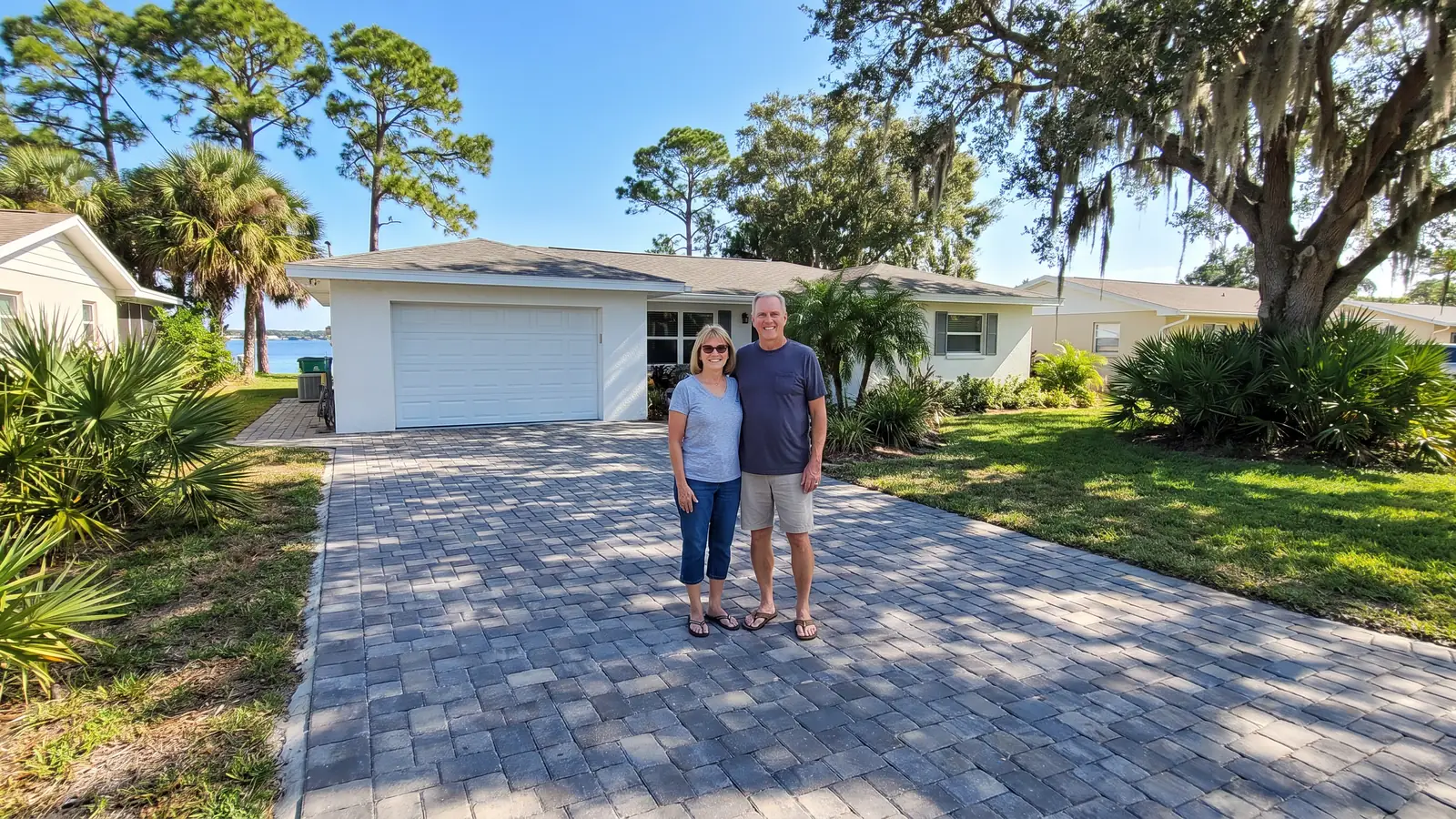
Paver sealing for Deltona homes
Paver Sealing in Deltona, FL
Deltona pavers from the Deltona Lakes era to today can look new again; call (321) 416-1841 for a free estimate.
- Brings out deeper paver color
- Fresh joint sand helps lock pavers in place
- Gives weeds less room to grow
- Makes the surface easier to keep clean
- Free estimate, no obligation
Request a Free Estimate
Free, no obligation.
Fast, careful paver sealing in Deltona
Paver sealing in Deltona reaches homes from the old Deltona Lakes streets to the newest blocks. A local contractor will wash, re-sand and seal a driveway, walk or patio, with no charge for the estimate. Request a quote through get your free estimate and expect to hear within 1 business day, often far sooner. Work reaches from the oldest Deltona Lakes streets to the newest blocks.
Perhaps the drive has faded to a flat tan and weeds are working up through the joints. Washing, refilled joints and a fresh coat can pull the color back to a steady tone. To talk before anything else, call (321) 416-1841 and describe what you see.
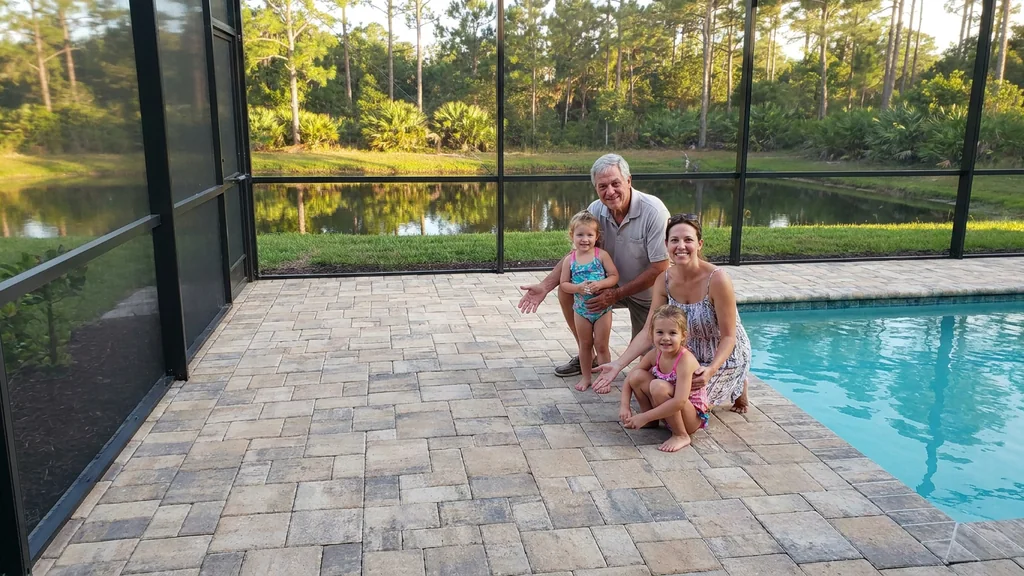
Why hire a local paver sealing contractor in Deltona?
Deltona grew in rings and layers, so pavers of many ages sit side by side, and a local contractor sorts them out. To hear how that fits your street, get your free estimate.
A free look and a price
A pro examines your Deltona pavers and writes the price down before anything is agreed. You pay nothing for the look.
A range to test bids
The published Space Coast span is $1.85 to $4.00 a square foot for everything. Hold any Deltona quote up beside it.
Matte or wet look
Matte hides everyday wear on a family drive, while wet look adds depth and picks up marks earlier.
The decision is yours
You choose the day, the sheen and whether to go ahead. Nothing in a Deltona estimate binds you.
Get Your Free Estimate in Deltona
Tell us about your pavers in Deltona.
Free, no obligation
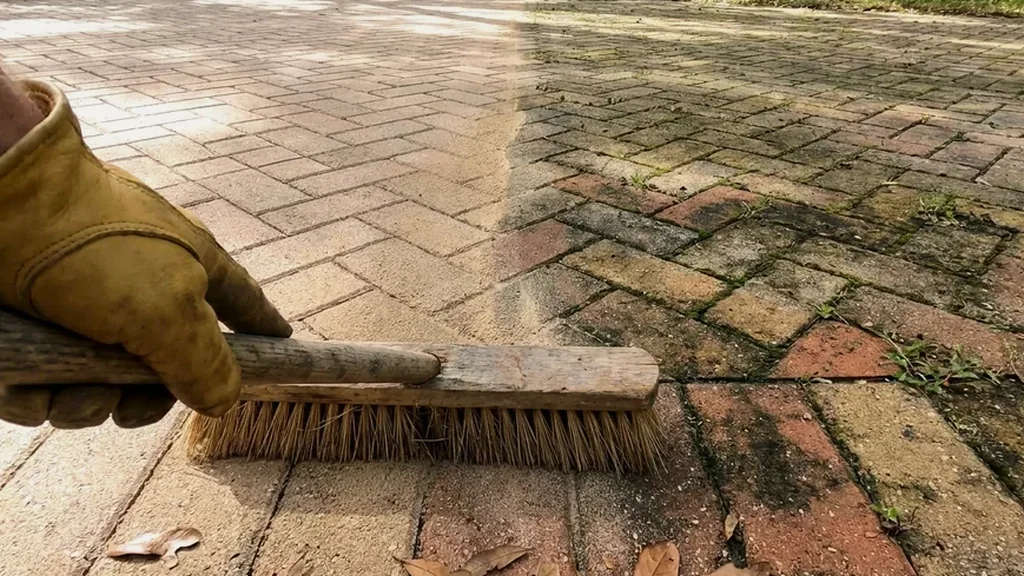
What paver problems show up most in Deltona?
Many owners, many coats
Deltona Lakes opened in 1962 and grew from about 1,600 residents in 1965 to 51,828 in 1990. Homes went up in waves and many changed hands more than once, so pavers added by different owners may carry different coats. Old solvent-based sealer means a water-based coat is off the table, so the pro tries to learn what is on yours before settling on a product. Old receipts help. If there are none, a small test patch settles it. Ask the previous owner or the builder if you can reach them. Houses in the original center and houses on outer lots may have gone in years apart. That gap often means two different coats on one street. Deltona Lakes opened to buyers on November 18, 1962, so some pavers have had decades of different owners.
Slopes that carry sand away
Much of Deltona is karst ground with rolling hills, and elevations run from 20 to 112 feet. Water and sand both travel downhill, so a sloped driveway can lose joint sand toward the road. The low edge shows gaps first and gets the most attention after the wash. Point out any spot where sand piles up after a storm, since that shows where the water runs. Thin sand also leaves low spots where water stands. A drive that slopes toward the road is the usual place for this. Elevations from 20 to 112 feet mean one block can slope while the next one is flat. Look at where your downspouts send water, since that path often matches the sand loss. Elevations run from 20 to 112 feet, and water finds its way downhill.
Damp spots near lakes and trees
The original plan counted more than 30 lakes and a blanket of pine and oak trees. Shade and lake air keep some pavers damp, and moss and algae grow where damp stays. With about 53 inches of rain a year, mostly June through September, the cycle repeats. Sealer would trap that film, which is why washing comes first. Check shaded spots again when a recoat comes due. Sun and wind dry open pavers faster than shaded ones. Lake Monroe covers 8,771 acres on the city's southern edge, and the lakes inside town add more moisture. Shaded pavers near a lake can stay wet well into the day. The land is blanketed by pine and spreading oak, and shade keeps pavers damp.
Rust stains from lawn irrigation
According to UF/IFAS, iron turns up in most Florida well water, and irrigation drawing on it stains the pavers it lands on orange. On a lot with a well, every head can leave a rust fan on the pavers near it. The wash treats the marks, because a coat would hold them for years. Walk the line with the pro and name each head. Orange stains sealed in stay visible. Irrigation timers that run before dawn soak the same pavers every morning. A different spray angle sometimes ends the staining. UF/IFAS says most Florida well water is high in iron and leaves orange streaks on whatever it touches.
A commuter city with empty weekdays
Deltona mostly serves as a commuter town for Orlando and Daytona Beach, so many driveways sit empty all day. Film and weeds go unnoticed when nobody is home to see them. A weekend walk around the house shows where growth has started. A few photos of the drive, the walk and the patio are plenty for an estimate. Mention the days you are home when you call. A photo from a weekday morning works as well as one from the weekend. A driveway can look fine from the street while the back patio has gone green. Weekend photos show growth that weekday glances miss. Many owners are away on weekdays, so crews can arrange start times around your schedule.
Does it matter whether my Deltona home sits in the first housing area or on an outer lot?
Sometimes, because Deltona Lakes was laid out in rings. The Mackle plan put house and lot packages in a housing area at the center, with cash lots and installment lots in circles around it. Homes in the core went up together, so their pavers may be close in age, while outer lots filled in one owner at a time. Tell the contractor which area you are in when you get your free estimate.
Lake Monroe lies just south of the city, and the plan counted more than 30 lakes in all. Land runs from 20 feet above sea level to 112 feet, so some streets sit on slopes and some sit low. A home on a slope may shed water and sand toward the road, while a low lot may stay wet. Mention which one you have when you call (321) 416-1841.
Lots were priced for buyers across the country, with small, low-maintenance homes at affordable prices. Pavers on a drive or walk may have been added after the house, so a contractor could be the first to look at them in years. A short note on when they went in helps, and you can get your free estimate to start the conversation.
The lakes give the city its character. Lake Monroe covers 8,771 acres, and the original plan counted more than 30 lakes and a canopy of pine and oak. Homes near the water tend to have damp mornings, so the contractor can plan a longer dry time. Tell the contractor where you are when you get your free estimate.
What does paver sealing cost in Deltona?
Printed Space Coast prices climb from $1.85 to $4.00 a square foot to clean, sand and seal. On a Deltona lot the total area, the joints and any old coat decide where you fall. Big patios and long drives add up faster than short walks. To price your pavers, get your free estimate.
Prep and access can change the number. Thin joint sand means extra filling, and an old coat that has worn out may need stripping. Settled or lifted pavers are fixed before sealing, which adds time. Call (321) 416-1841 and the pro will tell you how many of these might touch your property.
| Paved area | Typical example | Clean, sand and seal |
|---|---|---|
| 300 sq ft | Small patio or walkway | $555 to $1,200 |
| 600 sq ft | Two car driveway | $1,110 to $2,400 |
| 1,000 sq ft | Large driveway or pool deck | $1,850 to $4,000 |
| 1,500 sq ft | Driveway plus pool deck | $2,775 to $6,000 |
Math based on the $1.85 to $4.00 per square foot that Space Coast paver companies publish. Your contractor sets the actual price after seeing the surface. Repairs, leveling and stripping failed sealer are usually extra.
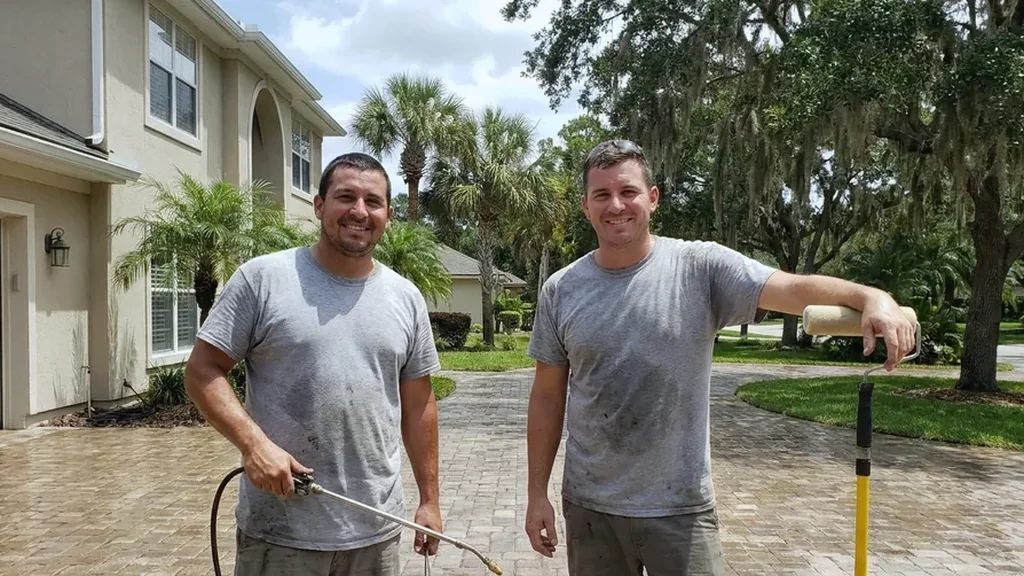
How does a paver sealing job work in Deltona?
Inspect and learn the history
The pro walks your Deltona drive, walk and patio, checking tone, joints, dips and grade. If you know when the pavers went in and what was put on them, say so. Coat history steers the product, since solvent-based sealer on the pavers blocks a water-based coat. On a house bought used, a small test patch may come first. Ask for the visit to include the sides and back of the house. Bring up any home inspection notes about the driveway or patio. Share what you know about earlier owners and earlier coats.
Wash off film and rust
The wash lifts green film from damp or shaded spots and treats rust from sprinklers. Runoff is steered away from plants, doors, screens and any pool. Bare pavers are the aim, because sealer locks in whatever remains. Extra passes go under trees and along walls, where film is thickest. Say where the water will go before the wash starts, so shrubs and low spots stay clear. Grills, planters and cars come off the work area before the wash starts. Rust streaks get a treatment before the wash.
Refill with sand
Washing takes out joint sand, and fresh sand goes in before the coat. On a sloped lot, the low edge usually needs the most. Full joints hold pavers in line and leave weeds nowhere to root. A sweep clears the top, and a last pass along the edges closes any gap the wash opened. Ask how deep the sand will sit in the joints. Beds along the drive are checked last, because soil can slide onto the fresh joints. Sand is brushed in until the joints sit flush.
Let everything dry
About 53 inches of rain fall in a year, mostly June through September, and sealer needs dry pavers. Joints and tops are both probed, since shaded spots dry more slowly than open ones. If anything is wet, the job waits and you hear early. Ask how the contractor decides a surface is dry enough. Expect a call or text if the sky turns, and keep a second date in mind. Sealer waits until the pavers are dry all the way through.
Coat, then keep off
Sealer goes down in even coats across the whole area in the finish you chose. The product sets the keep-off time, so ask for it up front. Switch the sprinklers off until the coat has cured, and look over the finish in daylight the next morning. Park on the street until the wait ends. Keep the estimate with your house records so the next recoat has a reference. Park elsewhere until the crew gives the all-clear.
Complete paver services in Deltona
The Deltona sequence runs wash, sand, dry, coat. Washing clears film and stains, new sand packs the joints, and the sealer waits until the pavers have dried clear through. That order protects the finish, and a skipped stage often shows within a season. Call (321) 416-1841 for the timing on your lot.
Most Deltona lots have a drive, a front walk and a back patio, and each wears in its own way. Wheels, feet and weather all play a part. List all three when you get your free estimate, and the pro can plan a separate wash and finish for each. Different surfaces can take different finishes.
Picking a sealer is a two-step choice: the family first, then the sheen. An old coat decides the family, because a solvent-based coat rules out a water-based one. A wet look gives deeper color and shows scuffs earlier, which matters on a busy family drive. Call (321) 416-1841 to weigh the options for your pavers.
Rain totals about 53 inches a year in Deltona, with June through September the wettest. Dry pavers are a must for sealer, so those months can stall a job, while the drier months open up more dates. Ask what happens if rain arrives on the day. To build a plan around the weather, get your free estimate.
Questions to ask before you hire
- Will you check the forecast and move the job if a storm is coming?
- How do you handle the salt air and humidity near the water?
- Can the pool deck be sealed without making it slippery when wet?
- How often will the pavers need sealing again in this climate?
- Do you sand the joints with polymeric sand after the wash?
- Do you seal with a matte finish or a wet look, and can I choose?
- How long before cars can drive on the driveway again?
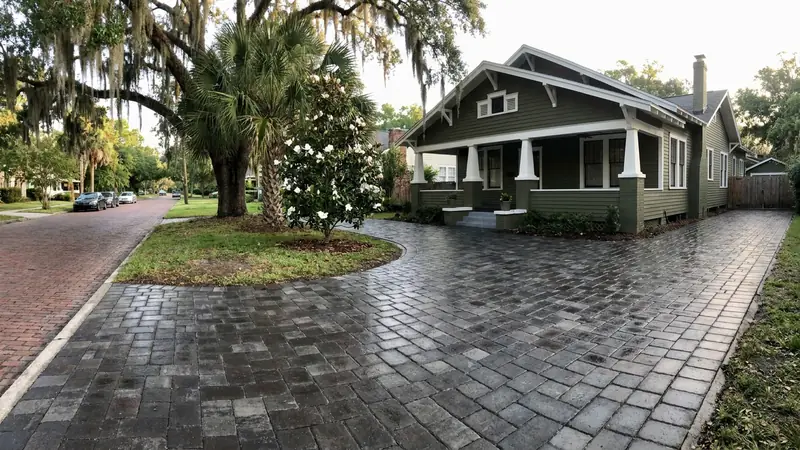
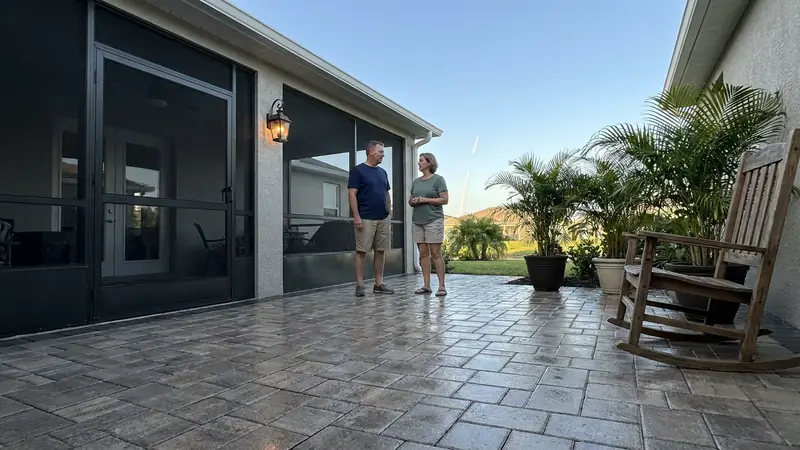
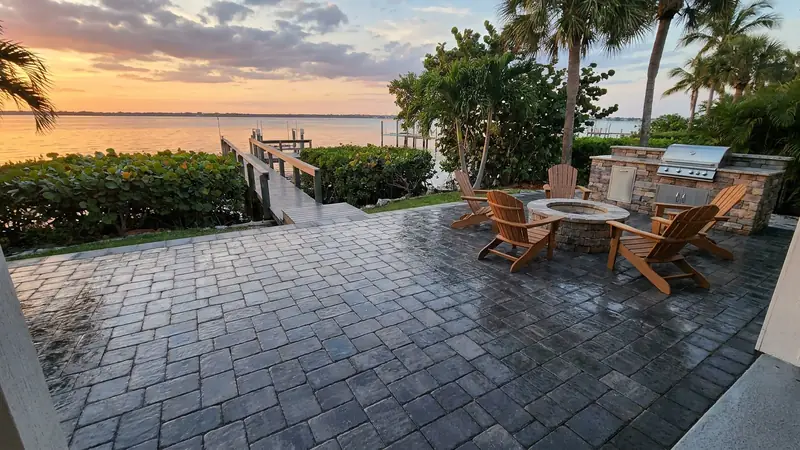
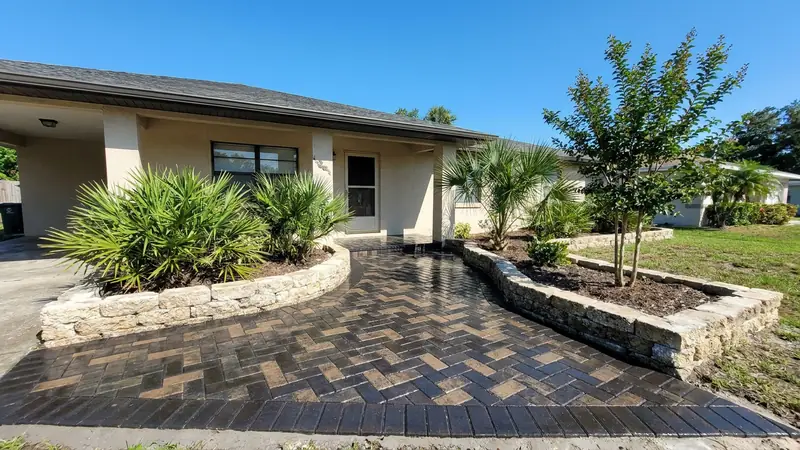
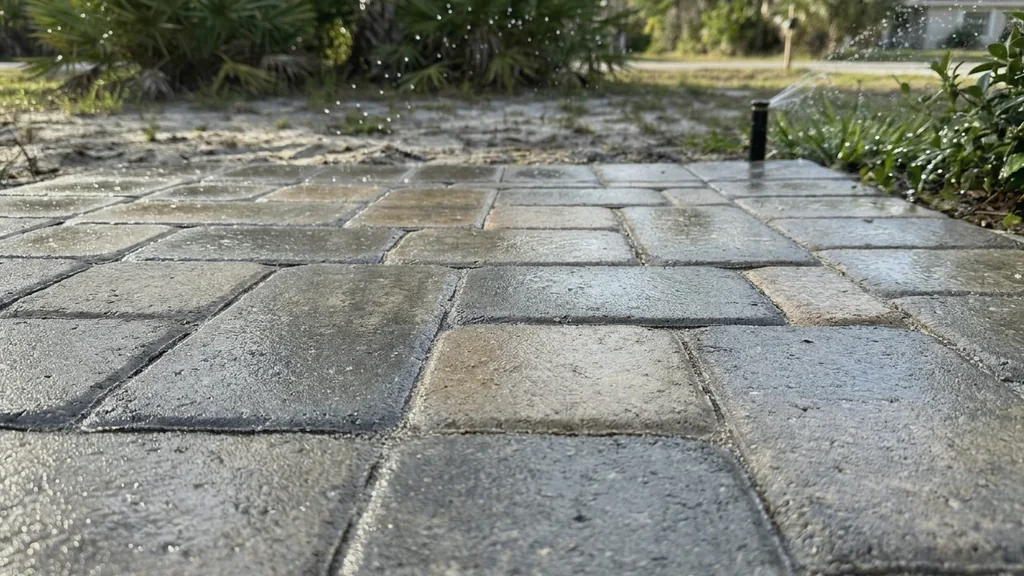
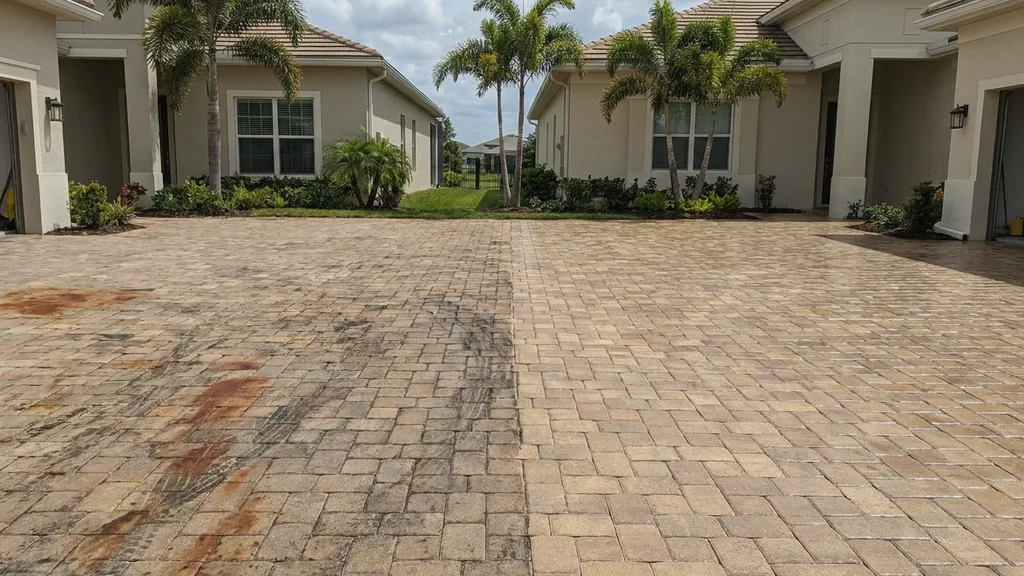
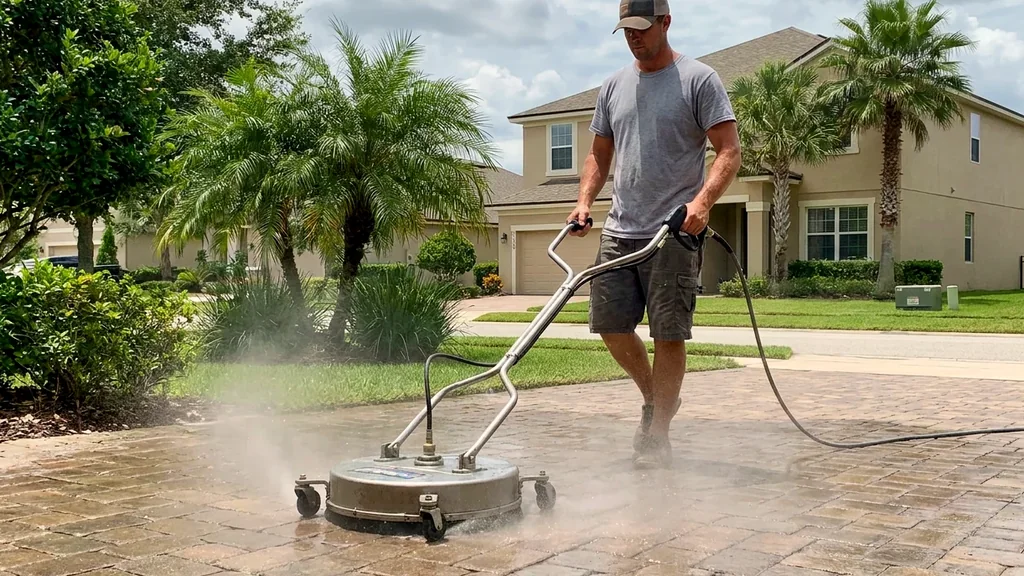
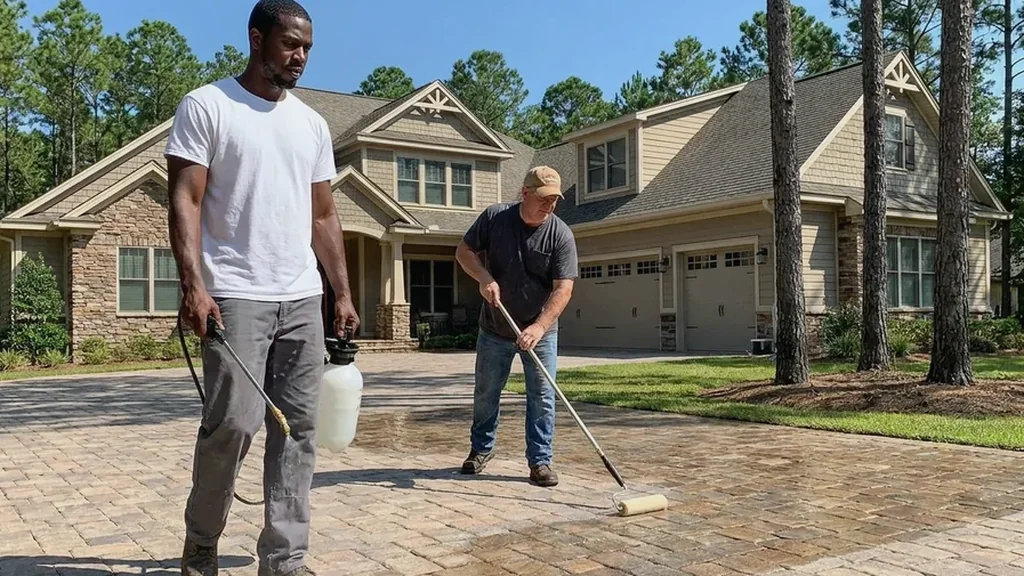
What do sealed pavers look like around Deltona?
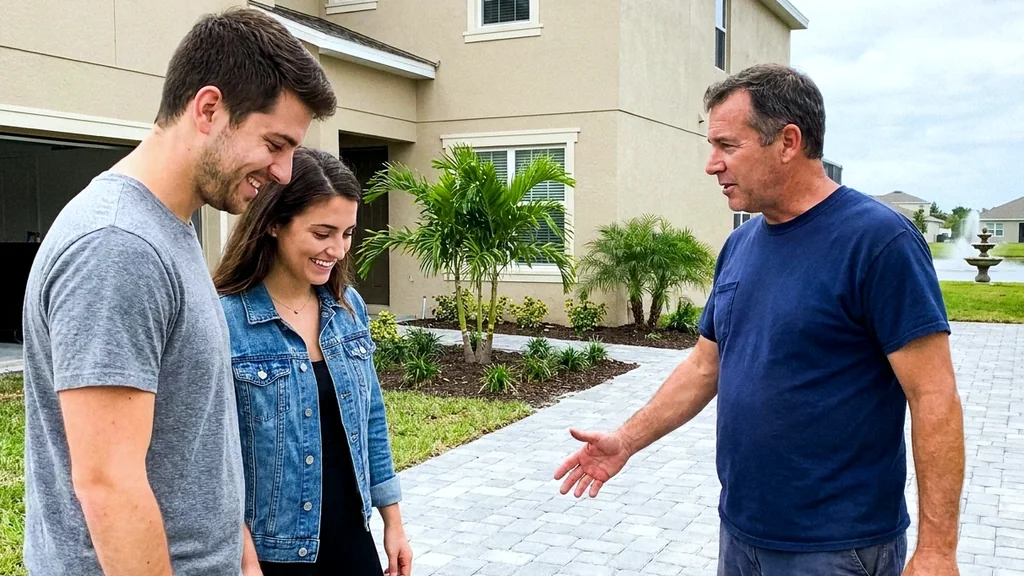
Why local matters in Deltona
A contractor who works Deltona will ask when your house went up and who has owned it. The city grew from 1962 in layers, so pavers on one street can be many different ages, and the answers decide which product can follow. To hear from a contractor in southwest Volusia County, call (321) 416-1841. Those details save time on the first visit.
Local pros also know the ground. Deltona mixes rolling hills with low spots, from 20 to 112 feet in elevation, and water runs off each one differently. Someone local checks the slope before any sand goes in. You can get your free estimate and mention any dip where water stands.
Many people here commute to Orlando or Daytona Beach, so weekday access matters. A reliable contractor plans arrival times and parking around an empty house. When you are ready, get your free estimate and share the hours when no one is home. Ask whether a text before arrival is welcome.
How did Deltona grow, and what does it mean for my driveway?
Deltona grew from a 1962 land-sales plan, so its homes arrived in waves rather than all at once. Deltona Lakes opened to buyers on November 18, 1962, on 17,203 acres planned by the Mackle brothers. By 1965 nearly 1,000 homes were built or going up, and by 1990 the population was 51,828. If your pavers date from one of those waves, call (321) 416-1841.
The community was called Deltona Lakes until it incorporated on December 31, 1995, after two failed tries in 1987 and 1990. Deltona City Hall opened in 2002, with a Daytona State College campus beside it in 2004. If you live near one of these places, get your free estimate and name your street.
Commuting shaped the map. SunRail serves the area at the DeBary station, reached by a Votran feeder bus, and The international airport at Sanford lies about 9 miles south. Deltona sits 25 miles inland, halfway between Daytona Beach and Orlando. Near the bus routes or the highway, get your free estimate and give your street.
Frequently Asked Questions
What does the average paver sealing job cost in Deltona?
Space Coast companies publish a spread of $1.85 to $4.00 a square foot for the clean, the sand and the coat. A Deltona job lands inside that range according to size, joints and the old coat. Ask for the area on the quote so two bids line up, and if one sits far below the range, ask what it leaves out. A written scope settles most price questions. Deltona has about 53 inches of rain a year, so ask how rain days are handled in the quote.
What does it cost to seal a Deltona patio or other outdoor pavers?
A patio is priced by area at the same rates, and its square feet are added to the drive and walk. Mention stains and loose pavers, since repairs come before sealing, and say what furniture or planters must move. Ask whether the patio gets its own line on the quote. Measure carefully, since pavers are priced by area. A patio is priced by area, like the drive.
Are there downsides to sealing pavers in Deltona?
Sealer wears down and must be renewed, and wet look shows scuffs before matte does. It also needs dry pavers, so rainy months can push a Deltona date back. The payoff is richer color and joints that keep their sand longer, with the biggest gain right after a coat. Ask to see the finish on a sample patch before the full job. A downside is the wait for dry weather, which can push a job back a day.
How often should I seal pavers in Deltona?
Typical quotes put coats two to five years apart. Strong sun or a wet look shortens the span. A pro can read your Deltona pavers: beading water means the coat works, soaking water means it is spent. Write down the date and sheen for whoever recoats. Mark the date on a calendar when the coat goes on.
Which sealer suits pavers in Deltona?
No single product fits every set of pavers. The old coat picks the family, since water-based cannot go over solvent-based, and then you choose matte or wet look. Ask why a product was chosen and keep its name for next time. Put the product name in the folder with your other house records. Ask the crew to show you the product label.
Do pavers on an older Deltona home need anything special before sealing?
Often they need more prep. Older pavers may have thin joint sand, settled spots or an unknown coat, and repairs come before the sealer so it does not keep a dip. A paver that rocks underfoot signals a shifted base, so mention it when you call. Photos of settled spots help the estimate. Deltona Lakes opened in 1962, so older homes may carry more than one coat.
Can paver sealing in Deltona be scheduled around my work hours?
Often yes, since many Deltona residents commute and the job can proceed while you are away. Settle the date, parking and access first. The surface must be dry and clear, so a car left in the drive can delay the day. A text the night before keeps everyone aligned. Say whether a gate code is needed. Ask about start times that fit your work hours.
When can I park on my Deltona driveway again after sealing?
The product sets the wait, so ask for the exact time. Shoes can usually go back on before tires. Shade slows drying on a Deltona drive, so expect the longer end of the range, and move cars off the drive when asked. Sprinklers wait until the coat has cured. A written note of the cure time saves guessing.
Ready for a Free Estimate in Deltona?
Call (321) 416-1841 and tell us about your pavers.
Free, no obligation