
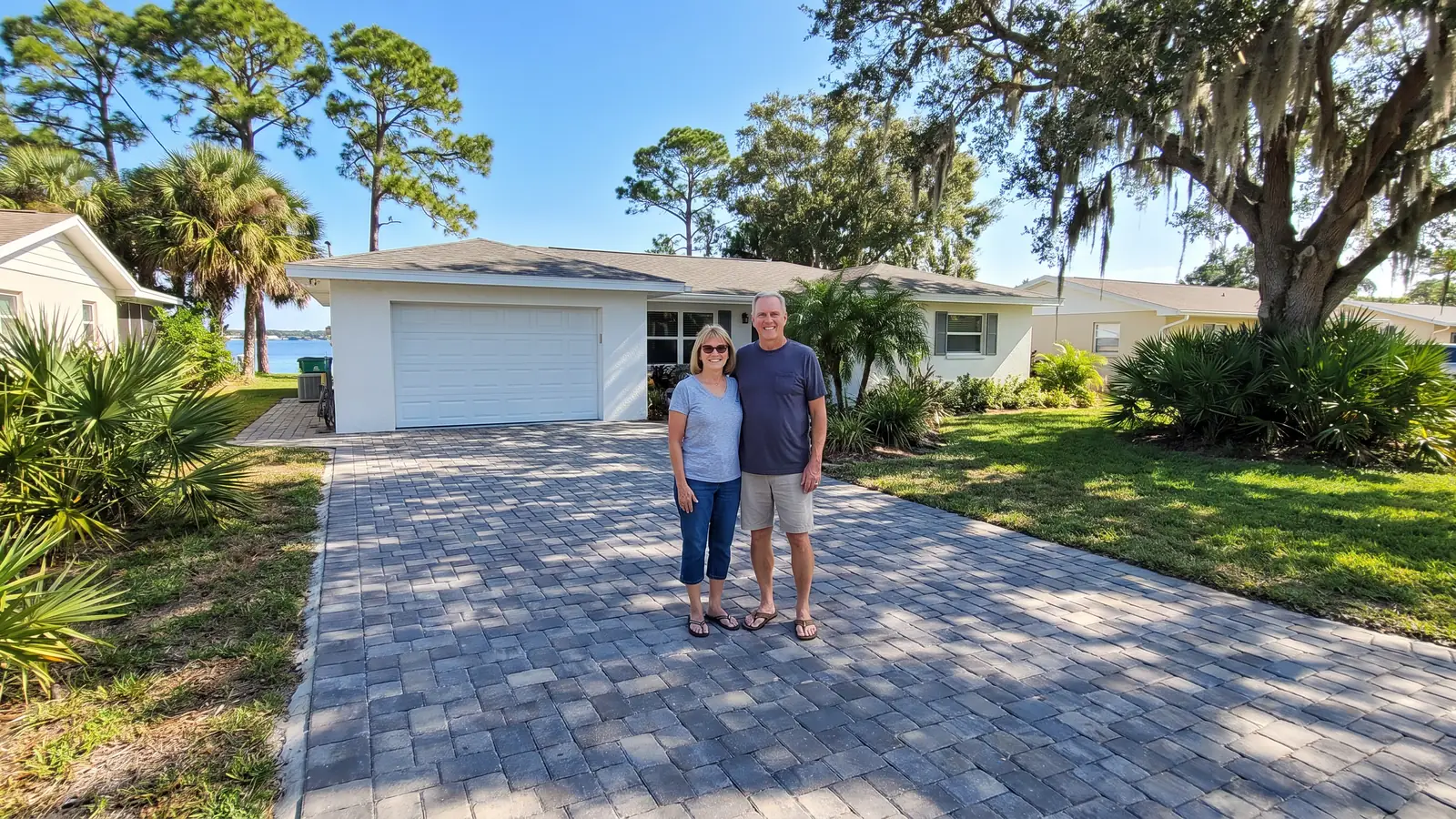
Paver sealing for New Smyrna Beach homes
Paver Sealing in New Smyrna Beach, FL
On the barrier island or the mainland, New Smyrna Beach pavers get a free sealing estimate when you call (321) 416-1841.
- Brings out deeper paver color
- Fresh joint sand helps lock pavers in place
- Gives weeds less room to grow
- Makes the surface easier to keep clean
- Free estimate, no obligation
Request a Free Estimate
Free, no obligation.
Fast, careful paver sealing in New Smyrna Beach
Paver sealing is available in New Smyrna Beach, on the mainland near Canal Street and across the causeway on the beach side. A local contractor washes, re-sands and seals driveways, pool decks and walkways on both sides of the waterway, and the estimate is free. Once you get your free estimate, an answer should reach you within 1 business day, usually much sooner.
Imagine a pool deck gone dull and gritty, with a pale film on the surface and sand missing from the seams. Washed, re-sanded and recoated, that pool deck can come back clean and even. Call (321) 416-1841 if you would rather describe the spot out loud.
A visit takes little time. A contractor reads the joints, the old coating and the spots where water lingers, then puts a price on the job in plain words. You decide whether to go ahead and when. Call (321) 416-1841 when you are ready to set one up.
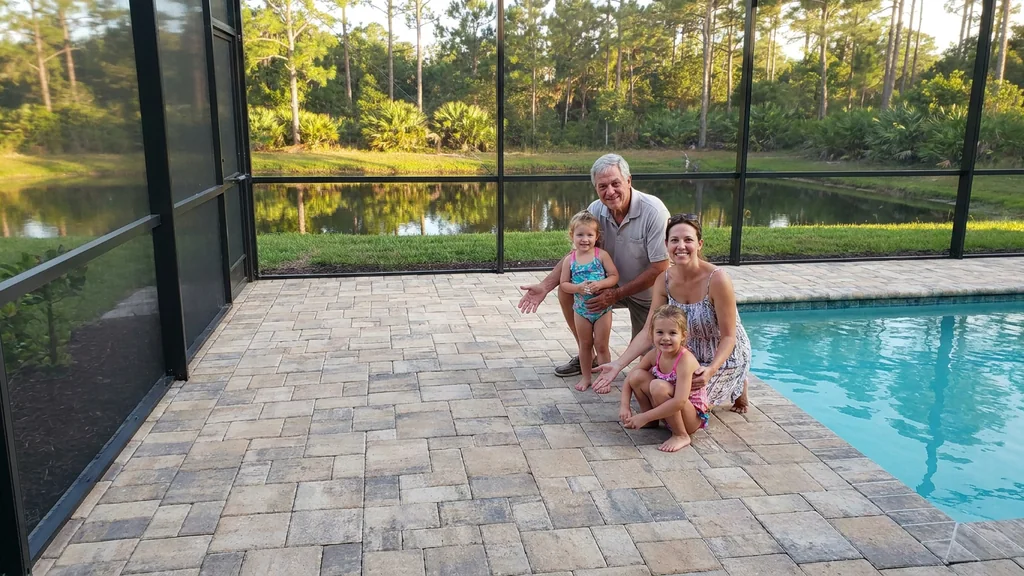
Why hire a local paver sealing contractor in New Smyrna Beach?
New Smyrna Beach has a lagoon on one side and the ocean on the other, and salt, sand and sudden storms shape every job. A local contractor plans for all three, so get your free estimate and hear how.
Free look, clear price
At no charge, the contractor measures your New Smyrna Beach pavers and states a price before you agree to anything.
A range to measure against
Published prices run $1.85 to $4.00 per square foot, so check any bid against that figure. Check any bid against that figure.
Finish by use
Matte suits a busy driveway because it hides scuffs. A wet look brings richer color and shows marks sooner.
Decide in your own time
The estimate carries no obligation, and the date, the finish and the final choice all stay with you.
Get Your Free Estimate in New Smyrna Beach
Tell us about your pavers in New Smyrna Beach.
Free, no obligation
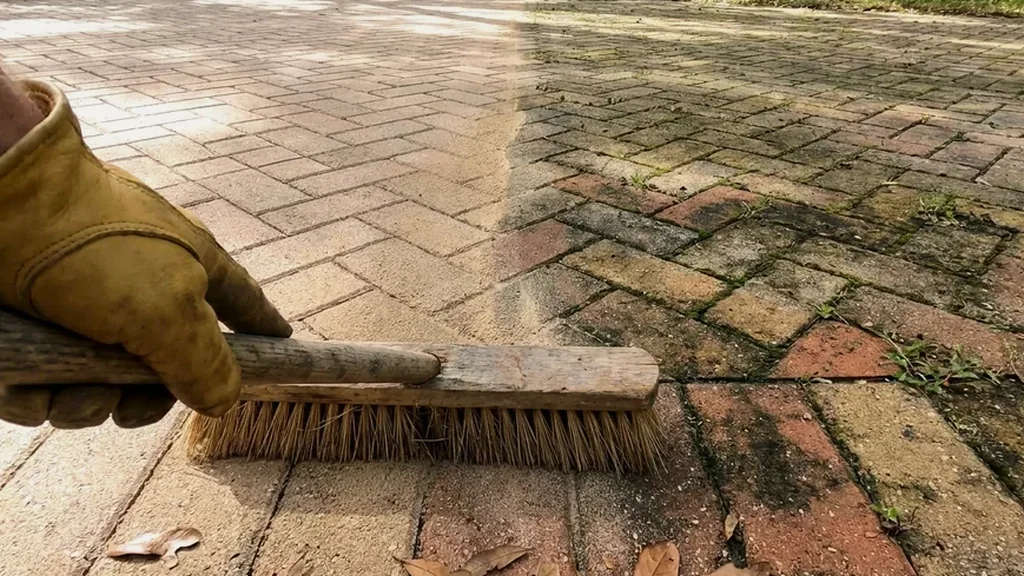
What paver problems show up most in New Smyrna Beach?
Salt and sand off the water
New Smyrna Beach sits between the Indian River Lagoon and the Atlantic. A Brevard company says salt air breaks down cheap sealers, and a New Smyrna Beach company says sealing can slow salt and stain absorption. Volusia County's coastal soils are sandy and often shelly. Pavers near the water collect grit and salt film that has to be washed off before sealing. Rinse water is kept off screens and plants so the wash does not leave marks of its own. Wind off the Atlantic and the Indian River can leave salt on beach-side cottages and mainland streets alike, so say which side you live on.
Joint sand that disappears
Landscape Ontario says lost joint sand lets soil in and supports weeds. New Smyrna Beach has a long rainy season from May to October, with frequent afternoon thunderstorms. Heavy rain moves sand out of the seams and leaves the stones free to shift. New sand goes in and settles before any sealer is applied. Seams that look wide and dark along the edge are usually the first to run short of sand. Landscape guidance notes that lost joint sand lets soil in, and that soil is what weeds root in.
Green growth under the old oaks
Historic oaks line parts of downtown and Flagler Avenue. Under shade like that, pavers stay damp, and Landscape Ontario says moss and algae mainly grow where shade is heavy. A walkway beneath a big oak is the place to look. The green film is lifted first, since sealer would only trap it. Fallen leaves stain the surface as well, so those spots get a closer look. Moss and algae mostly grow in heavy shade, so the north side under a canopy gets the longest scrub.
Sealer that has started to fail
A New Smyrna Beach company warns that sealing over a failed coat is a common cause of cloudy, peeling results. If your pavers look hazy or flaky, the old product needs to be identified and may need stripping. A solvent-based coat underneath rules out a water-based sealer on top. The contractor checks the surface before choosing the new sealer. A hazy or flaky look is the clue to watch for.
Walkways lifted by oak roots
Historic oaks line parts of downtown and Flagler Avenue. A Brevard paver company lists tree roots lifting a walkway and weak concrete edging among its common repair jobs. A lifted corner under a big oak is a trip hazard as well as an eyesore. Sealer keeps the shape of whatever lies beneath it, so lifted pavers are reset first. Point to the high spots at the visit. A Melbourne paver company lists tree roots lifting a walkway as a common repair, so a lifted slab beside an oak is no surprise.
Is paver sealing different on the beach side than on the mainland?
It can be, because salt and wind are stronger across the causeway. The beach side, with Flagler Avenue, South Atlantic Avenue and miles of condominiums, faces the ocean directly. Salt film and sand build up on pavers faster there. Say which side of the waterway you live on when you get your free estimate.
On the mainland, Canal Street Historic District and the older subdivisions along Highway 1 have less direct spray but more shade. Tall oaks keep pavers damp, and leaf stains are common. Older mainland lots tend to have settled pavers and coats from past owners. Call (321) 416-1841 and give the approximate year your house went up.
Many condominiums and cottages here are owned by weekenders from Orlando and beyond, and 29.2 percent of housing units were vacant at the 2020 Census. A part time home can sit closed for weeks while damp air and rain work on the pavers. A contractor can plan a visit for when you are away. If that is you, get your free estimate and give your dates.
Streets near Canal Street and the city marina sit close to the Indian River, so damp air reaches nearby patios. Pavers in those spots can stay damp longer and pick up film. Call (321) 416-1841 and say how close your pavers sit to the water.
Flagler Avenue is a narrow street that ends at the ocean, and miles of condominiums line South Atlantic Avenue to the south. Pavers that close to the ocean pick up salt and sand more often than pavers inland. Call (321) 416-1841 and mention which street you are on.
Cars can drive on the hard packed sand of the beach here, as at Daytona, and the beach side has many condominiums and cottages. Sand and salt ride home on tires and shoes and settle on driveways and steps. If that sounds familiar, get your free estimate and say which side of the causeway you live on.
What does paver sealing cost in New Smyrna Beach?
Companies on this stretch of Florida commonly publish $1.85 to $4.00 per square foot to clean, sand and seal. A New Smyrna Beach job lands inside that range depending on size, salt film, shade growth and old sealer. A driveway, a pool deck and a front walk are priced together by area. For a number on your pavers, get your free estimate.
Failed coats that need stripping, rust marks and low joints all add time. A pool deck calls for a sealer that copes with chlorine and constant splashing, so that product is chosen with care. Pavers on the beach side may need extra rinsing to clear salt. Call (321) 416-1841 to hear which of these may apply to your pavers.
Have the contractor spell out whether cleaning, sand, repairs and coats are in the price. A low quote and a high quote can describe two different jobs. When you have the list, get your free estimate and see how it stacks up against other bids.
| Paved area | Typical example | Clean, sand and seal |
|---|---|---|
| 300 sq ft | Small patio or walkway | $555 to $1,200 |
| 600 sq ft | Two car driveway | $1,110 to $2,400 |
| 1,000 sq ft | Large driveway or pool deck | $1,850 to $4,000 |
| 1,500 sq ft | Driveway plus pool deck | $2,775 to $6,000 |
Math based on the $1.85 to $4.00 per square foot that Space Coast paver companies publish. Your contractor sets the actual price after seeing the surface. Repairs, leveling and stripping failed sealer are usually extra.
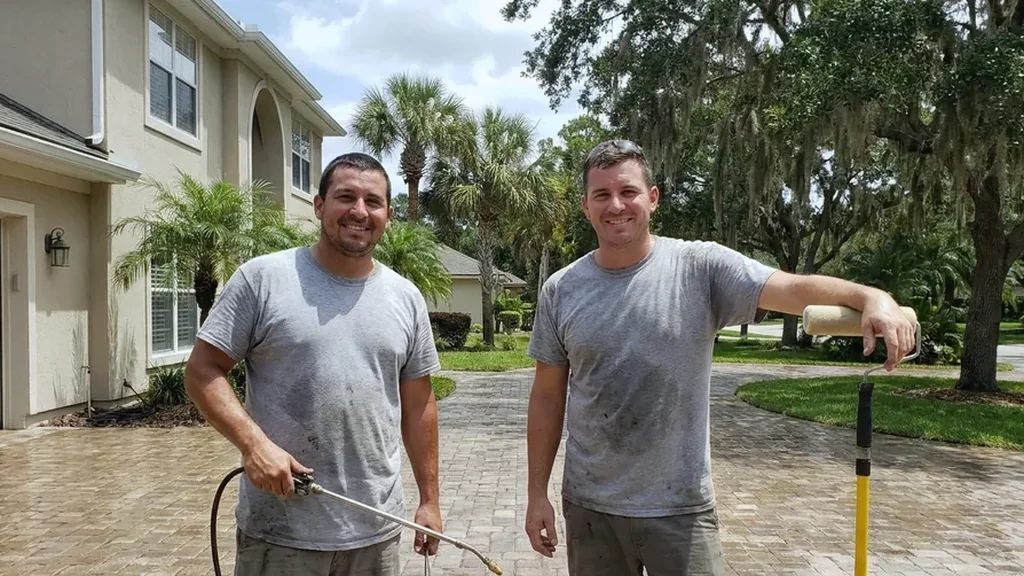
How does a paver sealing job work in New Smyrna Beach?
Check the pavers and the old coat
The contractor walks the surface, measures it and looks for low spots, stains and old sealer. A New Smyrna Beach company says failed sealer may need stripping rather than a new coat on top. Sunken or broken pavers are reset first. The price is given in writing. Mention who sealed the pavers last, if you remember. Point out the spots under the oaks that never see the sun.
Wash away salt, sand and growth
The whole surface is cleaned to lift dirt, algae, mildew and salty film. Spots of rust or oil each get a product matched to them. Plants, screens and walls are kept clear of rinse water. Salt film on the beach side may take an extra rinse, and the estimate should say so. Hard-to-reach corners behind air conditioner pads and along fences are rinsed too.
Wet sand the joints
Sand is washed into every joint so it packs tight. Packed joints hold the stones together and give weeds little to grab. Joints that have sat empty for years take more sand and more time. Coastal dune soils are sandy, so joint sand is checked all the way across the driveway. Wet-sanding settles the grains tightly into each joint.
Let the surface dry
A New Smyrna Beach company says sealing over moisture can make the coat cloud or fail. Per the ICPI, most sealers need at least 24 hours with no moisture or dampness first. In a rainy season that runs May to October, the contractor watches the forecast and may move the day. Beneath the old oaks, a walkway may need a full extra day. The ICPI asks for at least 24 hours without moisture before most sealers go on, so crews check the forecast.
Apply the coats in thin layers
The first coat is often sprayed for an even finish, and a second goes on after about an hour. You pick matte or wet look. The area is then kept closed so the sealer can cure, so ask how long that takes for your product. After curing, a splash of water that beads up tells you the coat took. One Titusville paver company keeps the area closed for 48 hours so the coat can cure.
Complete paver services in New Smyrna Beach
A New Smyrna Beach job follows a set order: check, wash, re-sand, dry and seal. The wash clears salt film and shade growth, and fresh sand fills the joints. Sealer goes on last so nothing dirty is trapped under it. Call (321) 416-1841 to hear how long each stage would run at your address.
Driveways, pool decks, lanai floors and entry walks wear differently. Salt and sand scuff a beach side driveway, and splashing chlorine tests a pool deck. Brick and stone are not sealed the same way as concrete pavers, so name the material at the estimate. Tell the contractor which surfaces you want done when you get your free estimate.
Sealer type depends on the old coat. A water-based product cannot be laid over a solvent-based coat, so the surface is checked first. Between coats, companies commonly quote two to five years, and a wet look shows marks sooner than matte. Call (321) 416-1841 for a plain talk about product and finish.
Weather decides the calendar here. Afternoon thunderstorms are frequent, and a patio under oaks can stay damp longer than an open driveway. A good contractor leaves room for delays and says so up front. For a date that fits your street, get your free estimate.
Questions to ask before you hire
- How do you handle the salt air and humidity near the water?
- Can the pool deck be sealed without making it slippery when wet?
- What do you do about the green algae in the shady corners of my driveway?
- Do you sand the joints with polymeric sand after the wash?
- How often will the pavers need sealing again in this climate?
- What does the estimate say about extra charges for stripping an old sealer?
- Will you tell me which sealer goes on my pavers and why it suits them?
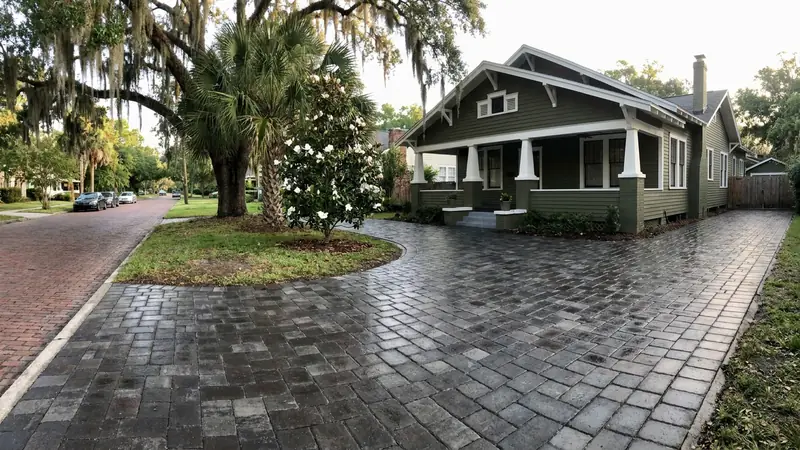
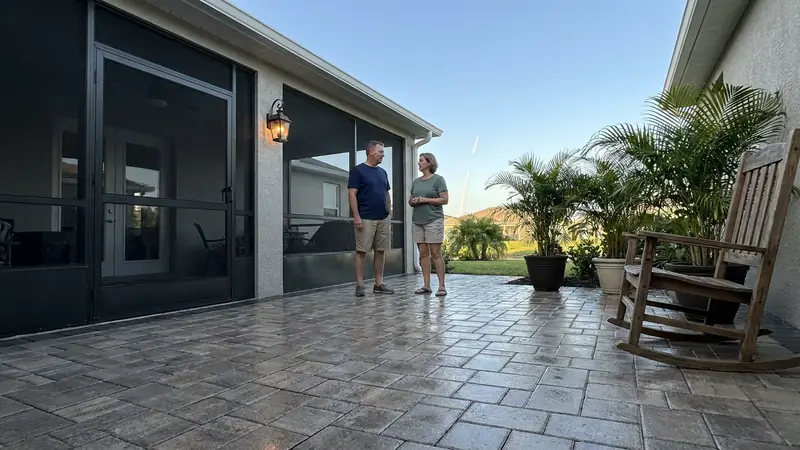
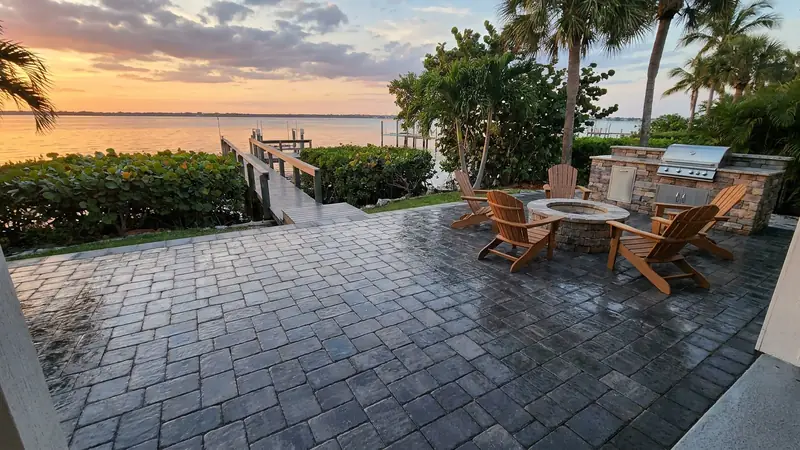
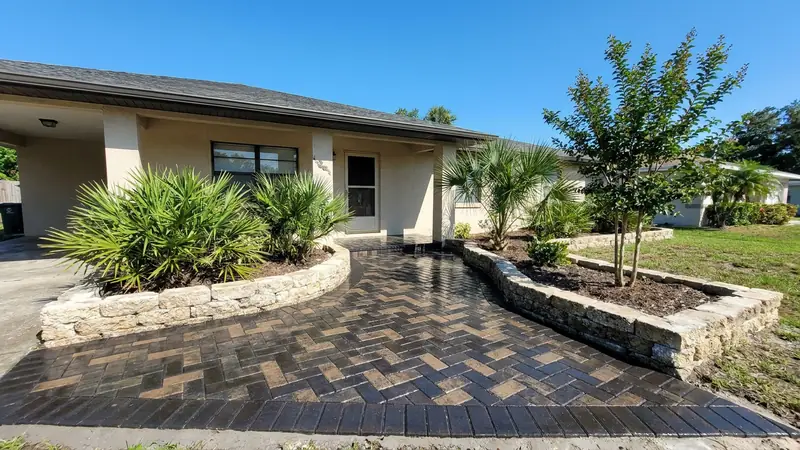
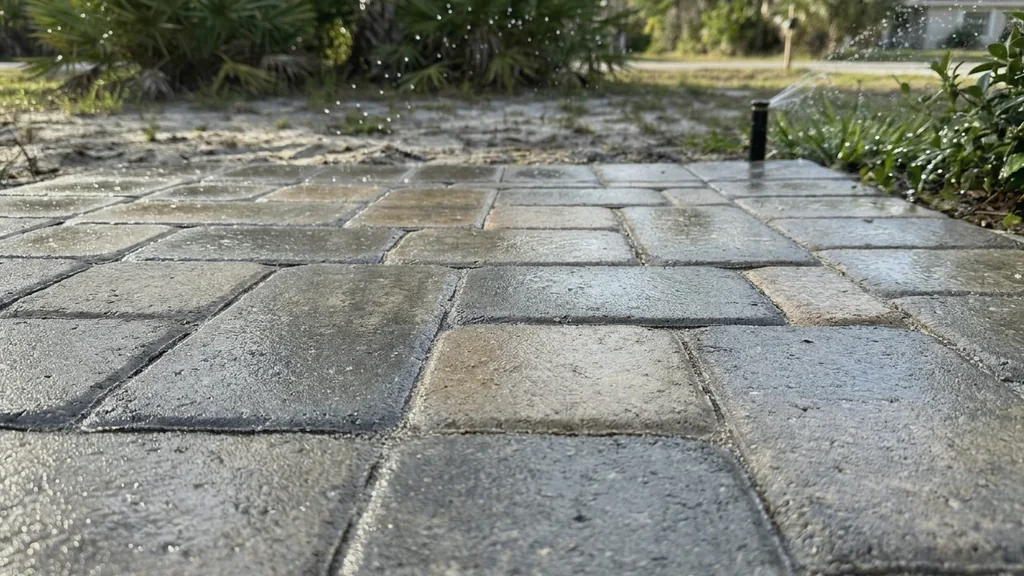
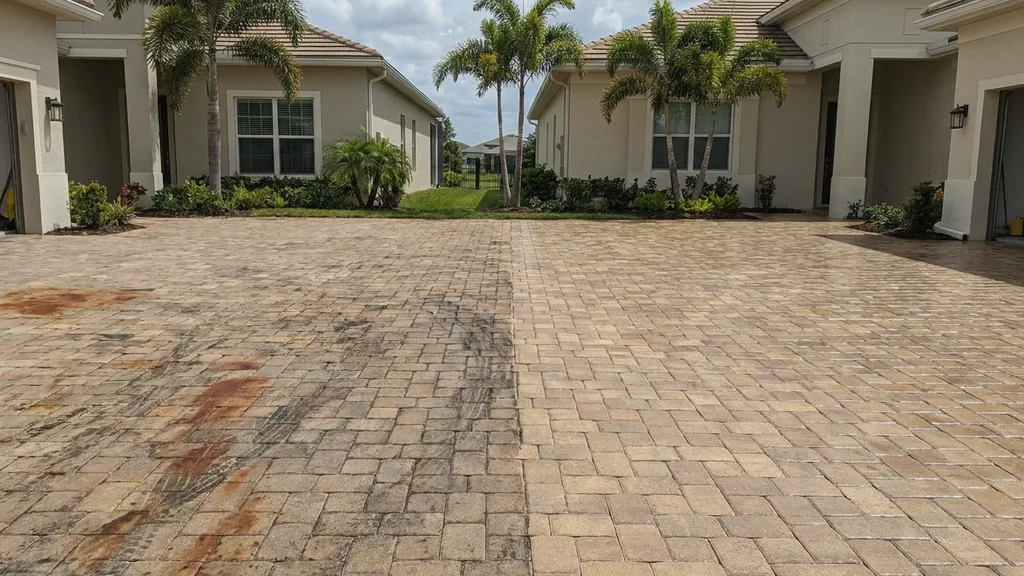
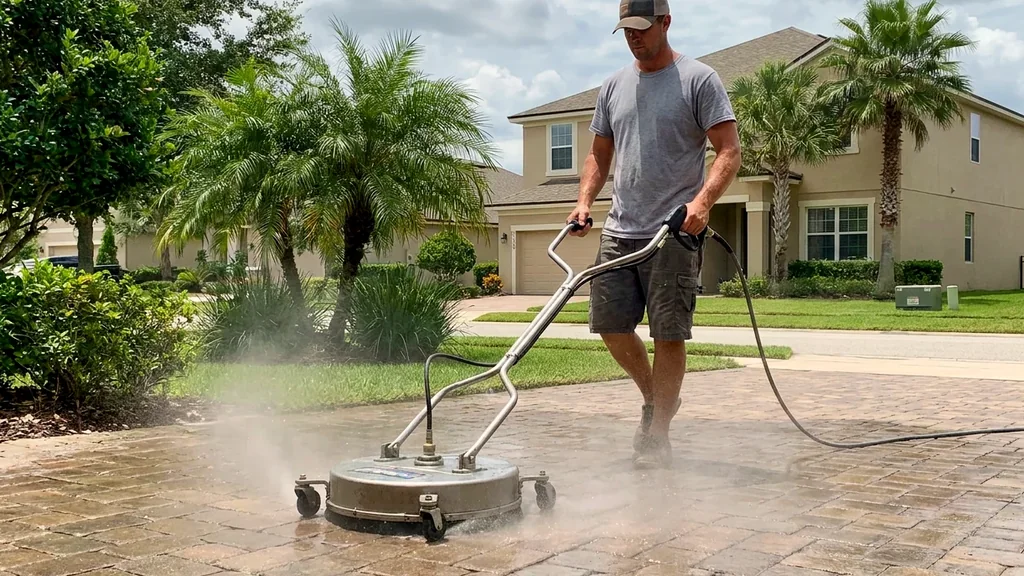
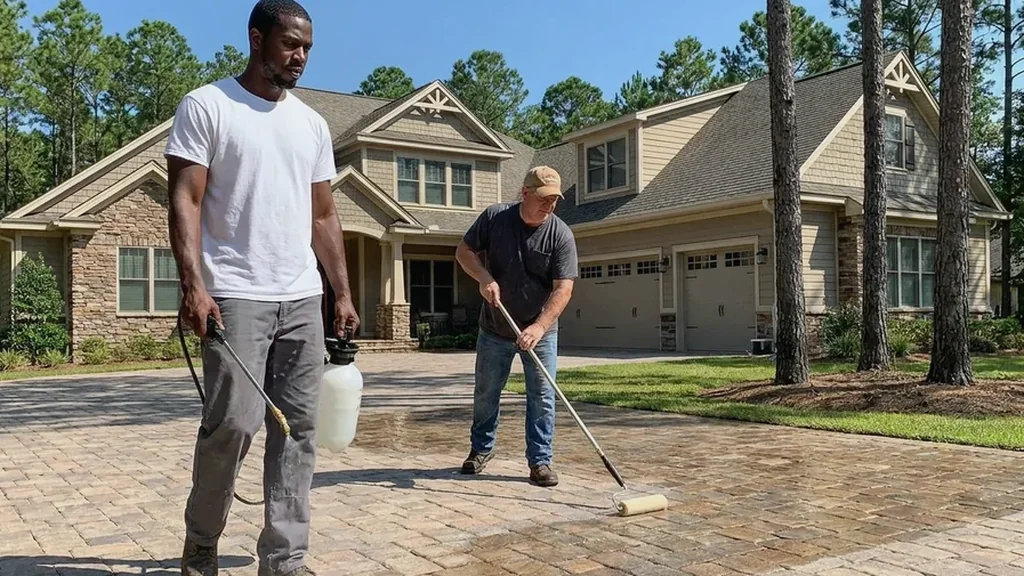
What do sealed pavers look like around New Smyrna Beach?
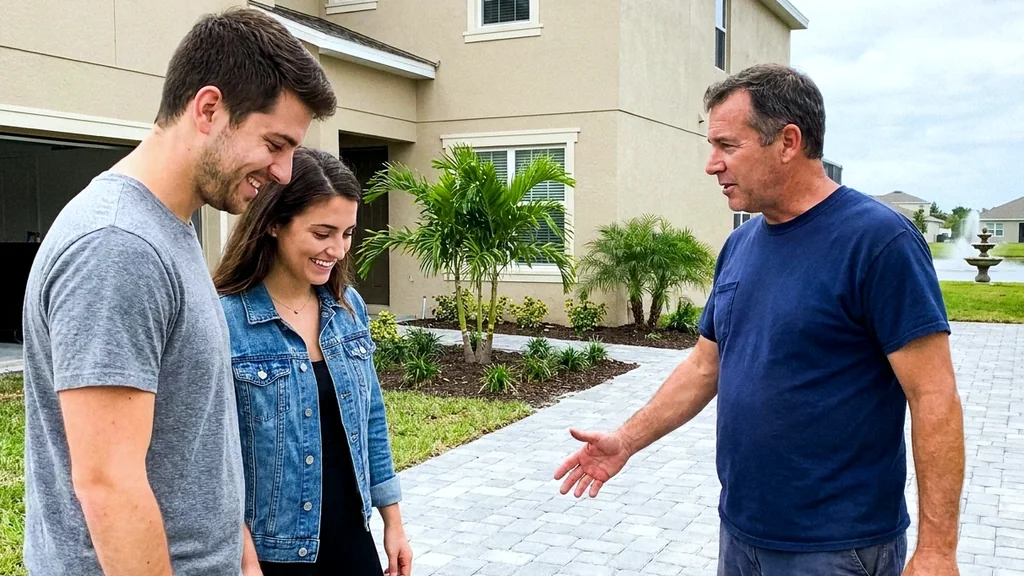
Why local matters in New Smyrna Beach
A contractor who works New Smyrna Beach knows the city is split by the Intracoastal Waterway, with a mainland and a beach side. Salt, shade and age of the home differ between them. Someone from inland may not ask the right questions. To talk with a contractor who already works Volusia County jobs, call (321) 416-1841.
Local crews also know the calendar. The rainy season runs from May to October, with frequent thunderstorms, and the dry season runs from November to April. That shapes when pavers are dry enough to seal. You can get your free estimate and ask which months suit your lot.
Second homes matter here too. With many weekenders and a high share of vacant units, a local contractor is used to working around owners who are away. That means a visit can be set for a time that fits your travel. If that is you, call (321) 416-1841 and share your dates.
The beach side and the mainland are linked by causeways, and traffic can slow a crew. A local contractor builds that into the day. That means fewer late arrivals and a cleaner sealing schedule. To check dates near you, call (321) 416-1841.
The city sees only about two freezes a year, and its summers are long, hot and stormy. That means sun and rain wear on pavers far more than cold does. A local contractor plans around that. To talk it through, call (321) 416-1841.
What should you know about New Smyrna Beach history before sealing pavers?
The city is old by Florida standards. Andrew Turnbull founded a colony here in 1768 with about 1,300 settlers, most from Menorca, and the city was incorporated in 1887. Henry Flagler's railroad arrived in 1892, and the town became New Smyrna Beach in 1947 when it annexed Coronado Beach. If your home is near the old colony ground, call (321) 416-1841.
The past shows up on Canal Street and at Old Fort Park, where ruins of uncertain origin stand near the marina. Flagler Avenue runs to the ocean, and Ponce Inlet, once called Mosquito Inlet, gives the city its ocean access. The area has lived under four flags. If one of these places is near your home, get your free estimate and name your street.
Today about 30,142 people live here, and 36.8 percent of them are 65 or older. Many owners plan upkeep with care. If your pavers are due for another coat, get your free estimate and tell the contractor when the last one went on.
Canaveral National Seashore starts where South Atlantic Avenue ends, and its beach runs 24 undeveloped miles along the barrier island. Past that point there are no more driveways, only dunes. If your home is near the south end of the beach side, call (321) 416-1841.
Prohibition brought rum runners through Mosquito Inlet in the 1920s, and moonshine stills hid on the river islands. Douglass Dummitt, remembered as the Father of the Indian River Citrus Industry, had groves in the area. If your home sits near the river, call (321) 416-1841.
Frequently Asked Questions
How much does it cost to seal pavers in New Smyrna Beach?
Published prices on this coast run $1.85 to $4.00 per square foot for cleaning, sanding and sealing. Salt film, shade growth and old sealer move the price within that range. The quote should list the square footage so bids can be compared. Stripping a failed coat or sealing a pool deck can lift the number. Salt air is an added consideration on the beach side, so mention yours when you ask for a price.
Can clean, sand and seal be done in one visit in New Smyrna Beach?
Often yes. That order is the standard sequence of a professional job, and many driveways and patios finish in one to two days. Repairs, stripping an old coat or a rainy stretch add time. You hear the plan and the price at the estimate. Cleaning and sand always come before the coat. Ask whether the crew plans one visit or two, since wet-sanded joints need time to dry before the coat.
How often should you seal pavers in New Smyrna Beach?
The span companies commonly quote runs two to five years between coats, and salt can shorten it. Salt air, strong sun and storms push a coastal driveway toward the shorter end. If water soaks into the surface and darkens it, a new coat is due. Color loss and low joints are other signs the coat has run its course. A contractor can confirm it at the visit. A quick spring rinse of the salt film helps a coat last.
Which sealer suits New Smyrna Beach pavers?
A water-based or solvent-based sealer, with the old coat deciding which can go on. Laying a water-based product over a solvent-based coat does not work. Before any work begins, ask which product and finish are planned. On a pool deck, ask for a product that handles chlorine and water. Water-based and solvent-based sealers differ in look and wear, so ask which one is on your pavers now.
Does salt air damage pavers in New Smyrna Beach?
It can. A Brevard company says salt air breaks down cheap sealers. Salt film on the surface is washed off before sealing so the coat bonds well. Pavers closest to the water are the first place to look for it. Salt can sit in the joints, so a rinse before sealing matters.
Is it worth sealing pavers in New Smyrna Beach?
For many owners, yes. A New Smyrna Beach company says sealing can slow moisture, salt and stain absorption, deepen color and help hold joint sand, though no sealer is permanent. A visit shows whether your surface is a good fit. An old invoice or product label from the last job is worth saving. A New Smyrna Beach company says no sealer is permanent, so plan on a recoat.
What if my old sealer is peeling?
Hazy or peeling sealer has to be removed before a new coat can bond. Sealing over a failed coat is a common cause of cloudy results. The contractor identifies the old product first. Keep in mind that stripping is a separate step. Peeling sealer has to come off before a new coat bonds, which adds to the quote.
Do sunken pavers need repair first?
Yes, because sealer preserves whatever shape is underneath. Broken or sunken pavers go first on the repair list. Show the contractor the low spots so they are included in the quote. Edging that has come loose is reset during the same visit. Reset pavers are checked for level once more before sand and sealer go on.
Nearby areas we serve
Ready for a Free Estimate in New Smyrna Beach?
Call (321) 416-1841 and tell us about your pavers.
Free, no obligation