
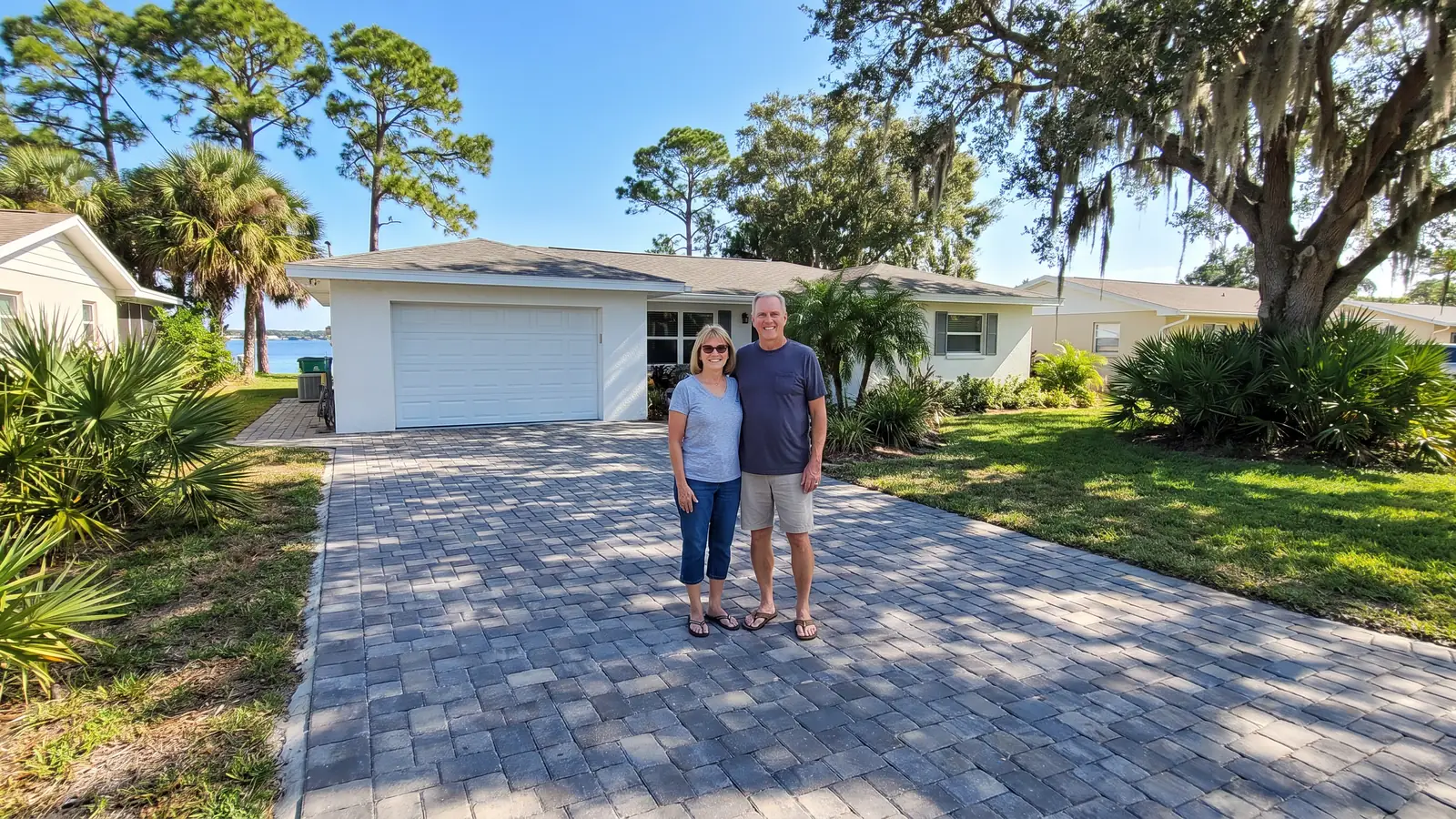
Paver sealing for Conway homes
Paver Sealing in Conway, FL
From Anderson Road to the Lake Conway shore, a free paver sealing estimate in Conway starts when you call (321) 416-1841.
- Brings out deeper paver color
- Fresh joint sand helps lock pavers in place
- Gives weeds less room to grow
- Makes the surface easier to keep clean
- Free estimate, no obligation
Request a Free Estimate
Free, no obligation.
Fast, careful paver sealing in Conway
Conway homeowners can arrange paver sealing from the blocks near Anderson Road to the streets along Conway Road and Curry Ford Road. The work covers driveways, pool decks and patios around Conway, from the first wash to the last coat, and the estimate costs nothing. To start, get your free estimate; a reply lands inside 1 business day, usually much sooner.
Picture the lanai floor after a damp week: green film across the pool deck and joints worn down to thin lines. Washing, fresh sand and a coat make that floor clean, even and safer for bare feet. Prefer a conversation to a form? Ring (321) 416-1841 and tell the contractor what you see out back.
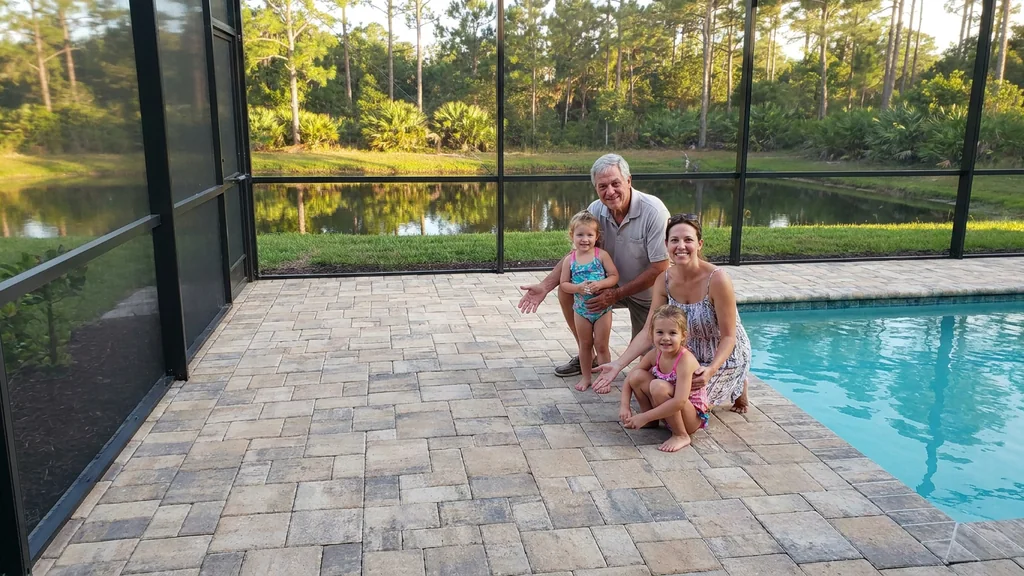
Why hire a local paver sealing contractor in Conway?
Lakes, pool decks and long-settled streets set Conway apart. A local contractor treats water and footing as the first questions, so you can get your free estimate and ask how that applies at your address.
Inspection, no invoice
A contractor measures and reviews your Conway surfaces free of charge. A written price comes before any decision, and a visit never costs a fee. Lakefront and inland lots get the same free visit.
A yardstick for bids
Published Space Coast pricing runs $1.85 to $4.00 per square foot for cleaning, new sand and sealing. Ask each Conway bidder to break out any rinse-water setup on its own line.
Traction before shine
Wet decks and lake patios need grip. Matte finishes bite better and look calm, while gloss wears smooth sooner. Ask for a sample patch. Walk the sample patch barefoot before choosing.
Take your time
Pick the day and the finish yourself. A Conway estimate carries no obligation, and replies come within 1 business day. If the forecast looks wet, wait for a dry week.
Get Your Free Estimate in Conway
Tell us about your pavers in Conway.
Free, no obligation
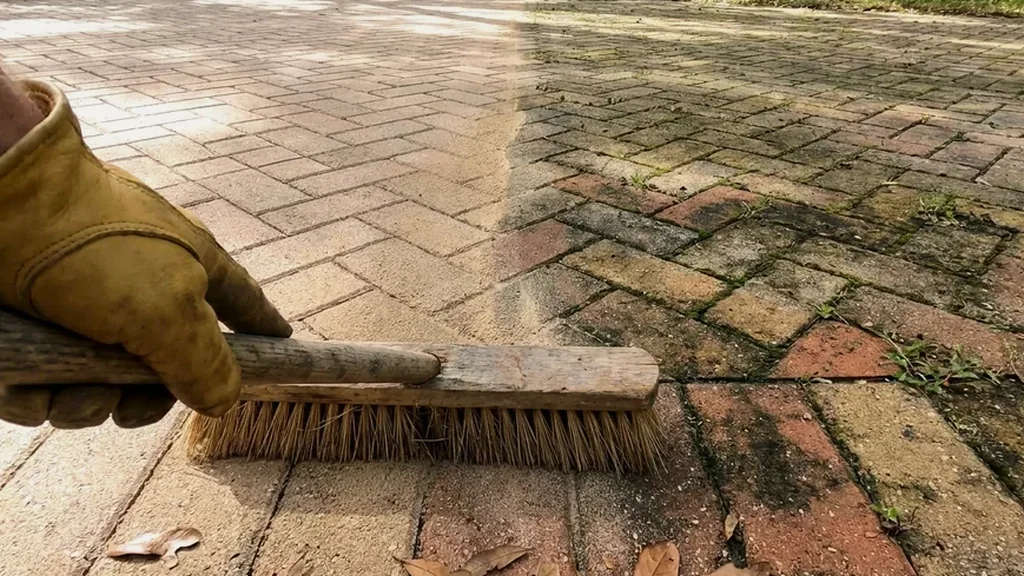
What paver problems show up most in Conway?
Slick green film near the lakes
Roughly 4.7 percent of Conway is water, and the Lake Conway chain sits close by in Belle Isle. Moist air and shade keep surfaces beside lanais and docks wet for long stretches. Algae follows, and a slick walkway is a real slip risk. The wash has to come first, because a coat laid over green film seals it in. Inland homes along Anderson Road stay drier, but shady side yards still collect film. Belle Isle, the city that holds the lake, has water covering more than half its area, which shows how much of the setting is wet. Surfaces beside the water and surfaces a few blocks inland age differently, so a quote for one rarely fits the other.
Wash water that must stay out of the lake
The Lake Conway district was created to protect the lakes' natural beauty and to regulate shoreline work. Dirty rinse water from a lakeside patio runs downhill toward the shore. Careful crews catch or redirect it, so lakefront lots can need extra setup. Ask where the lake-side runoff goes before you pick a date, because a plain answer tells you a lot about the company. Docks and boat ramps on the chain fall under district ordinances too, so a crew working near the water should know the local rules. Lake Conway is three bodies of water joined by canals, which means a shoreline job can sit beside several shorelines at once.
Old coats on long-settled streets
Conway counted 5,414 homes in 2000 and 5,464 in 2020, so nearly every house here is long settled. Several owners may have coated the same pavers. Layering the two sealer types fails, because a water-based product cannot sit over a solvent-based one. A small test patch can reveal what is there. The 2020 median age of 42.5 hints at many owners who have repeated the job. Homes near Conway Road and Anderson Road are mostly settled, and a coat applied years ago may have worn unevenly. Neighbors on the same street often remember what was used. A short walk around the house usually shows which pavers were coated and which were skipped.
Hollow joints after the summer downpours
NWS Melbourne dates the median start of the Orlando wet season at May 27 and says the heaviest rain falls from June to September. Heavy runoff over loose Florida ground carries sand out of the gaps between pavers. Once a joint goes hollow, the edges rock and weeds root in the dip, so new sand is the first repair. Look for a shallow channel along the curb or the garage apron, and have the crew probe a few gaps while you watch.
Slippery pool decks
Screens and shade keep a Conway pool deck damp from morning until late in the day. A shiny coat can turn glassy under wet feet, while a matte coat bites and keeps its calm look. Choose the deck finish separately from the driveway, lay a small test patch and walk it barefoot before the whole deck is covered. Pool chemicals and wet towels both act on that surface, so it ages faster than a driveway does.
Is paver sealing different on the lakes than inland in Conway?
Yes, because water changes how long pavers stay wet. Lake Conway is made up of three bodies of water joined by canals, and the city of Belle Isle holds the lake near the Conway area. Lanais, docks and pool decks near the water stay damp and pick up green film. Tell the contractor if you are near the water when you get your free estimate.
Inland streets near Anderson Road, Conway Road and Curry Ford Road dry faster and see more driveway wear than algae. The old brick Conway Road once followed Briercliff Drive, Curry Ford Road and Conway Road out to Anderson Road. Homes along those routes are mostly settled, with 5,464 housing units counted in 2020 and only 3.8 percent of them vacant. Call (321) 416-1841 and name your street so the contractor can plan the cleaning.
Most Conway households are long-established, since the 2020 median age was 42.5 and 51.8 percent of households were married couples. Many owners have lived in the same house through several coats of sealer. That history is worth sharing with the contractor, because it hints at what is on the pavers. When you know what you have, get your free estimate and ask for an estimate.
What does paver sealing cost in Conway?
Published Space Coast pricing for cleaning, new sand and sealing runs $1.85 to $4.00 per square foot. Algae near the water, old layers and thin sand shift a Conway quote inside that range. A pool deck and lanai join the driveway at the same rate. To price your own lot, get your free estimate.
Setup is part of the price too. A patio at the water's edge can call for a crew to trap or steer its rinse water, which costs time. Taking off a failed layer costs more than the range. Call (321) 416-1841 to find out which of those apply to a lot like yours.
| Paved area | Typical example | Clean, sand and seal |
|---|---|---|
| 300 sq ft | Small patio or walkway | $555 to $1,200 |
| 600 sq ft | Two car driveway | $1,110 to $2,400 |
| 1,000 sq ft | Large driveway or pool deck | $1,850 to $4,000 |
| 1,500 sq ft | Driveway plus pool deck | $2,775 to $6,000 |
Math based on the $1.85 to $4.00 per square foot that Space Coast paver companies publish. Your contractor sets the actual price after seeing the surface. Repairs, leveling and stripping failed sealer are usually extra.
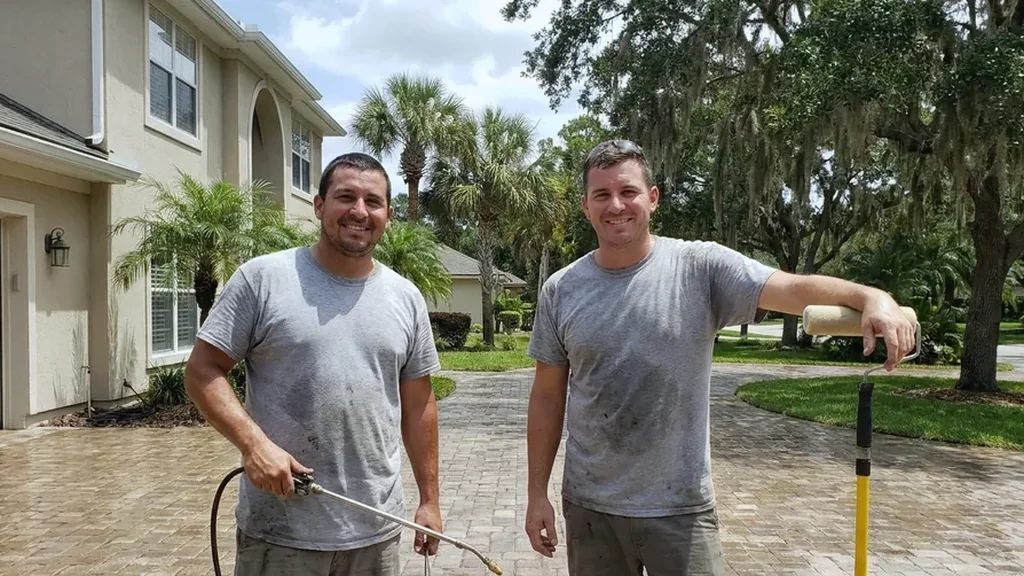
How does a paver sealing job work in Conway?
Start at the water
The crew begins on the lake side of the property and watches where runoff travels, which corners stay damp and whether any pavers have sunk. Sunken units are lifted and reset first, since a coat would lock the dip in. Whatever finish is already there gets identified, because it limits the next product. Mention any stains you want gone.
Rinse carefully
Pressure rinsing removes algae, grit, rust and oil. On lakefront lots the runoff is caught or steered away from the shore, and spray stays off plants, screens and doors. Pool decks are rinsed thoroughly so no cleaner lingers. The surface looks lighter even before any sealant goes on. Scrubbing stops short of beds and lawn, so plants are not washed with cleaner.
Restore the sand
The rinse takes sand with it, so fresh sand is swept into each joint. Heavy rain over loose Florida ground explains why Conway joints thin. A last sweep leaves a flush surface. Joints open for years may need more time. Sand that is swept in but never settled washes out again, so the crew tamps and sweeps until the joints sit level.
Let it dry out
Pavers must be bone-dry before a coat goes on. Once the wet season begins in late May, afternoon storms are routine, so crews start at first light and stop when clouds gather. A shaded lanai beside the water can stay damp long after the driveway has dried, so the crew checks it by hand.
Seal for grip
One even layer goes on in your chosen finish, and a grippier pick for the pool deck. Cars and bare feet stay off until the crew says go. Write down the product and the day for the next coat, and keep pets off until it dries. A look the next day confirms an even cure. Cars wait until the surface can take weight, and the time depends on the product and the weather.
Complete paver services in Conway
A Conway job has four phases: rinse, restore sand, dry out, seal. Sealing is last, so no dirt hides underneath. Lakefront lots add a setup phase for runoff. To hear how long each phase runs on your lot, call (321) 416-1841.
Driveways take wheels and sun. Lake patios and pool decks stay damp and turn green. Wet surfaces want steady grip, and matte tends to deliver it. Describe your surfaces when you get your free estimate.
Choosing a sealer means answering two questions: what chemistry and what look. Whatever a previous owner put down decides the first answer, since water-based product will not bond to a solvent-based coat. The second is taste, with matte reading subtle and gloss reading bright but wearing sooner. Call (321) 416-1841 to weigh both for your Conway house.
Conway's calendar follows the rain. The wet season starts near the end of May and the dry season returns by mid October, which makes fall and winter the steadier months. A summer job starts at sunrise and holds a spare day in case a storm shuts it down. To pick a day for your street, get your free estimate.
Questions to ask before you hire
- How do you handle the salt air and humidity near the water?
- What do you do about the green algae in the shady corners of my driveway?
- How do you protect my landscaping and pool screen from overspray?
- Does the quote cover pressure cleaning, joint sand and any paver repairs?
- Do you seal with a matte finish or a wet look, and can I choose?
- What does the estimate say about extra charges for stripping an old sealer?
- How often will the pavers need sealing again in this climate?
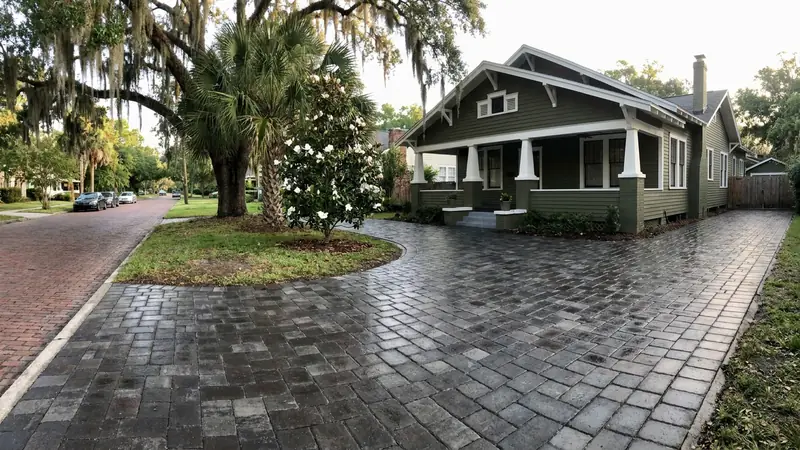
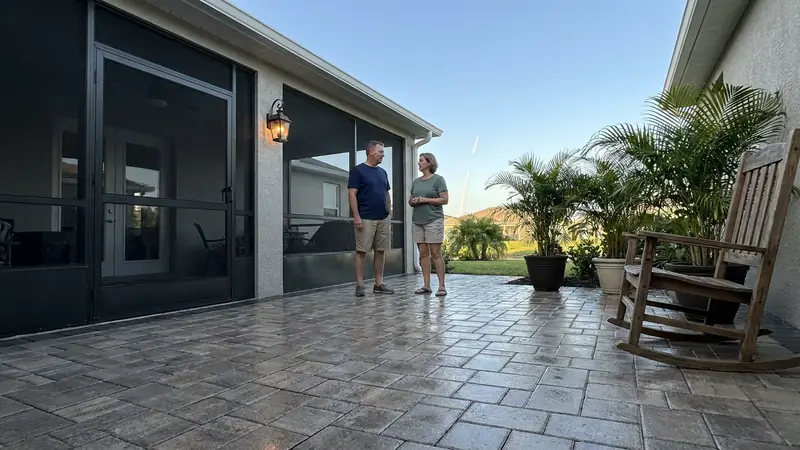
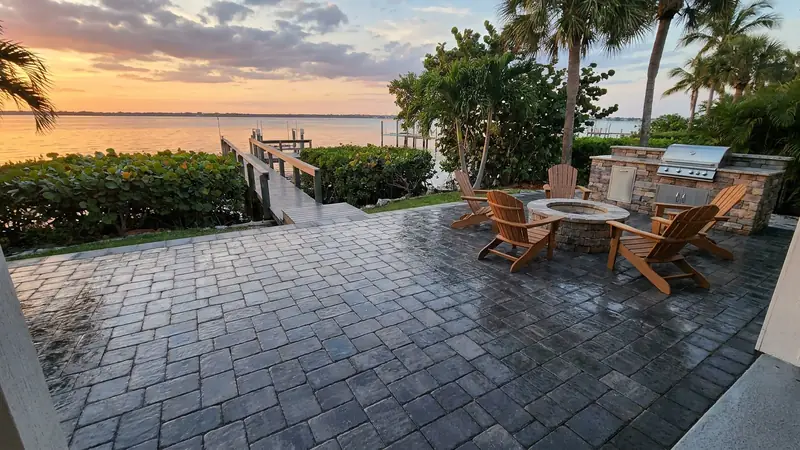
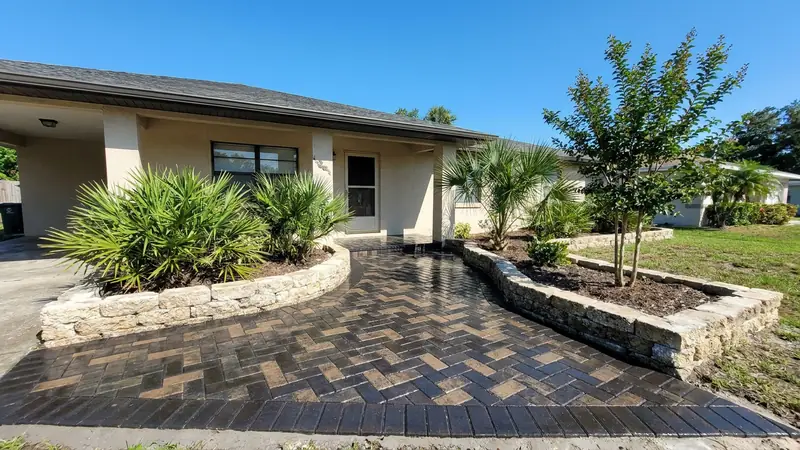
What do sealed pavers look like around Conway?
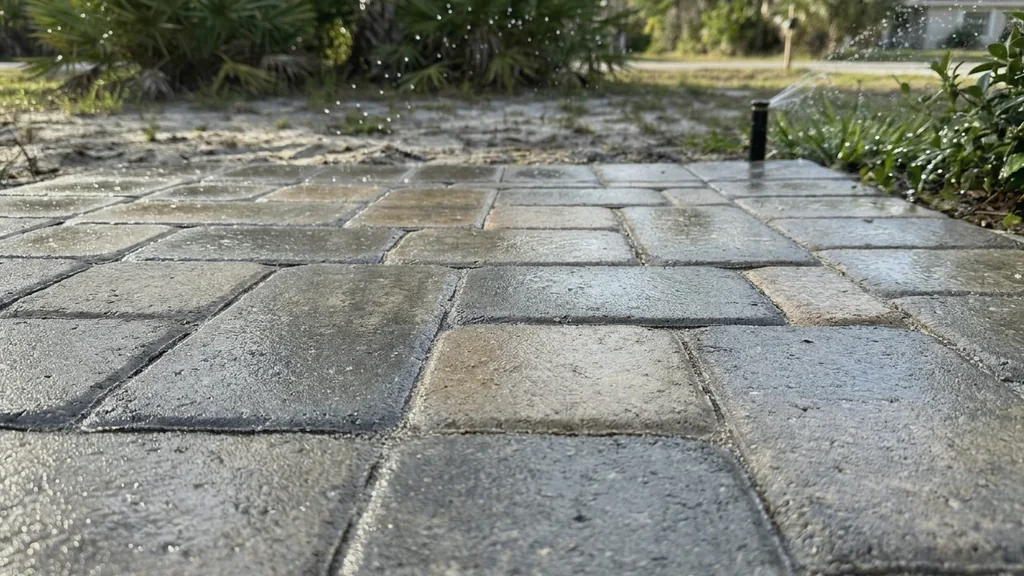
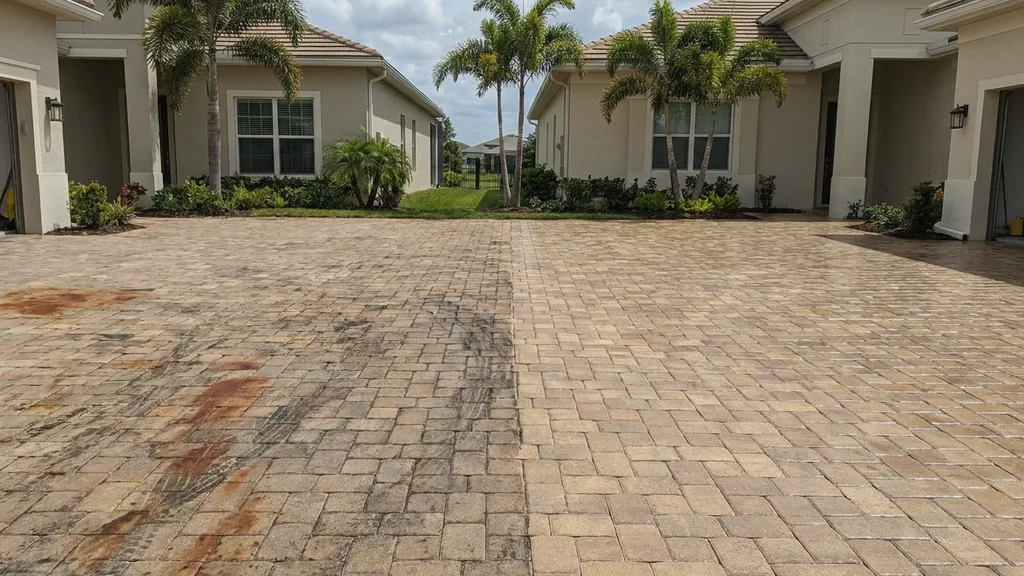
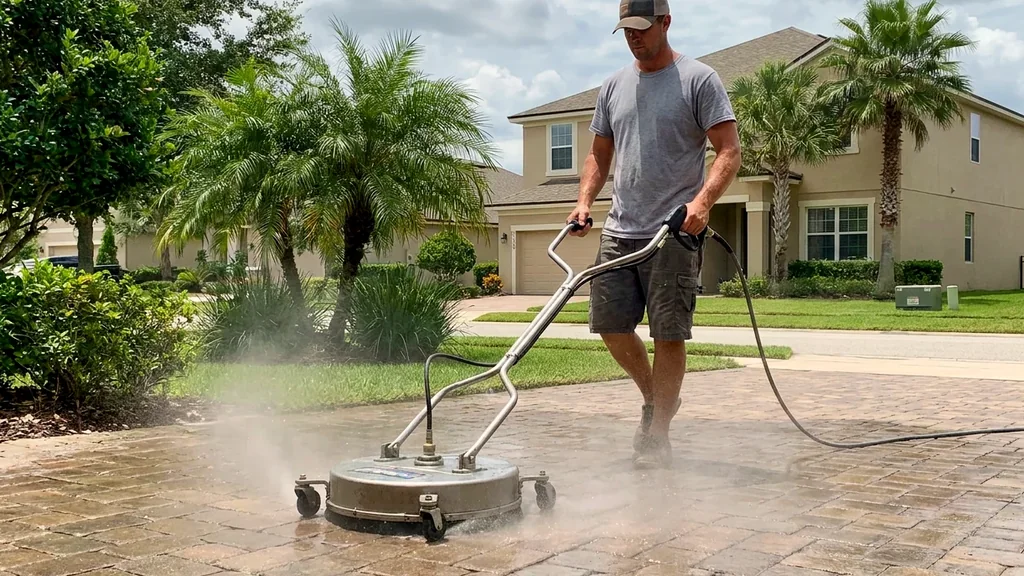
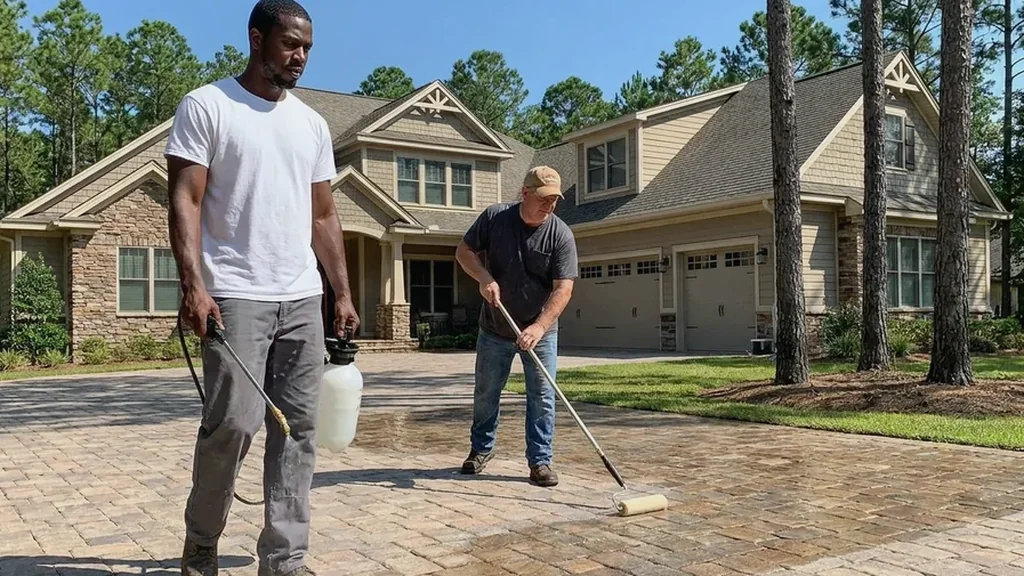
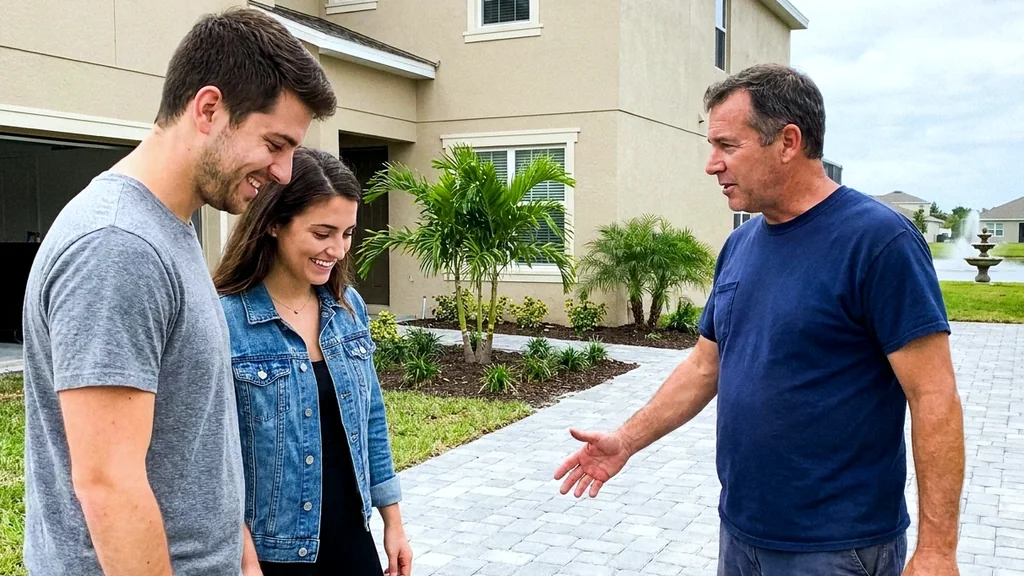
Why local matters in Conway
Local crews around Conway ask two things first: how close the lakes are, and where the rinse water runs. Those answers set how much preparation comes before any washing. A company from the far side of the county may never think to ask. To reach a contractor who works near the Conway lakes, call (321) 416-1841.
Rain sets the pace in Conway more than anything else. A patio beside the water can hold its dampness for hours after a storm passes, and a careful crew would rather reschedule than coat a wet surface. Ask how a company decides when to postpone; you can get your free estimate and bring that question.
Conway is a settled place, and owners tend to want straight answers and tidy work around the pool and lanai. A contractor who works here explains each step, gives exact times and cleans up after the job. To see how that feels, get your free estimate; asking questions does not commit you to anything.
What is the story behind the Conway name and its brick road?
A longtime resident says the name Conway comes from Wales, and the place was settled in the 1850s. A brick road, one of the first five paved highways in Orange County, ran from Orlando out to Anderson Road, the center of Conway. It followed what is now Briercliff Drive, Curry Ford Road and Conway Road, and some of those names are still on today's street signs. If you live near any of those roads, get your free estimate.
The lakes have their own history. In 1957 a Florida law created the Lake Conway Water and Navigation Control District, because Belle Isle had no say over the lake. The district still regulates shoreline work, docks and boat speed, and Belle Isle's government began in 1924, went quiet in 1928 and returned in 1954. Near the lakes, the old road or Anderson Road, call (321) 416-1841 and name your street.
Frequently Asked Questions
What does a Conway paver sealing job usually cost?
Published Space Coast pricing runs $1.85 to $4.00 per square foot for cleaning, new sand and sealing. Algae, old coatings and thin sand move a Conway quote. Get the area in writing and compare a few written estimates. Extra lakefront setup, if any, should be itemized. A lanai or second walkway grows the total while the rate holds. Ask whether rinse-water control is included, since lake lots may need it.
How many years between seal coats on Conway pavers?
Expect two to five years from a coat, as local companies commonly say. A soggy pool deck or a busy drive wants the short end of that range. Sprinkle water on the surface each spring; if it soaks in, the coat has run its course. Gloss can look great on new pavers and tired on scuffed ones. Pavers that stay damp under trees or screens usually need the earlier end.
Should you seal pavers after power washing in Conway?
Yes, once sand is back in the joints. Cleaning strips joint sand, so it is replaced before sealing. The surface must also be completely dry, which can take a day in a shaded Conway corner, so allow for that when you book. Get the drying time confirmed first. Pool decks under a screen enclosure are often the slowest to dry.
Do patio pavers need to be sealed in Conway?
No rule requires it, though a coat helps patio pavers resist stains and fading. Damp patios by the lakes gather a slick film, and a sealed surface rinses off easier. A quick inspection tells you for certain. Sun and rain both reach a patio, so the benefit shows quickly. Patios beside the water get the film first, so they show the difference soonest.
What do professionals use to seal pavers in Conway?
Two families of product are common: water-based and solvent-based. Which is safe depends on what a previous owner used, because water-based sealer will not bond over a solvent-based coat. Ask for the brand and finish in writing so the next coat can match. Thin layers dry cleaner than heavy ones. Conway's older streets mean a hidden corner is the cheapest place to learn what was used before.
Can a Conway pool deck be sealed without making it slippery?
Yes, with a finish picked for footing. Matte products tend to look calm by water, while gloss can feel slick. Mention anyone who walks the deck barefoot and ask about traction first, since children and grandparents feel it most. A test spot is a reasonable ask. Ask for traction on the deck and a different look on the drive if you prefer.
Will rinse water from a Conway pressure wash reach Lake Conway?
A careful contractor keeps it out. The Lake Conway district exists to protect the lakes and regulate shoreline work, so lakefront jobs can call for rinse water to be caught or diverted. Ask where that water goes, and expect a clear answer. Some lakefront owners also check dock and shoreline rules before any big job. A written estimate can state how runoff will be caught.
What should lakefront owners ask a contractor before booking in Conway?
Ask how rinse water will be handled, whether the crew has worked near shorelines and how the schedule moves around storms. The Lake Conway district exists to protect the lakes, so a plain answer matters. Also ask for the product name and the finish for wet areas. A plain written answer is a good sign.
Do older Conway homes need extra prep before sealing?
Often. Conway had 5,414 homes in 2000 and 5,464 in 2020, so most were already standing, and their pavers may carry coats from several owners. The crew tests a hidden corner, repairs sunken spots and refills joints. Tell the contractor roughly when you bought. The test corner is chosen out of sight, so the look of the yard is not affected. The 2020 census counted 5,464 housing units here, with only 3.8 percent vacant, so most driveways have an owner who can say what was done.
Do the lakes keep Conway patios wet longer than inland yards?
Usually. Water and shade hold moisture, and Conway has 4.7 percent of its area in water, with the Lake Conway chain nearby in Belle Isle. A lakeside patio can stay damp long after a driveway has dried. Expect the crew to check by hand before it seals. A moisture check by hand is quick and free.
Can a Conway pool deck and driveway get different finishes?
Yes, and many owners choose that. A pool deck wants traction, so matte is the common pick, while a driveway can take either finish. Ask the contractor to price both choices. Keep the product names in one place for the next coat. Two finishes mean two product names, so write both down.
Why do Conway storms leave pavers dirty so quickly?
Afternoon thunderstorms arrive most summer days, according to NWS Melbourne, and fast runoff carries leaf litter, grit and sand across lakeside surfaces. Pavers near the water also stay damp, which helps film settle. A coat makes the surface easier to rinse clean. After a storm, a quick sweep keeps the surface from staying dirty.
Nearby areas we serve
Ready for a Free Estimate in Conway?
Call (321) 416-1841 and tell us about your pavers.
Free, no obligation