
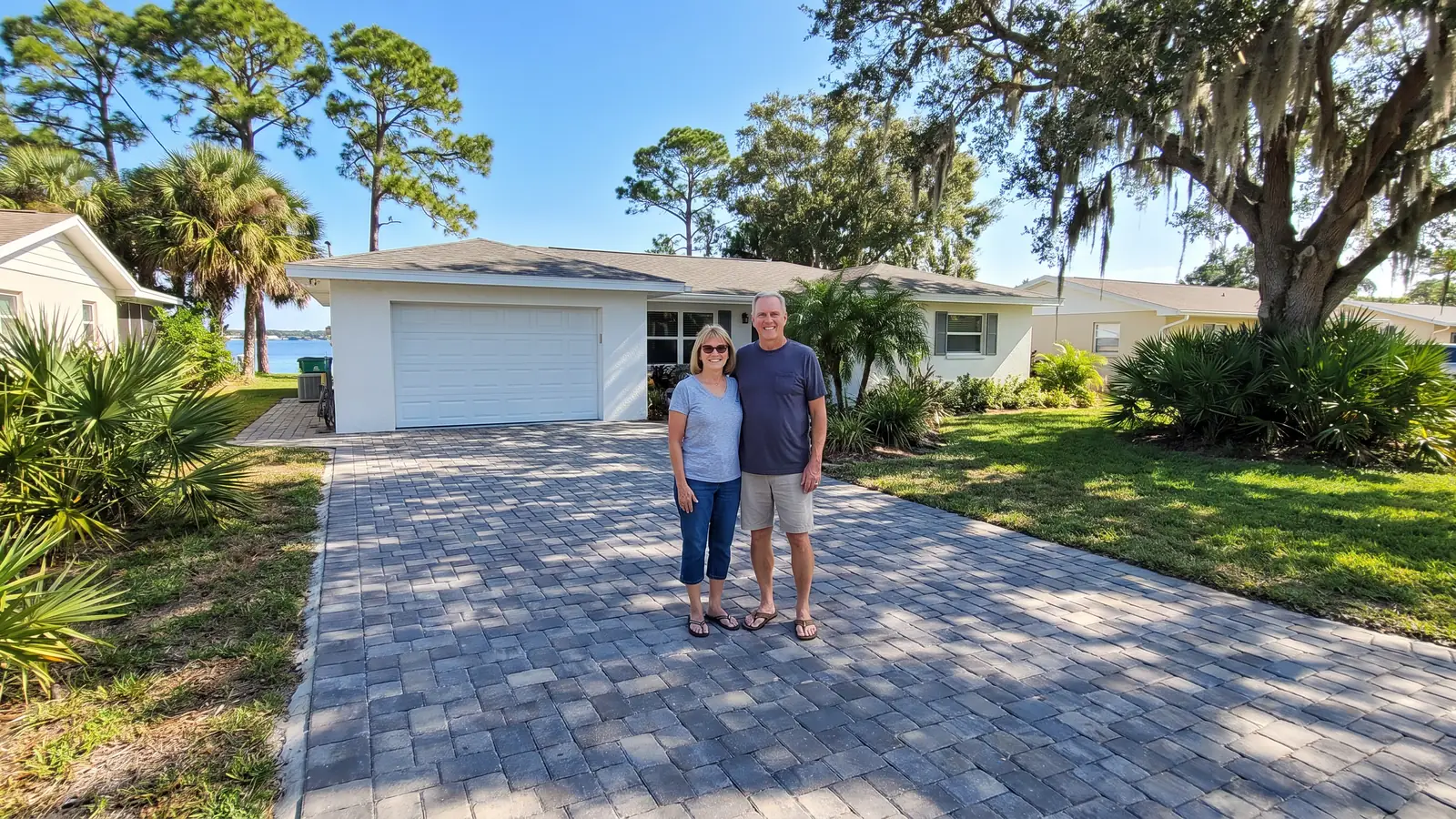
Paver sealing for Cocoa homes
Paver Sealing in Cocoa, FL
From Cocoa Village to Indian River Drive, a free paver sealing estimate starts when you call (321) 416-1841.
- Brings out deeper paver color
- Fresh joint sand helps lock pavers in place
- Gives weeds less room to grow
- Makes the surface easier to keep clean
- Free estimate, no obligation
Request a Free Estimate
Free, no obligation.
Fast, careful paver sealing in Cocoa
Paver sealing in Cocoa covers everything from the streets around Cocoa Village to the homes along Indian River Drive. Driveways, walkways and pool decks are washed, topped up with sand and sealed after a free first look. Cocoa homeowners who get your free estimate hear back within 1 business day, usually much sooner.
Maybe your driveway has gone dull and green at the edges, and the joints have thinned to bare lines. A wash, fresh sand and a new coat bring the whole surface back to one even color. Calling is fine too: (321) 416-1841 reaches a contractor who will ask what you see on the driveway, walk or patio.
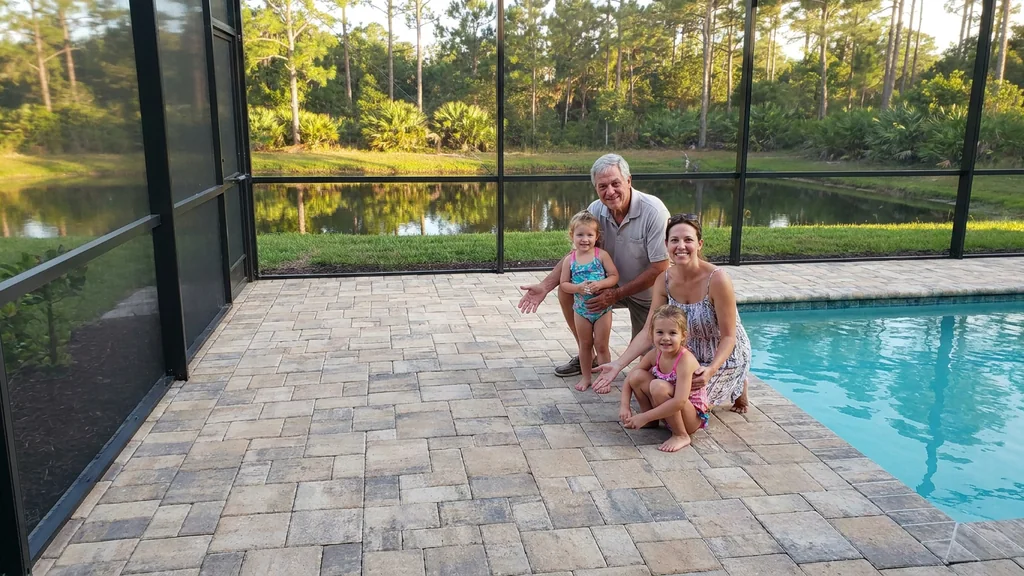
Why hire a local paver sealing contractor in Cocoa?
Cocoa sits on the Indian River Lagoon and holds homes from every decade since the space boom. A local contractor knows how both affect a sealing job, so get your free estimate to hear how that fits your block.
Look before you pay
Someone measures your pavers and reviews the surface, free of charge. A written price arrives before any commitment.
Know the going rate
Brevard companies list $1.85 to $4.00 per square foot for cleaning, sanding and sealing. Use it as your yardstick in Cocoa.
Choose how it looks
Matte stays natural, while wet look gleams and shows scuffs faster. Pick whichever suits your house.
Say yes on your terms
Dates, finish and the final go-ahead are all yours. Nothing is owed after a Cocoa estimate.
Get Your Free Estimate in Cocoa
Tell us about your pavers in Cocoa.
Free, no obligation
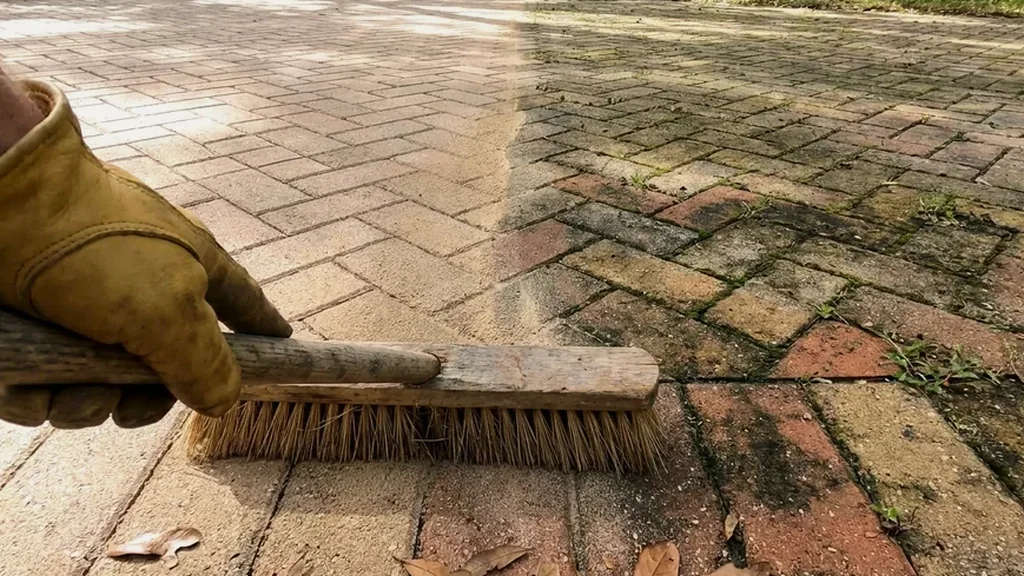
What paver problems show up most in Cocoa?
Green film beside the river
Cocoa borders the Indian River Lagoon, a water body averaging just 4 feet deep. Moist air drifts inland, and concrete in the shade never fully dries. Algae moves in and a walkway turns slick. Washing comes first, since sealer would lock the green in place. A slick film is a slip risk as well as an eyesore, and it often shows first on the north side of the house. If the first pass leaves a ghost of green, ask for the shaded side to be scrubbed a second time.
Joints emptied by hard rain
Hard rain strips joint sand fast in Cocoa. NWS Melbourne dates the median start of the wet season at May 28, and storms follow on most summer days. Water streams across a smooth driveway and drags loose sand out of the joints, and mostly sandy Florida soil gives it nothing to cling to. Open joints invite weeds and shifting, so new sand goes in before any sealer. After a few rainy summers, bare lines along the edges are common.
Water that sits after a storm
Brevard's highest point, at 83 feet, is in Cocoa, yet water covers 13.46 percent of the city. A flat drive or a low patio corner can hold a puddle long after the clouds clear. Sealer needs a dry surface, so one slow spot can set the schedule for the whole job. Ask the contractor to stand in that spot with you after a rain, so the drying time is planned instead of guessed. Mark the edge of the puddle with chalk after a storm, so the crew can see it on the visit.
A coat nobody remembers
Cocoa grew from 3,098 people in 1940 to 12,244 in 1960, and the homes built then are decades old. A house that changed hands may hide sealer from an owner nobody met. Because a water-based sealer will not bond to a solvent-based one, the contractor first finds out what is on the pavers. A small test patch shows how an old coat reacts before the whole driveway is committed. Knowing the answer saves a failed coat later.
Scuffs on open driveways
Tires and sun hit the top layer first, especially where no tree gives shade. A wet look shows every scuff sooner than matte. Companies commonly quote two to five years between coats, and a busy Cocoa driveway tends toward the short end. Pool decks and lanais get the same sun, so the contractor looks at every surface. Ask for a small test spot if you cannot decide between the two finishes. A spring test with a garden hose shows whether water beads or soaks in.
Does paver sealing change between Cocoa Village and the newer streets?
Yes, because the age of the home changes what sits under the pavers. Cocoa Village is the historic downtown, running from Florida Avenue to Stone Street and out to Riverfront Park. Courtyards and walks there are often small and tucked behind older buildings, so a contractor carries gear in by hand. Tell the contractor your block when you get your free estimate.
Along Indian River Drive the county road runs beside the river, so many lots sit close to the water. Pavers there stay damp and pick up green film faster than pavers on a dry rise. The Porcher House on Delannoy Avenue, built of coquina rock, shows how masonry meets the ground in this part of town. Mention stone walls when you call (321) 416-1841.
Farther west, US 1, Clearlake Road and I-95 mark the busier edges of Cocoa. The 2020 census counted 9,182 housing units, and 10.6 percent were vacant, so a few driveways may have sat unused with leaf stains and weeds. A first wash on those can take longer, and an honest estimate says so. To get one, get your free estimate.
What does paver sealing cost in Cocoa?
The published Brevard range is $1.85 to $4.00 per square foot for cleaning, sanding and sealing. Inside that band, a Cocoa quote moves with the amount of green growth, how much sand is missing and whether an old coat must come off. A pool deck or walkway added to the driveway raises the total, not the rate. For a figure tied to your address, get your free estimate, and the estimate is free.
Getting equipment in can change the number as well. A wide driveway off Clearlake Road is simple, while a Cocoa Village courtyard may mean hauling hoses by hand. Removing a failed coat is billed on top of the range. Call (321) 416-1841 and ask which of these apply before any date is set.
| Paved area | Typical example | Clean, sand and seal |
|---|---|---|
| 300 sq ft | Small patio or walkway | $555 to $1,200 |
| 600 sq ft | Two car driveway | $1,110 to $2,400 |
| 1,000 sq ft | Large driveway or pool deck | $1,850 to $4,000 |
| 1,500 sq ft | Driveway plus pool deck | $2,775 to $6,000 |
Math based on the $1.85 to $4.00 per square foot that Space Coast paver companies publish. Your contractor sets the actual price after seeing the surface. Repairs, leveling and stripping failed sealer are usually extra.
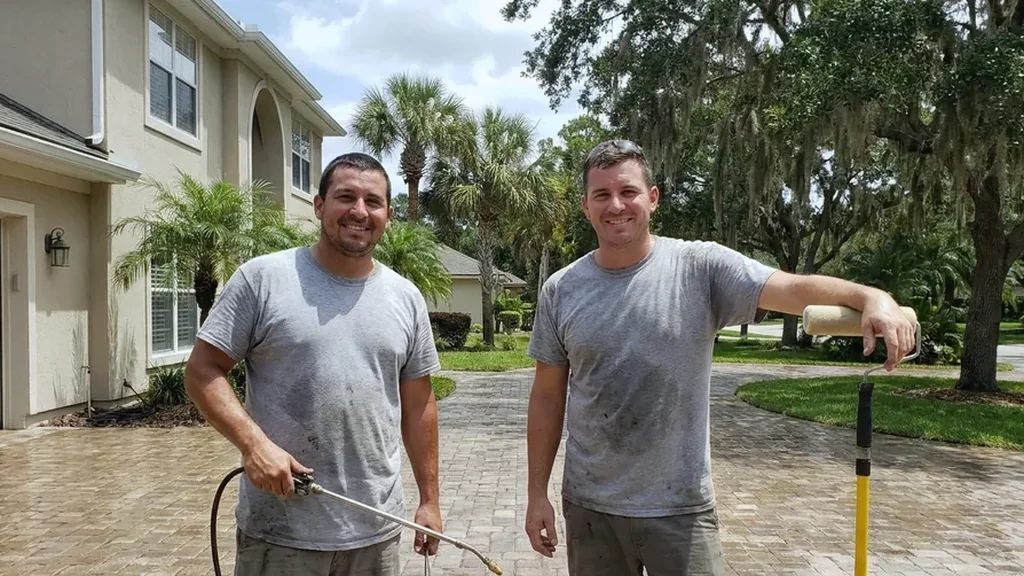
How does a paver sealing job work in Cocoa?
Walk the property
The contractor starts at the curb and walks the driveway, walkway and any pool deck. They watch where water runs off, which corners stay shaded and whether pavers have sunk or lifted. Repairs happen before sealing. They also ask if a coat was ever applied, because the answer decides which sealer is allowed. Bring up stains you want treated and any spot where water pools after rain. Mention any coquina or stucco beside the pavers, so the rinse can be chosen to suit.
Clean the surface
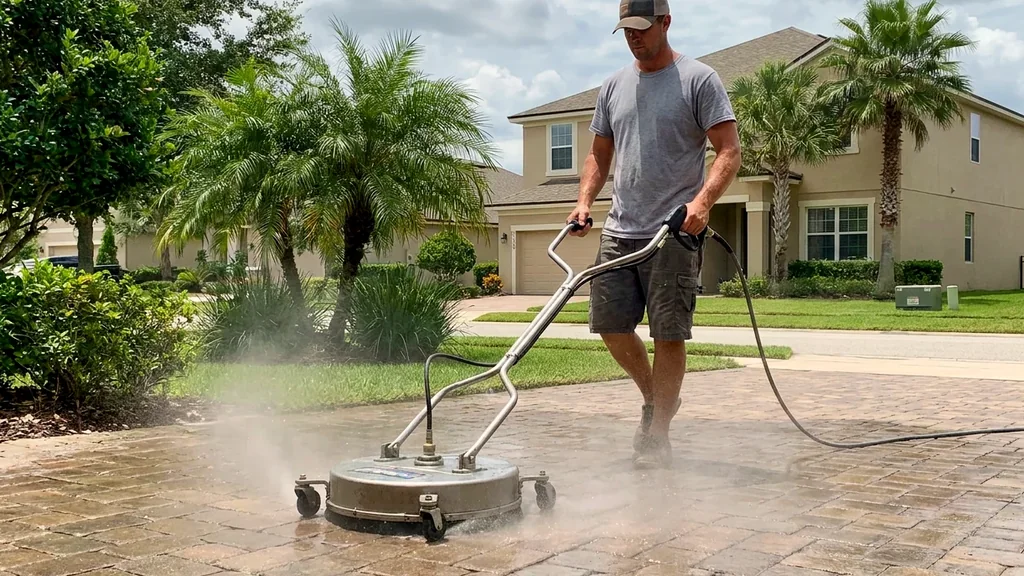
A thorough wash follows. It removes algae from damp edges, film left by storm runoff and stains such as rust or oil. Water is aimed away from older wood and masonry beside the house, which matters most near river-side homes. The aim is a clean, even surface that sealer can grip. Walls and doors stay dry, and the spray is angled away from them.
Refill the joints
Washing takes sand along with the dirt, so the joints get topped up before any sealer goes down. In Cocoa's loose sandy ground, empty joints let pavers drift and let weeds start. A broom finishes the job. Fresh sand also keeps neighboring pavers tight against one another. The fill is checked at each corner and along each edge before the crew moves on.
Confirm it is dry
Damp pavers wait. Storms arrive most summer afternoons, so Cocoa crews often begin at first light and pause when clouds build. Patios in shade take longest to dry, and the contractor checks them by hand and by eye, since sealer over dampness can turn cloudy.
Apply and protect
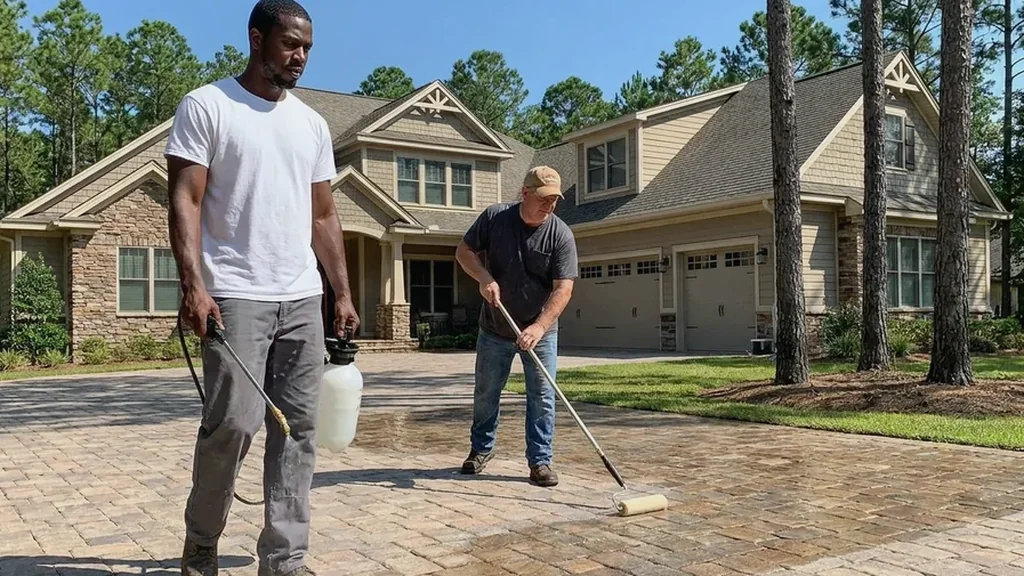
Sealer goes on in an even coat, in the finish you chose beforehand. Feet and tires stay off until the contractor gives the word. Write down the product and the date, so the next coat lines up in a few years. Pets and kids stay off until the surface is cleared for use. The product label and the date go into one folder, ready for the next coat.
Complete paver services in Cocoa
Think of a Cocoa sealing job as four moves. Wash first, then replace the sand, wait for the surface to dry and finally seal. That order keeps dirt from being trapped under the coat. Call (321) 416-1841 to hear how long each move takes on your lot.
Driveways face tires and sun, and walks under trees stay wet and go green. Pool decks and lanais need a finish with good footing, which usually means matte, and courtyards beside older masonry need gentle rinsing. Tell the contractor your mix of surfaces when you get your free estimate.
Picking a sealer is a matter of base and finish. If a solvent-based coat is already down, water-based sealer cannot cover it, so the crew finds that out first. As for finish, matte stays natural and a wet look gleams but shows scuffs faster. Call (321) 416-1841 and talk it through for your Cocoa home.
Cocoa's rainy season is the thing to plan around. By NWS Melbourne's median dates it opens May 28 and closes October 17, so fall and winter dates hold steadier. A summer job is still possible with an early start and a flexible day. To pick a date that suits your street, get your free estimate.
Questions to ask before you hire
- Does the quote cover pressure cleaning, joint sand and any paver repairs?
- Do you seal with a matte finish or a wet look, and can I choose?
- Can you remove the rust stains from my irrigation before sealing?
- Will you check the forecast and move the job if a storm is coming?
- Can the pool deck be sealed without making it slippery when wet?
- Do you sand the joints with polymeric sand after the wash?
- How do you protect my landscaping and pool screen from overspray?
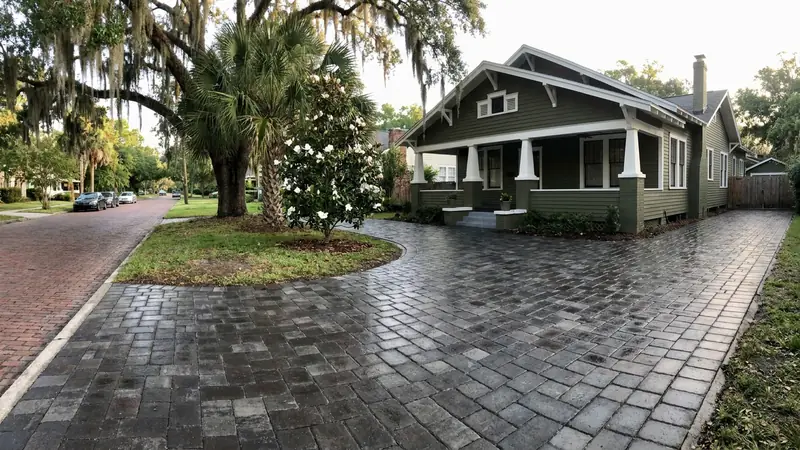
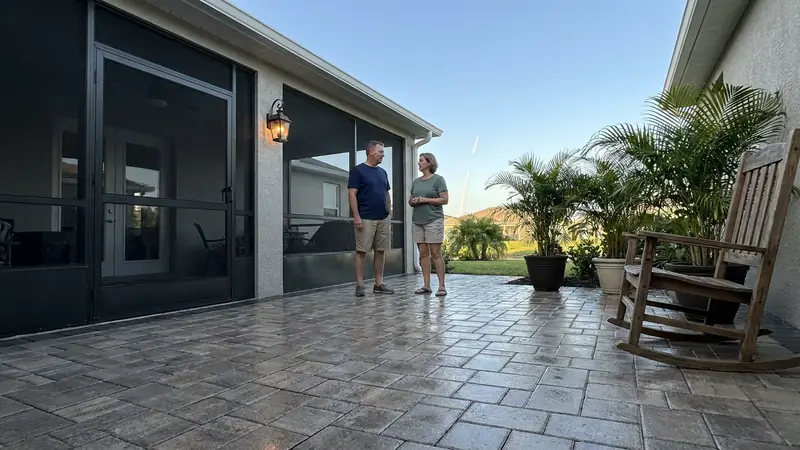
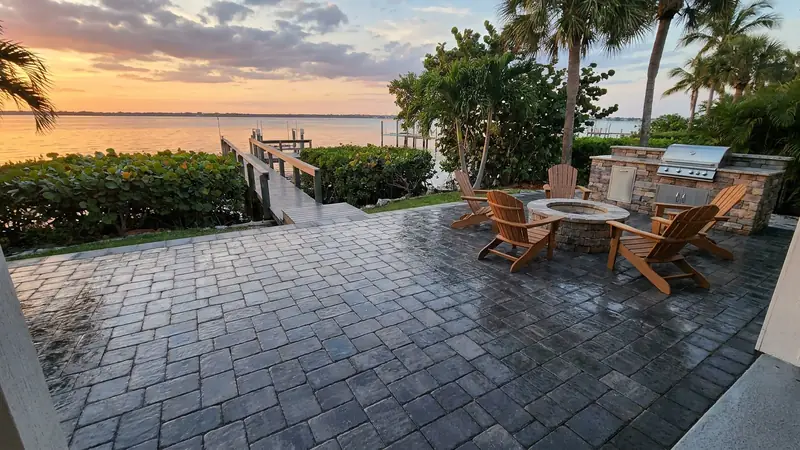
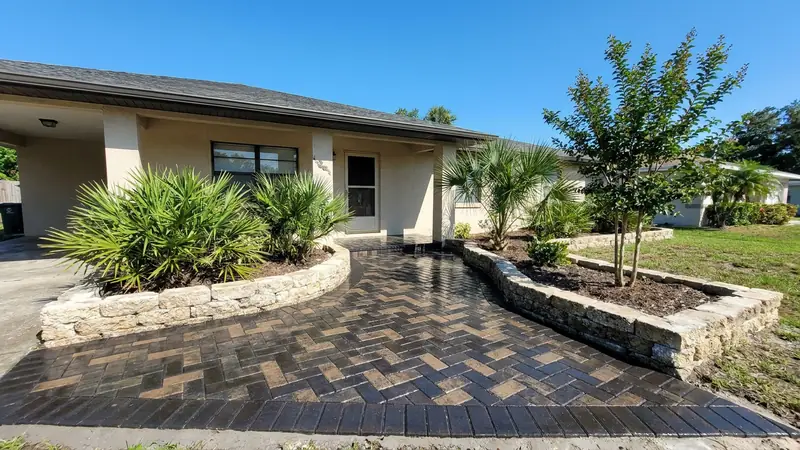
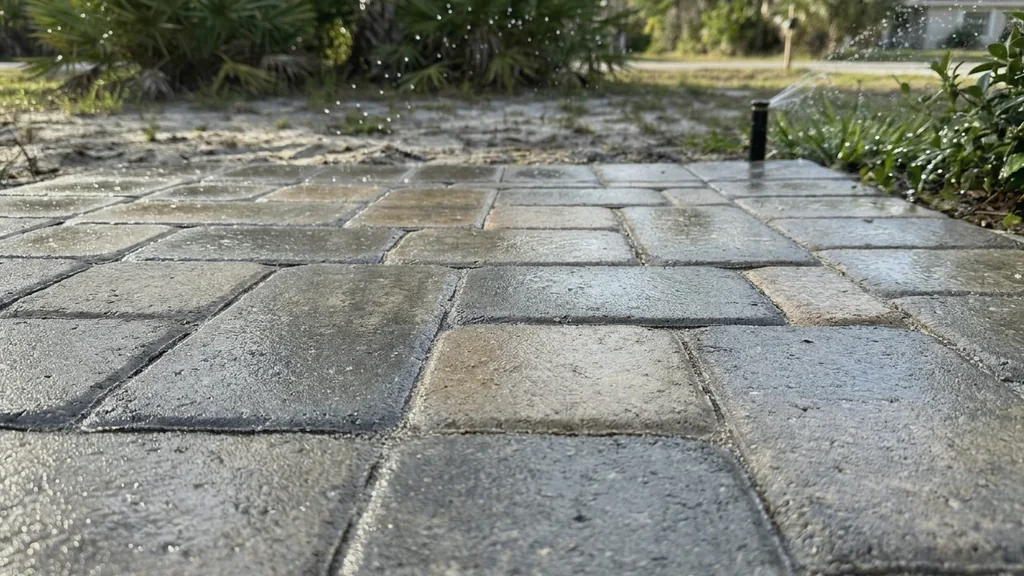
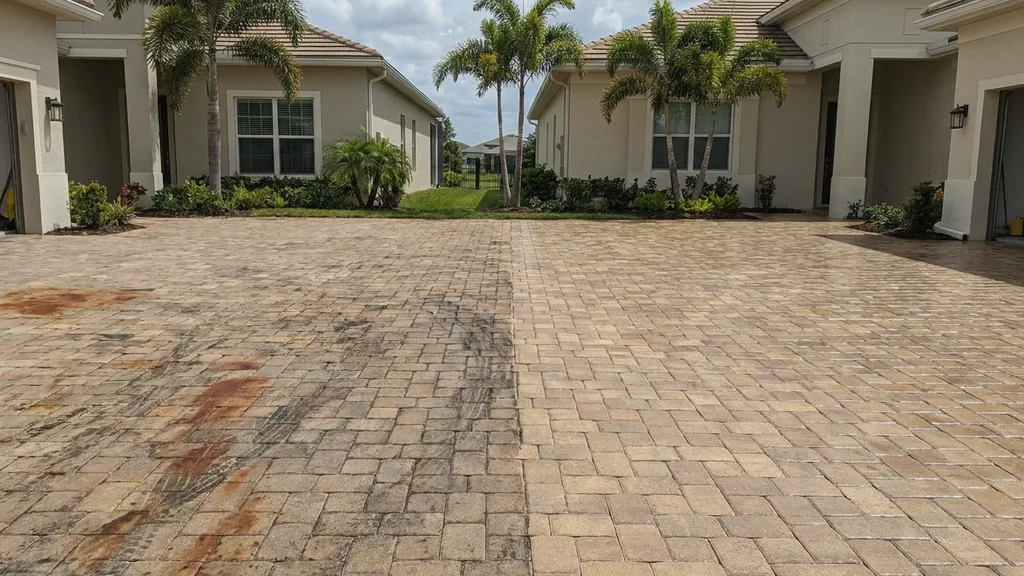
What do sealed pavers look like around Cocoa?
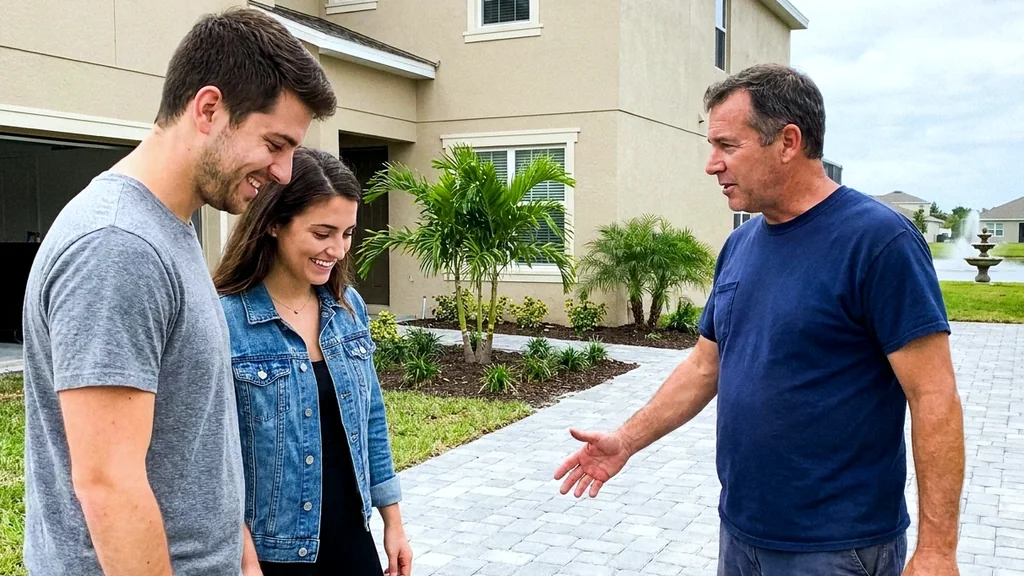
Why local matters in Cocoa
Ask a Cocoa contractor two questions and you learn a lot: how near the river are you, and how fast does the driveway drain? Those answers set how much washing the job needs. A crew from far away may skip them. To reach someone who works this stretch of Brevard, call (321) 416-1841.
Afternoon storms cross Cocoa on most summer days, and a patio by the water may stay damp for hours afterward. Good crews watch the sky and shift the day rather than seal a wet surface. To ask how a contractor handles that, get your free estimate.
Cocoa holds homes from the village core to streets laid out in the space years. A contractor who knows the mix expects old coats and thin joints, which means fewer surprises on the day. Tell the crew roughly when your house was built when you get your free estimate.
Does it help to hire someone who knows Cocoa's older streets?
Yes, because Cocoa grew in layers and each layer treats pavers a little differently. The city was chartered in 1895, after a fire in 1890 destroyed most of the business district and the railway arrived. Cocoa Village still holds the Aladdin Theatre building, now the Cocoa Village Playhouse, and the 1939 post office that houses the Florida Historical Society. If you live near the village and your walkway needs care, get your free estimate.
The Porcher House, finished in 1916, was built of local coquina rock and bought by the city in 1945 for use as city hall. Riverfront Park sits at the end of the village on the Indian River, and Indian River Drive follows the water south toward Rockledge. The space boom quadrupled the city's population between 1940 and 1960, and visitors still arrive for cruise day trips and more than 50 city events a year. Near the village, the river or the Porcher House, call (321) 416-1841 and name your street.
Frequently Asked Questions
How much does it cost to seal pavers in Cocoa?
The published Brevard range is $1.85 to $4.00 per square foot for cleaning, sanding and sealing. In Cocoa, a job lands higher or lower depending on green growth, missing sand and any coat that must be stripped. Ask for the full area in writing and compare quotes against that range. Free estimates make it easy to compare two or three bids side by side. Ask each bidder to price the pool deck and the walkway as separate lines.
When should Cocoa pavers be resealed?
Quotes from local companies usually fall at two to five years between coats. A Cocoa driveway in full sun with daily traffic should be checked at the early end of that span. Humid summers near the river add algae, so look it over each spring. Matte coats tend to hide wear longer than a wet look. Mark the month on a calendar when the coat goes on.
Is it better to spray or roll paver sealer in Cocoa?
Many crews spray first and roll right after, which pushes sealer down into the joints. The tool matters less than a clean, dry surface and a thin, even coat. Ask which product goes on and how. Either method works when the crew keeps the coat thin and even. Ask to see the can label before it is opened.
Do patio pavers need to be sealed in Cocoa?
Not required, though sealing helps patio pavers shrug off stains and fading. Patios near the river stay damp and collect algae, so a coat makes upkeep easier. A Cocoa contractor can check yours and tell you plainly. Screened porches and pool decks follow the same idea. A coat near the river is easier to rinse clean.
Is it good to seal pavers in Florida's humid air?
Yes, provided the pavers are dry at application. Damp weather can delay a Cocoa job, so careful crews pick a dry window. The old coat matters too, since a water-based sealer cannot cover a solvent-based one. Ask for the dry time in writing before the sealer goes on. A written dry time keeps both sides on the same page.
What time of year works for sealing pavers in Cocoa?
Mid October through May is steadier, since NWS Melbourne puts the median start of the dry season at October 17 and the wet season at May 28. Summer jobs still happen with early starts and a flexible day. Ask the contractor which weeks on the calendar are open. Ask early, since good weeks can fill.
Do older homes near Cocoa Village need a gentler cleaning method?
Often they do. The contractor looks at what the pavers touch, such as coquina, stucco or wood trim, and picks a rinse that will not harm it. The Porcher House, built of coquina rock in 1916, shows how much older masonry the area holds. Mention your wall material early. Gentle pressure on older masonry protects the mortar.
How can I tell which sealer an earlier owner used in Cocoa?
Ask the previous owner or the neighbors, check any old paperwork and let the contractor test a hidden corner. Cocoa homes date from many decades, so records are often missing. The answer matters, because water-based sealer cannot go over solvent-based. A hidden corner under a planter is a good test spot.
Does Cocoa's low, wet ground change how a driveway is sealed?
It can. Water covers 13.46 percent of the city, and a flat driveway may hold puddles after storms. Sealer needs a dry surface, so the contractor checks where water lingers and schedules around it. A slow-draining spot may need extra drying hours. A hand check for dampness at the low corner is quick.
Will sealing keep green film from coming back near the Indian River?
It slows the return but does not end it. A coat helps pavers shed water and stains, yet shade and humid air near the lagoon still feed algae. Plan on a light rinse now and then, and expect the shaded north side to green first. Light rinses cost little compared with a full wash.
Does a vacant or rental house in Cocoa need a different plan?
Often a little more cleaning. A driveway that has sat unused collects leaves, stains and weeds, so the first wash takes longer. The 2020 census counted 10.6 percent of Cocoa's housing units as vacant. Tell the contractor how long the place has been empty, and the quote can reflect it. Tell the contractor if a hose bib is hard to reach.
Why does Cocoa get so many afternoon storms in summer?
NWS Melbourne explains that Gulf and Atlantic sea breezes collide most summer days and set off thunderstorms. June through September are the wettest months. For sealing, that means mornings are the working window, and a Cocoa crew keeps a backup day open. A spare day on the schedule absorbs one rainy morning.
Ready for a Free Estimate in Cocoa?
Call (321) 416-1841 and tell us about your pavers.
Free, no obligation